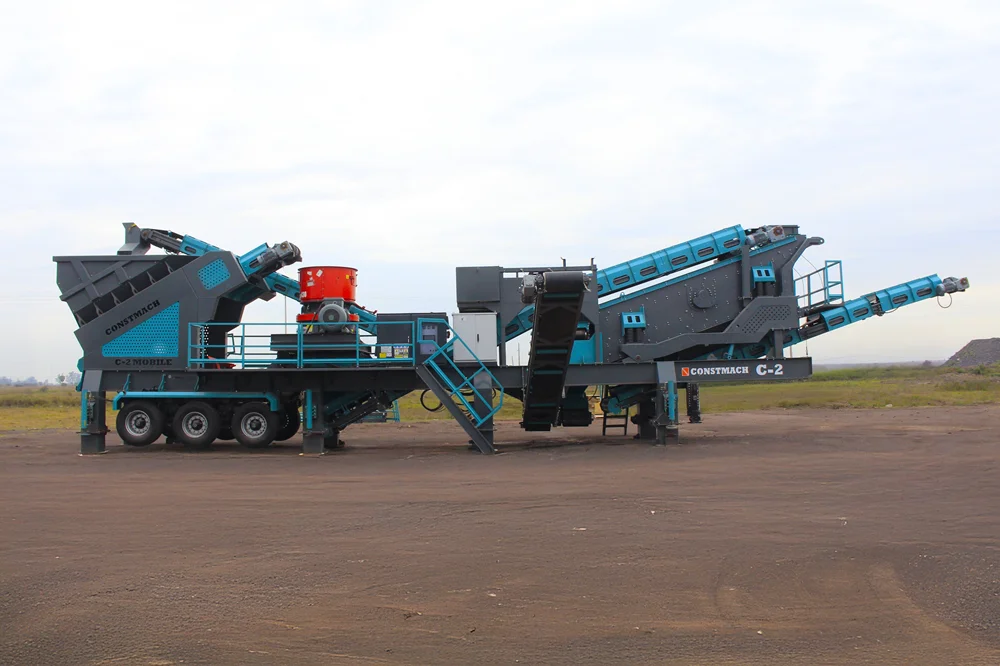






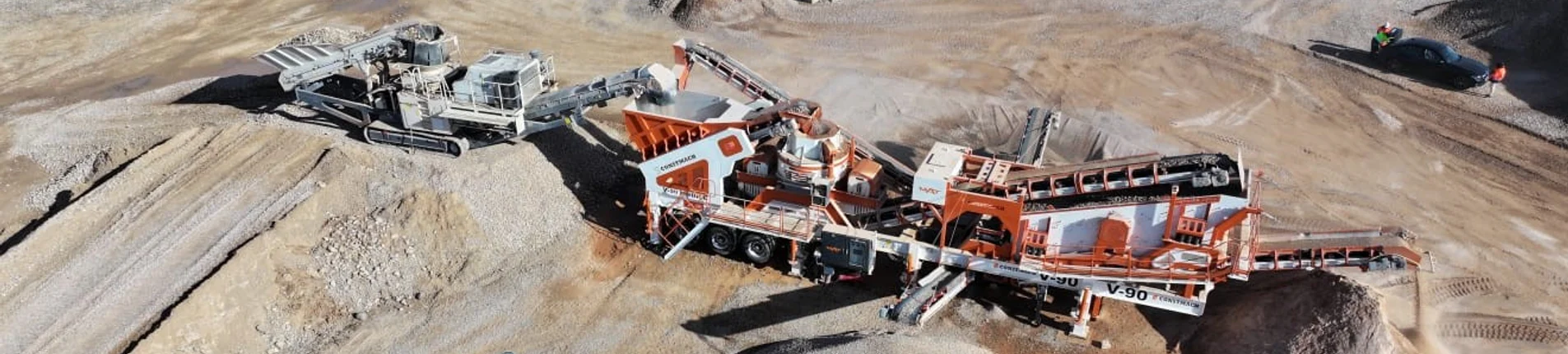

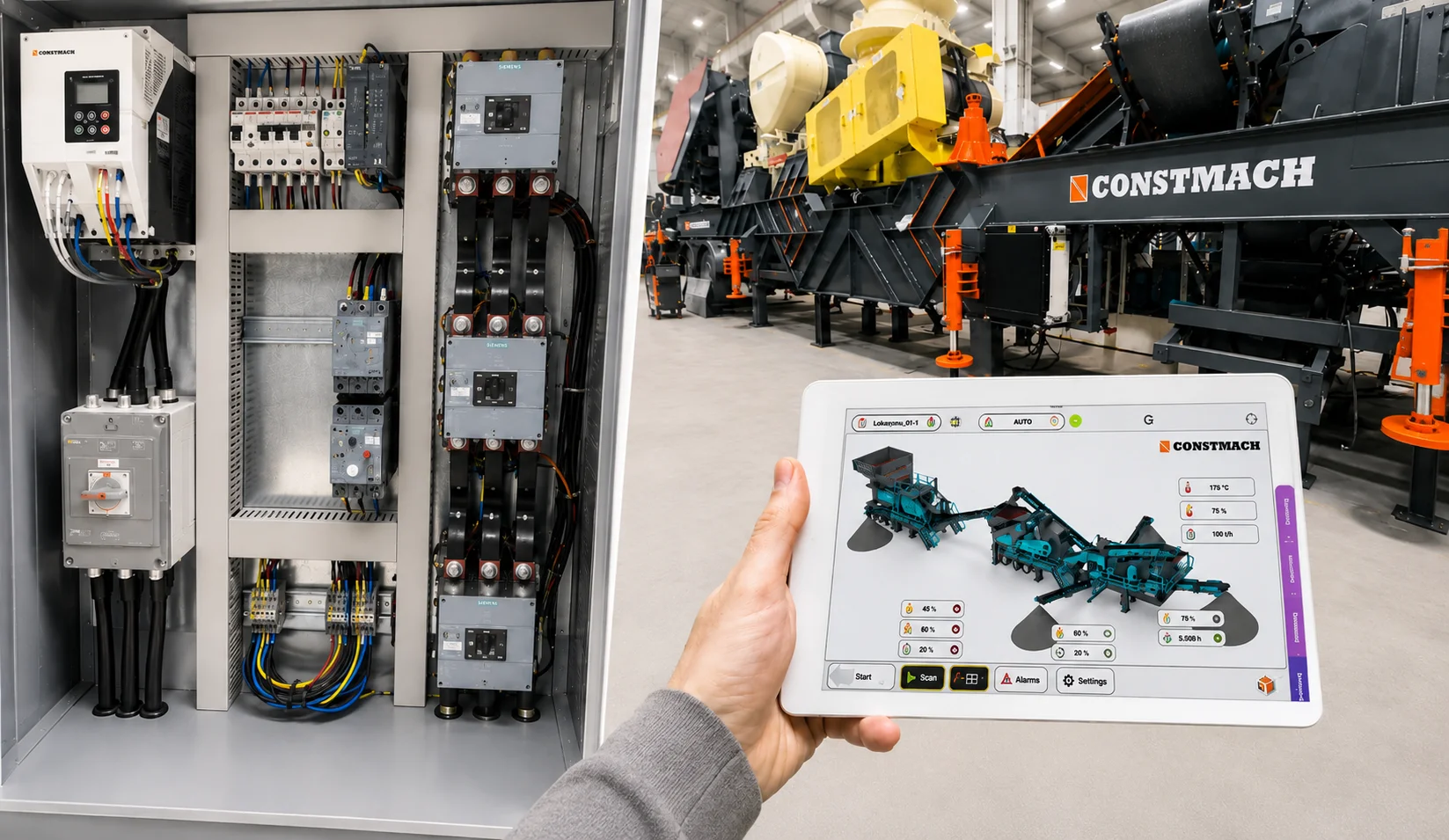
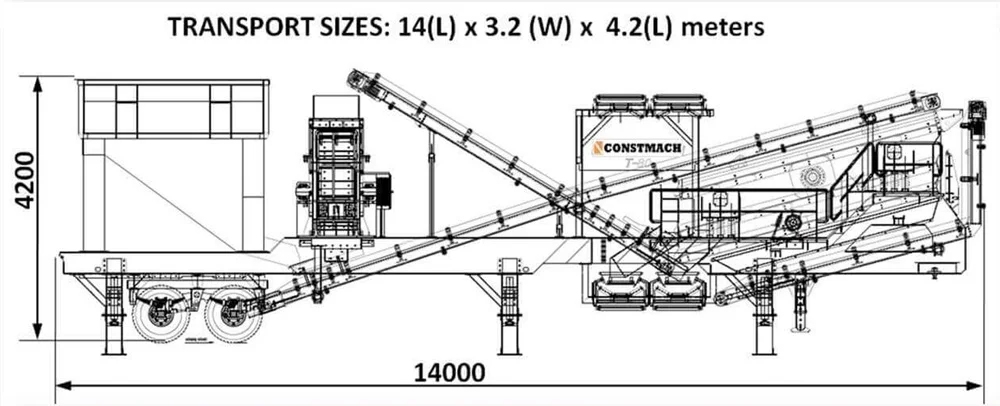
The CONSTMACH T-75 mobile tertiary impact crushing plant is a fine-aggregate and sand making unit used as a finishing stage in crushing and screening operations. The sections below summarise the materials it handles, the products it makes, the industries it serves, how it compares with vertical shaft impact (VSI) plants, and how it fits into a wider plant.
Which materials can be processed
The T-75 is designed to process pre-crushed stone of varying hardness. CONSTMACH lists suitable feed materials as:
- Granite
- Basalt
- Dolomite
- Gabbro
- Limestone
Feed is normally material that has already passed through primary and secondary crushing, with a maximum feeding size of 150 mm.
What products it makes
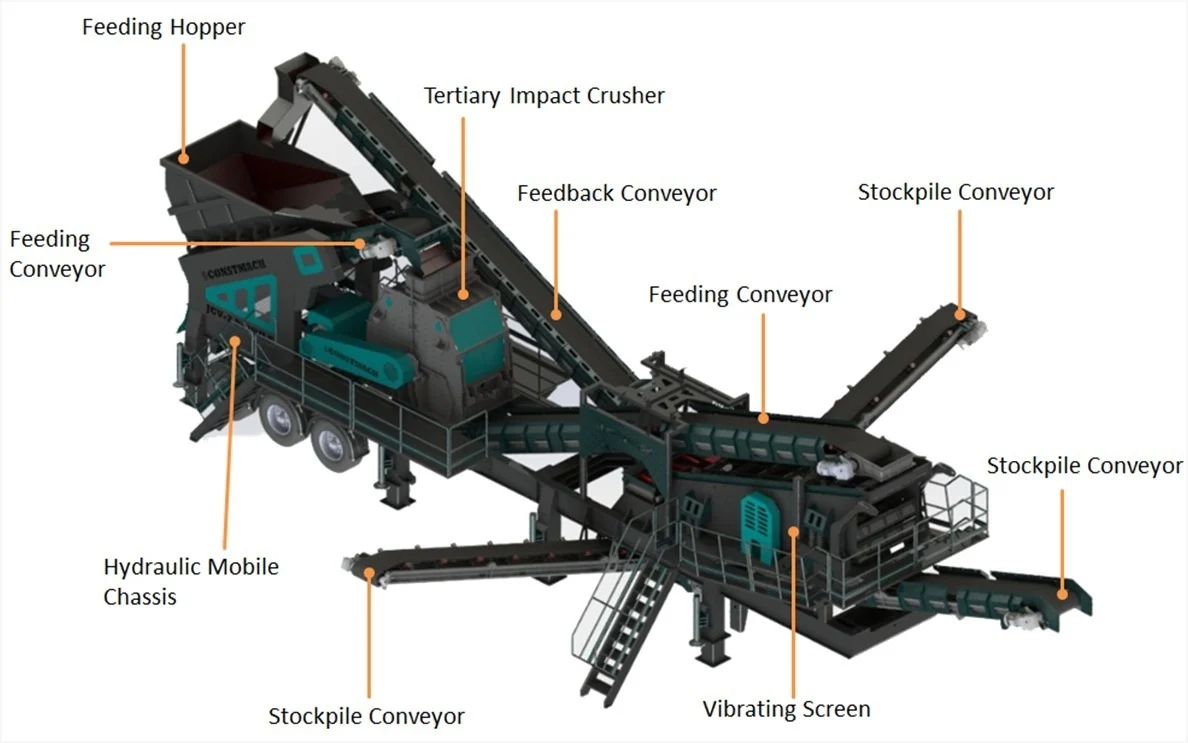
The plant is configured to produce manufactured sand and graded fine aggregate. With its three-deck vibrating screen it can deliver a 0-5 mm sand fraction together with up to three additional sized fractions simultaneously. The impact crushing action is used to obtain a cubical particle shape in the fine product.
Which industries use it
The T-75 is applied where manufactured sand and shaped fine aggregate are required, including:
- Ready-mixed concrete production
- Asphalt and road base material supply
- Aggregate quarrying and processing
T series tertiary impact versus V series VSI: when to choose which
The T series uses a horizontal-shaft tertiary impact crusher, while the V series uses a vertical shaft impactor. The T-75 accepts a larger feed size (150 mm) than the comparable VSI units and reduces material by impact against breaker plates. A VSI plant accelerates material against anvils or a rock bed and is commonly preferred for highly abrasive feed. The choice depends on feed abrasiveness, required gradation, and the position of the unit in the circuit.
Wear parts and maintenance
As an impact crusher, the T-75 has wear components in the crushing chamber that are consumed during operation. Typical considerations include:
- Blow bars mounted on the rotor
- Breaker (impact) plates and chamber liners
- Feeder and screen media
- Conveyor belts
Wear rates depend on the hardness and abrasiveness of the processed material. Routine inspection of chamber wear parts is part of normal operation.
Comparison to alternative configurations
Compared with a stationary tertiary plant, the mobile T-75 reduces site preparation and allows relocation. Compared with a cone crusher in the same finishing role, the tertiary impact crusher generally produces a higher fines content and a cubical shape, which supports sand production, while cone crushers are typically associated with harder, more abrasive duty.
Plant integration
The T-75 carries its feeder, crusher, screen and conveyors on a single chassis and can operate as a self-contained sand making stage or downstream of separate primary and secondary mobile or stationary plants. Oversize material is returned to the crusher through the feedback conveyor, and sized products are delivered by the stockpile conveyors.