







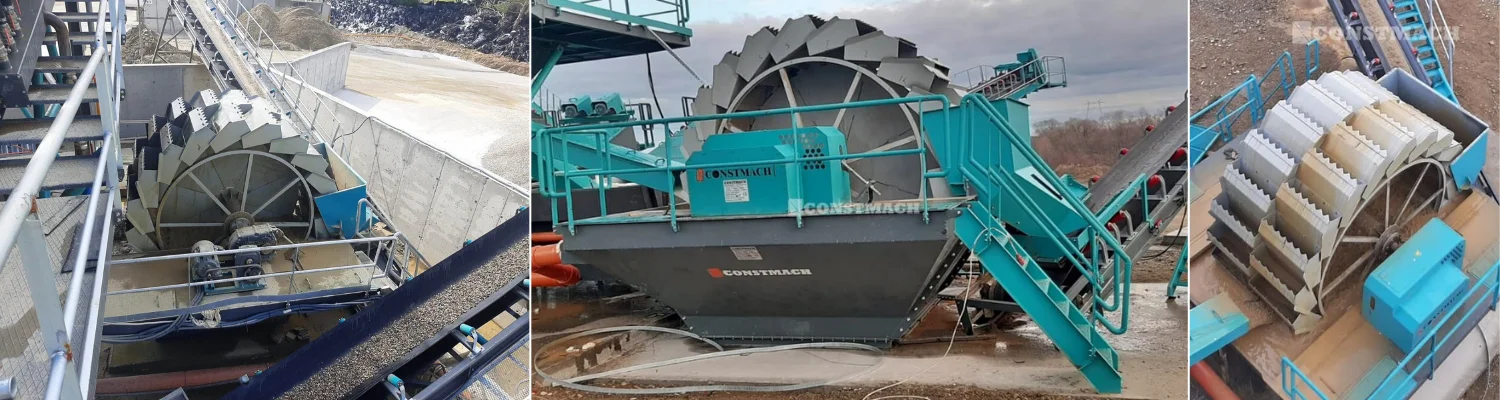

CBW - 1000 | غسالة رمل بعجلة دلوية

غسالة الرمل بعجلة دلوية CBW-1000 هي وحدة غسل دوّارة من تصنيع CONSTMACH لإزالة الطين والغرين من الرمل ورفع جودته. وهي الغسالة المفضّلة للمواد ذات المحتوى الطيني العالي: يُحرَّك الرمل والماء داخل حوض، فيطفو الطين المذاب والمواد الناعمة الخفيفة على هيئة ماء متسخ، بينما تلتقط عجلة تدور ببطء ومزودة بدلاء مثقّبة الرملَ النظيف والأثقل من قاع الحوض وترفعه إلى مزلق التفريغ. والتصميم البسيط والمتين هو ما يجعل CBW-1000 مناسبة تماماً للمواد الصعبة والمتّسخة.

تستخدم CBW-1000 عجلة بقطر Ø3,000 mm تحمل 40 دلواً، أبعاد كل منها 1,000 x 550 mm. تدور العجلة بسرعة 2.5 rpm فقط، وهي سرعة بطيئة عن قصد تمنح الرمل وقتاً كافياً ليستقر ويصفّى داخل كل دلو قبل أن يُقلب في مزلق التفريغ. ويحرّك هذه الحركة اللطيفة منخفضة السرعة محرك بقوة 7.5 kW، وهو السبب الرئيسي في أن العجلة الدلوية تستهلك قدراً ضئيلاً جداً من الطاقة مقابل ما تنجزه من عمل.

بقدرة مصنّفة تبلغ 110–120 m³/h، تُعدّ CBW-1000 الوحدة عالية القدرة في مجموعة CBW من CONSTMACH. وتُحدَّد القدرة الإنتاجية بحجم الدلو 1,000 x 550 mm وعدد الدلاء على العجلة: فالدلاء الأكبر تحمل رملاً أكثر في كل دورة، لذا فعند سرعة العجلة نفسها البالغة 2.5 rpm تقدّم CBW-1000 معدل الإنتاج المصنّف لها. ولأن العجلة ترفع الرمل وتصفّيه مسبقاً في آن واحد، فإن الدلاء مثقّبة للسماح للماء بالعودة إلى الحوض أثناء صعودها.

تُحدِّد خاصيّتان مبدأ العجلة الدلوية: استهلاك منخفض جداً للماء واستهلاك منخفض جداً للطاقة. فالرمل يُغسل في حوض ذي دورة مغلقة بدلاً من تدفق أحادي المرور، ما يجعل تعويض الماء العذب في حده الأدنى، كما أن الدوران البطيء بسرعة 2.5 rpm يعني أن نظام الإدارة بقوة 7.5 kW هو الحمل المؤثر الوحيد. وبالنسبة للمنتجين الذين يعملون في الرواسب عالية المحتوى الطيني، يجعل هذا المزيج تشغيل CBW-1000 أقل كلفة من الطرق التي تعتمد على كميات كبيرة من ماء الغسل.

في المحطة النموذجية، تتولى CBW-1000 الغسل الأولي لجزء الرمل، وغالباً ما تستقبل مواد أشد اتساخاً من أن تنظّفها غسالة لولبية بكفاءة بمفردها. والرمل الخارج من العجلة مغسول لكنه لا يزال رطباً، لذا يُمرَّر عادةً إلى غربال نزح المياه لإزالة الماء المتبقي واستعادة المواد الناعمة قبل التخزين. وبهذه الطريقة، تحوّل العجلة الدلوية وغربال نزح المياه معاً رمل المحجر شديد التلوث إلى منتج نظيف وجاف وقابل للبيع.

صُممت CBW-1000 لسهولة التركيب وهيكل بسيط بأجزاء متحركة قليلة، ما يبقي الصيانة منخفضة والموثوقية عالية. كما أن بنيتها المعيارية تتيح شحنها باقتصادية، إذ تتسع لمقطورات الشاحنات المغلقة والحاويات مفتوحة السقف مقاس 40 قدماً. وتوفّر CONSTMACH غسالة CBW-1000 مع الدعم الفني وقطع الغيار لتشغيل طويل الأمد في محطات غسل الرمل.

CBW - 1000 المواصفات الفنية

قوة المحرك (kW)7.5 kW
القدرة الإنتاجية (m³/h)110 - 120 m³/h
حجم الدلو (mm)1.000 x 550 mm
سرعة الدوران (rpm)2.5 rpm
قطر العجلة (mm)Ø 3.000 mm
عدد الدلاء40

CBW - 1000Video

FAQ

The CBW-1000 is used to wash clay and silt out of sand in order to raise its quality, and it is the best choice when the feed carries a high clay content. It is widely used on river-sand and alluvial deposits and on dirty pit-run sand where a screw washer alone would struggle. The wheel scoops settled clean sand from a tank while the clay floats off in the overflow water. Rated at 110–120 m³/h, it is the high-capacity model in the CBW range.

What does it wash and produce?

The CBW-1000 treats the sand fraction (broadly 0–5 mm) and produces washed sand suitable for concrete and plaster once it has been dewatered. The 40 perforated buckets of 1,000 x 550 mm lift the clean sand out of the agitated tank, draining some water as they rise, and tip it into the discharge chute. The clay, silt and organic fines leave with the overflow water for settling.

How much water and power does the CBW-1000 use?

Low consumption of both is the hallmark of the bucket wheel. The CBW-1000 is driven by just a 7.5 kW motor turning the wheel at 2.5 rpm, so power draw is modest. Water use is also low because washing happens in a recirculating tank rather than a once-through wash; with a settling pond the fresh-water make-up is small. This makes the CBW-1000 the most economical washer to operate on heavily clay-bound feed.

How much clay can it handle, and how dry is the output?

The bucket wheel is specifically suited to high-clay feed — more than a screw washer can comfortably clean — because the long residence time in the tank lets stubborn clay disperse before the sand is lifted out. The trade-off is that sand leaving the wheel is fairly wet, generally in the 20–30% moisture range, since the buckets drain only briefly. A dewatering screen downstream is the usual way to bring the product down to a stackable 12–15%.

Bucket-wheel washer vs screw washer vs dewatering screen

  • Bucket-wheel washer (CBW-1000) — best for high-clay feed; lowest water and power use; gentle 2.5 rpm action; output is wetter and loses some fines.

  • Screw washer — inclined spiral; good for light to moderate clay; gives a drier discharge and a longer scrubbing path, but is less able to cope with very high clay loads.

  • Dewatering screen — does not wash; a high-frequency screen and hydrocyclone that removes residual water and recovers 90-micron fines from already-washed sand, normally fitted after the wheel.

For a dirty, high-clay deposit the typical line is the CBW-1000 for washing followed by a dewatering screen for drying and fines recovery.

What maintenance does the CBW-1000 need?

The simple structure means few wear points. Routine attention covers the bucket liners and the wheel bearings, plus periodic checks of the drive and the tank for sand build-up. The slow 2.5 rpm rotation and low 7.5 kW load place little stress on the mechanism, so with basic upkeep the CBW-1000 runs reliably at its 110–120 m³/h rating for long periods.

Frequently Asked Questions

صورة تواصل عبر واتساب
تواصل سريع

اترك طلبك وسيقوم فريقنا المتخصص في أقرب وقت ممكن بالرد عليك

املأ النموذج للحصول على معلومات مفصلة حول محطات خلط الخرسانة أو محطات التكسير والغربلة أو منتجاتنا الأخرى — أو تواصل معنا مباشرةً.

بترك طلبك، فإنك توافق على معالجة بياناتك الشخصية.

أو مباشرةً

ما الجديد في CONSTMACH

فريقنا من الخبراء جاهز لتقديم حل مصمم خصيصًا لمشروعك. نحن على بُعد مكالمة هاتفية واحدة — اتصل بنا الآن.