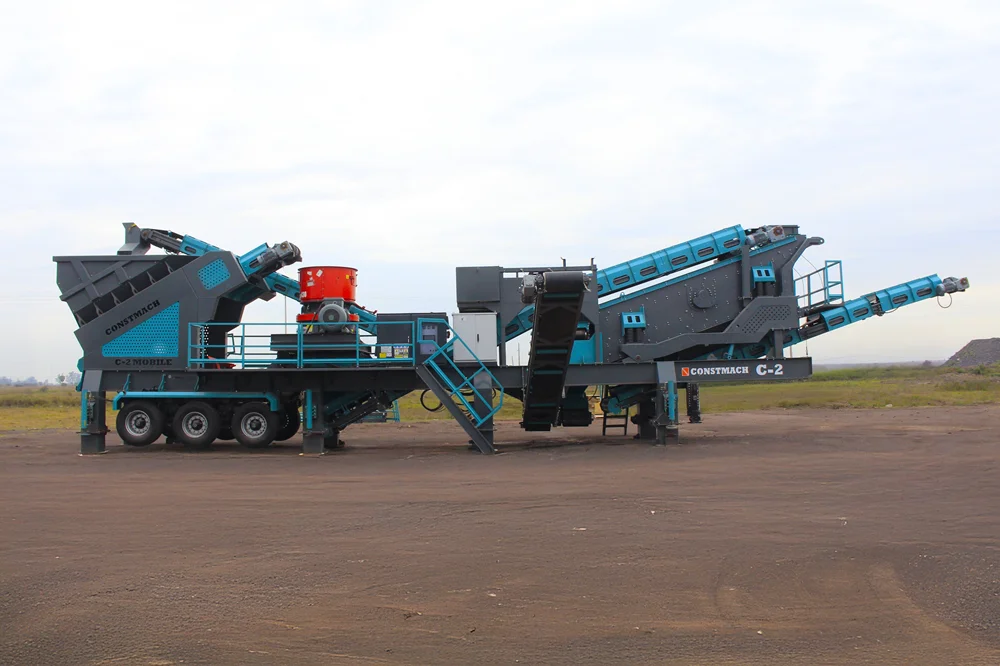






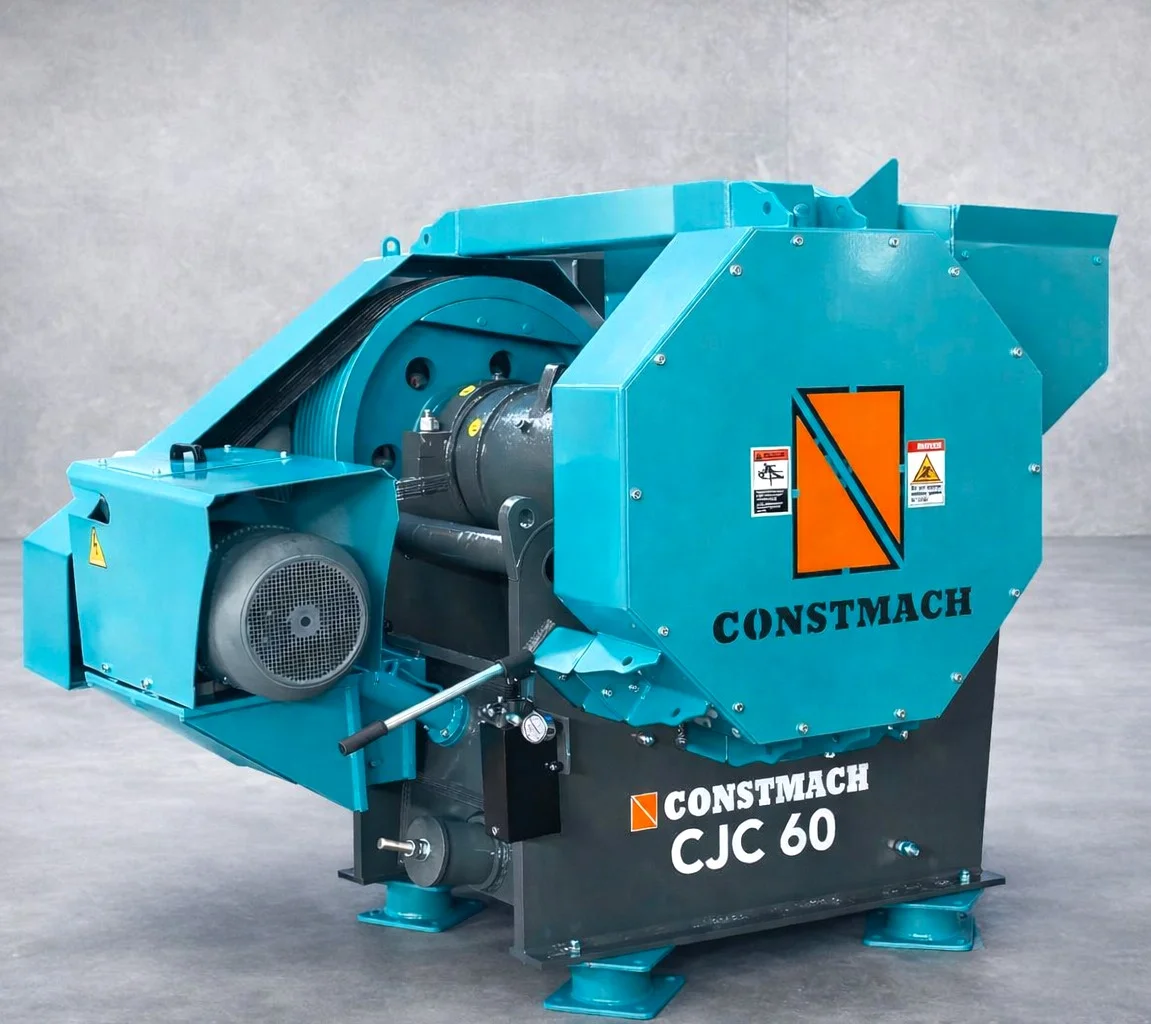

The CJC-60 jaw crusher is a primary crushing machine. This section covers the feed materials it accepts, the products it generates, the industries it serves and the practical considerations that influence its selection and operation.
What Materials Can the CJC-60 Process?
The CJC-60 is designed for primary crushing of natural rock and recycled mineral materials. Suitable feed includes:
- Limestone and dolomite
- Granite, basalt and other hard igneous rock
- River gravel and quarried stone
- Reinforced concrete and demolition rubble in recycling applications
Feed should be sized to enter the 600 x 380 mm opening cleanly. Oversized blocks must be reduced before charging to avoid bridging at the chamber mouth. Because the crusher reduces by compression, it tolerates the abrasive and high-strength rock that would shorten the life of an impact machine.
What Products Does It Produce?
As a primary crusher, the CJC-60 produces a coarse, unscreened product whose top size is controlled by the closed side setting (30-100 mm). This material is not a finished aggregate; it is an intermediate feed for secondary crushers and screens, which then split it into concrete and asphalt aggregate fractions, base course and finer products. With the CSS at the lower end of its range, the primary product gradation is tighter and reduces the load on the secondary stage; at the upper end, throughput is maximised at a coarser top size.
Which Industries Use This Crusher?
- Aggregate and quarry operations producing construction stone
- Ready-mix concrete and asphalt producers needing in-house aggregate
- Construction and demolition recycling
- Small mining and mineral processing sites
Its compact size and 6,000 kg weight make it a common choice for producers commissioning a first stationary line or operating a satellite quarry with moderate output requirements.
How Are Wear Parts Managed?
The main wear items are the fixed and moving jaw plates, manufactured from manganese steel that work-hardens in service. Plate life depends on feed abrasiveness and tonnage. Both plates are reversible and replaceable; planning replacement during scheduled stops avoids unplanned downtime. The cheek plates that protect the chamber side walls and the toggle plate are also serviceable items. The toggle plate acts as a mechanical safety element, designed to fail and protect the crusher if uncrushable tramp metal enters the chamber. Keeping a set of spare jaw plates on site shortens changeover time.
What Should Be Considered During Operation?
Consistent, choke-fed loading produces the most uniform product and even jaw wear. The hydraulic setting mechanism should be used to verify the CSS after plate changes. Automatic lubrication, where fitted, keeps the bearings protected under continuous duty. Because the CJC-60 runs at a relatively high flywheel speed of 330 rpm, maintaining drive belt tension and flywheel balance is important for smooth operation. A vibrating grizzly feeder ahead of the crusher scalps fines and regulates feed, which both protects the jaw plates and stabilises throughput.
Jaw Crusher Versus Impact Crusher
A jaw crusher such as the CJC-60 reduces material by compression and is the preferred primary machine for hard, abrasive rock and recycled concrete with reinforcement. A primary impact crusher reduces by impact and is better suited to softer, less abrasive materials such as limestone where a cubical product and high reduction ratio are required. For hard granite or basalt feed, the jaw crusher is generally the more economical and durable primary choice, because its wear parts last longer on abrasive material and its compression action handles high-strength rock that would quickly round off impact blow bars.