







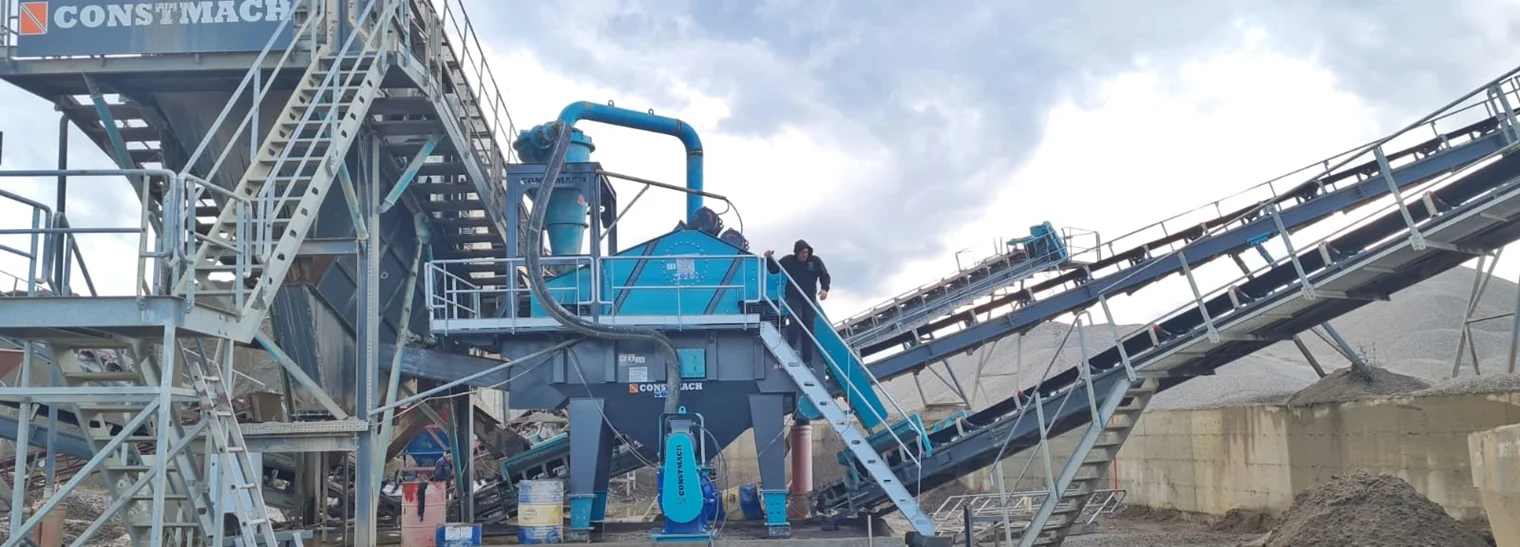

CDS - 1635 | Sito za Odvodnjavanje i Hidrociklon

CDS-1635 Sito za Odvodnjavanje je visokofrekventni vibracioni sklop sita i hidrociklona koji proizvodi CONSTMACH za izdvajanje i odvodnjavanje sitnog opranog peska. Za razliku od pužne ili kofičaste mašine za pranje, CDS-1635 ne skida glinu sa zrna peska; njegov zadatak dolazi nakon pranja, gde uklanja zaostalu vodu iz peska i spašava veoma sitne čestice koje bi se inače izgubile u prelivnoj vodi. Rezultat je suv proizvod pogodan za deponovanje, koji se može direktno transportovati na deponiju.

CDS-1635 kombinuje ležište sita za odvodnjavanje dimenzija 1.600 x 3.500 mm sa jednim hidrociklonom od 26 inča. Pumpa za muljevitu smešu snage 55 kW pumpa smešu peska naviše u ciklon, gde centrifugalno dejstvo zgušnjava smešu i ispušta je na sito. Hidrociklon je ključan za izdvajanje sitnih čestica: hvata čestice do oko 90 mikrona koje klasične pužne i kofičaste mašine za pranje obično ispiraju zajedno sa prljavom vodom, tako da pesak zadržava sitnu frakciju potrebnu za ispunjavanje mnogih kriva granulacije za beton i malter.

Na ležištu sita, dva vibraciona motora snage 2 x 7,5 kW generišu visokofrekventno, linearno kretanje koje protiskuje vodu kroz poliuretansku mrežu, dok pesak formira sloj za ceđenje i putuje ka ivici za izbacivanje. Poliuretanski paneli sita se koriste jer su otporni na abraziju od oštrog peska i pružaju dug radni vek. Visoka frekvencija je ono što razlikuje sito za odvodnjavanje od običnog klasirnog sita — podešeno je da odvaja vodu, a ne da razdvaja frakcije po veličini.

CDS-1635 je model srednjeg opsega u CONSTMACH CDS seriji, kapaciteta 100–150 t/h. Ovaj kapacitet određuju zajedno površina ležišta 1.600 x 3.500 mm, konfiguracija ciklona od 26″ i pumpa od 55 kW, tako da su ova tri elementa usklađena kao celina, a ne definisana pojedinačno. Napajanje sita projektovanim protokom održava sloj peska na odgovarajućoj dubini za efikasno ceđenje.

U postrojenju za pesak, CDS-1635 se ugrađuje iza faze pranja — obično pužne ili kofičaste mašine za pranje — i napaja se opranom smešom peska. Uklanjanjem zaostale vode smanjuje se vlažnost proizvoda sa vrednosti koje daje mašina za pranje na nivo pogodan za deponovanje, što znači da se pesak može prodati ili koristiti ranije i manje se cedi na deponiji. Istovremeno izdvajanje frakcije od 90 mikrona poboljšava i iskorišćenje i kvalitet proizvoda.

Održavanje se uglavnom svodi na poliuretanske panele sita i potrošne delove pumpe za muljevitu smešu, a oba su projektovana za jednostavnu zamenu. Uz lako održavanje, dugotrajne PU mreže i suv finalni proizvod koji se lako skladišti, CDS-1635 predstavlja praktično rešenje za podizanje kvaliteta i iskorišćenja linije za pranje. CONSTMACH isporučuje uređaj uz podršku pri puštanju u rad i dostupnost rezervnih delova za neprekidan rad.

CDS - 1635 Tehničke Specifikacije

Dimenzije Sita za Odvodnjavanje1,600 x 3,500 mm
Prečnik Hidrociklona26”
Snaga Motora Pumpe za Muljevitu Smešu (kW)55 kW
Snaga Vibracionog Motora (kW)2 x 7.5 kW
Proizvodni Kapacitet (t/h)100 - 150 t/h

CDS - 1635Video

CDS - 1635 Opšti Raspored

FAQ

The CDS-1635 is used at the end of a sand-washing line to dewater washed sand and to recover the ultra-fine particles that ordinary washers lose. It does not wash or remove clay itself — it takes already-washed sand slurry, drives the water out through a high-frequency polyurethane screen, and uses a single 26-inch hydrocyclone to capture fines down to about 90 microns. The output is a dry, stackable sand at a controlled gradation.

Where is it used and what does it produce?

It is used in concrete-sand, plaster-sand and manufactured-sand plants where both a dry product and a precise fine fraction matter. Because the CDS-1635 recovers 90-micron material that screw and wheel washers flush away, the producer can hold the fine end of the grading curve and tailor the sand to project specifications. Rated at 100–150 t/h, it is matched to the mid-range throughput band of the CDS range.

How much power and water does the CDS-1635 use?

The CDS-1635 is driven by a 55 kW slurry pump and two vibrator motors rated 2 x 7.5 kW. A dewatering stage is not a heavy water consumer in itself — its purpose is to take water out — but the water and fines it recovers in the cyclone underflow are returned to the sand rather than lost, and the overflow water can be sent to a settling pond for recirculation, which lowers the fresh-water demand of the whole plant.

How dry is the sand, and how does it handle clay?

The CDS-1635 is a dewatering device, not a clay scrubber. Any clay must already have been washed out upstream by a screw or bucket-wheel washer; the dewatering screen then takes the washed slurry and reduces its moisture to roughly 12–15%, low enough that the sand can be stockpiled and handled immediately. If the feed still contains clay, that clay will simply pass through with the sand, so correct upstream washing is essential.

Dewatering screen vs screw washer vs bucket-wheel washer

  • Dewatering screen (CDS-1635) — high-frequency screen plus hydrocyclone; removes residual water and recovers 90-micron fines from already-washed sand. Does not wash.

  • Screw washer — inclined spiral that washes and partially dewaters fine sand; good for light to moderate clay.

  • Bucket-wheel washer — washes high-clay feed with low water and power use, but leaves the sand wetter and loses more fines.

The three are complementary: a washer (screw or wheel) cleans the sand, and the CDS-1635 finishes the job by drying it and saving the fines.

What maintenance does the CDS-1635 need?

The main wear items are the polyurethane screen panels, which resist abrasion and are designed for easy replacement, and the slurry-pump impeller and liners. Routine checks cover the vibrator-motor mounts and the cyclone apex for wear. Keeping the screen fed at the 100–150 t/h design rate and the PU panels in good condition maintains efficient drainage and consistent fines recovery.

Why add a dewatering screen to an existing washing line?

Two reasons. First, product quality: a screw or wheel washer flushes the finest particles away with the dirty water, which can leave the sand short of fines and outside the target grading curve. The hydrocyclone on the CDS-1635 captures that 90-micron material and returns it to the sand. Second, handling and yield: wet sand from a washer drains in the stockpile, ties up storage and loses saleable tonnage. By cutting moisture to roughly 12–15%, the CDS-1635 gives a sand that can be stocked, loaded and sold immediately, which is why a dewatering screen is a common final stage in mid-range and larger washing plants.

Frequently Asked Questions

WhatsApp kontakt slika
Brzi Kontakt

Ostavite zahtev, a naš stručni tim će vam se u najkraćem mogućem roku javiti

Popunite formular za detaljne informacije o fabrikama betona, postrojenjima za drobljenje i prosejavanje ili našim ostalim proizvodima — ili nas kontaktirajte direktno.

Ostavljanjem zahteva pristajete na obradu vaših ličnih podataka.

ili direktno

Šta je novo kod Constmach-a

Naš tim stručnjaka spreman je da ponudi rešenje prilagođeno vašem projektu. Udaljeni smo samo jedan telefonski poziv — pozovite nas odmah.