







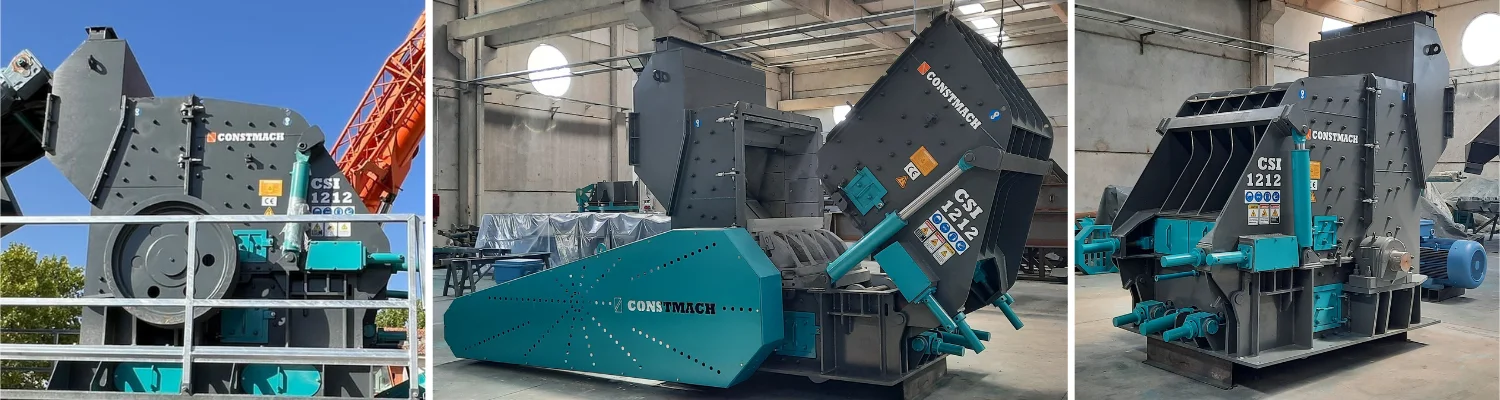

CSI - 1210 | İkincil Darbeli Konkasör

CSI-1210 İkincil Darbeli Konkasör, CONSTMACH'ın ikincil darbeli kırma serisindeki giriş kapasiteli modeldir ve birincil çeneli veya darbeli konkasörden gelen ön kırılmış malzemeyi alarak iyi dereceli agregaya dönüştürmek üzere üretilmiştir. 1.100 x 1.100 mm rotoru 160 kW tahrik gücüyle birleştirir ve 17.500 kg çalışma ağırlığına sahiptir; bu da onu yerleşim alanı ve kurulu gücün önemli olduğu orta ve küçük ölçekli sabit kırma-eleme tesisleri için pratik bir seçim yapar.

Bir kırma-eleme hattında boyut küçültmenin büyük kısmı ikincil kademede gerçekleşir ve CSI-1210, en yüksek tonajda değil, bu işi istikrarlı biçimde yapmak üzere boyutlandırılmıştır. Kurulu gücü ve ağırlığı ölçülü tutulmuştur; böylece taşıyıcı yapıyı, konveyörleri ve elektrik beslemesini aşırı boyutlandırmadan mevcut tesislere entegre edilebilir veya kompakt yeni kurulumlarda kullanılabilirken darbeli kırmayı tanımlayan kübik ürünü sunmaya devam eder.

İkinci kademe makinesi olarak CSI-1210, maksimum 200 mm besleme boyutunu kabul eder. Kırma haznesine giren malzeme, rotor üzerine monte edilmiş yüksek krom veya manganez alaşımlı darbe çubukları tarafından çarpılır ve ayarlanabilir kırıcı plakalara fırlatılır; burada tekrarlanan darbe, taşı doğal kırılma çizgileri boyunca parçalar. Bu darbe etkisi, basınçlı kırmaya özgü yassı veya uzun tanecikler yerine kübik bir tanecik şeklini destekler; bu da ikincil darbeli konkasörlerin beton ve asfalt agregası üretiminde tercih edilmesinin başlıca nedenidir.

Nominal kapasite, besleme granülometrisine, malzeme sertliğine ve seçilen tahliye ayarına bağlı olarak saatte 60 ila 100 tondur. CSI-1210, kireçtaşı, dolomit ve benzeri tortul taşlar gibi orta sertlikte, düşük aşındırıcılığa sahip malzemeler için tasarlanmıştır; ayrıca temiz kübik bir ürün gerektiren geri dönüştürülmüş beton ve yıkım molozunda da iyi performans gösterir.

İki kırıcı plaka, makine çalışırken operatörün aralığı değiştirmesine imkân tanıyan hidrolik bir ayar sistemi üzerinde taşınır. Tahliye ağzı üzerindeki bu kontrol, operatörün ürün granülometrisini doğrudan ayarlamasını sağlar; daha ince bir spesifikasyon gerektiğinde ince malzeme oranı artırılabilir veya verimi yükseltmek için hazne açılabilir. Yüksek kırma oranı, CSI-1210'un tek geçişte önemli bir boyut küçültmesi sağlayabileceği ve alt kademedeki ekipmanın yükünü azaltabileceği anlamına gelir.

Bakım erişimi yapının içine dahil edilmiştir. İki hidrolik silindir, rotora, darbe çubuklarına ve kırıcı plaka astarlarına makineyi sökmeden ulaşılabilmesi için gövdeyi açar; arka kapılar ise kırıcı plaka astar cıvatalarına doğrudan erişim sağlar. Rotor, gerilimi giderilmiş, açık disk tasarımlı olup büyük küresel makaralı rulmanlar üzerinde taşınır; bu ikisi birlikte, ikincil kademenin tekrarlanan darbe yükleri altında kararlı çalışmayı ve uzun rulman ömrünü destekler.

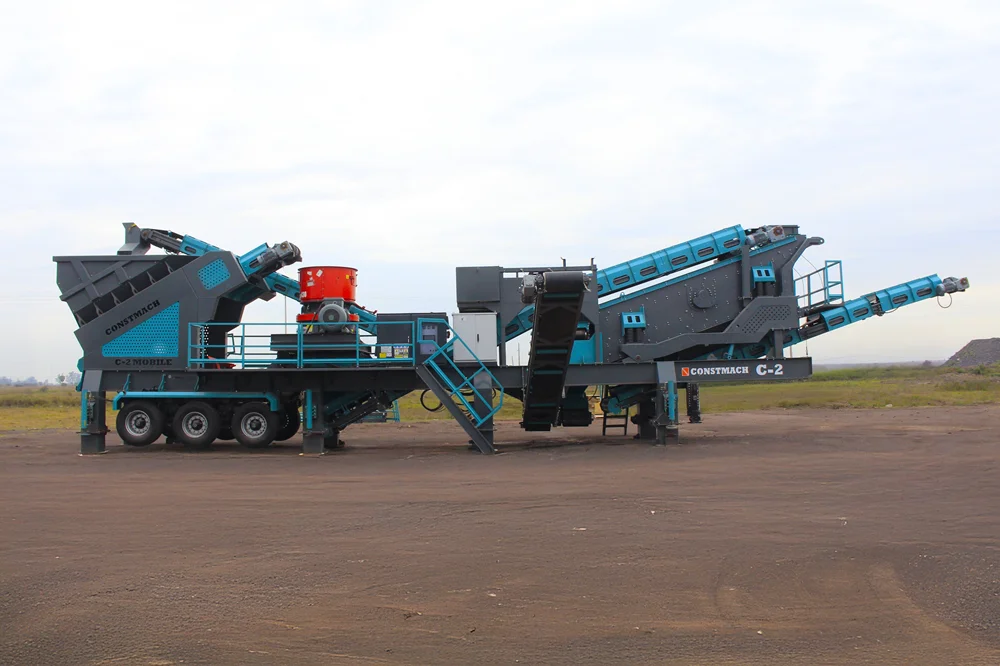
CSI-1210, kapalı tır dorselerine ve 40 ft açık üst veya flat-rack konteynerlere sığan modüler bir konfigürasyonda sevk edilir; bu da taşıma ve kurulum maliyetlerini öngörülebilir kılar. Eksiksiz bir CONSTMACH tesisinde genellikle birincil konkasörden sonra konumlandırılır ve nihai ürünü sınıflandıran titreşimli elekleri besler; üst boyuttaki malzeme ise daha fazla küçültme için geri döndürülür. Daha yüksek verim veya daha geniş besleme ağzı gerektiren işletmeler için CSI-1212 ve CSI-1215, aynı tasarımı daha büyük rotor genişliklerine ve kapasitelere taşır.

CSI - 1210 Teknik Özellikler

Rotor Boyutları (mm)1.100 x 1.100 mm
Maksimum Besleme Boyutu (mm)200 mm
Kapasite (ton/saat)60 - 100 t/h
Motor Gücü (kW)160 kW
Ağırlık (kg)17.500 kg

CSI - 1210 Genel Yerleşim

FAQ

The CSI-1210 Secondary Impact Crusher sits in the second crushing stage of an aggregate production line. The information below covers feed materials, output products, applications, wear-part service and how the machine compares with the alternatives, to support buyers evaluating it for a specific plant.

What materials can be fed into the CSI-1210?

The CSI-1210 is designed for medium-hard, low to moderately abrasive stone that has already passed through a primary crusher. Typical feed materials include:

  • Limestone, dolomite and similar sedimentary rock
  • River gravel and natural stone
  • Recycled concrete, demolition rubble and crushed asphalt

Maximum feed size is 200 mm. Highly abrasive rock such as granite or quartz-rich stone can be processed, but it raises blow-bar wear and is usually better matched to a tertiary or vertical shaft impactor in the final stage.

What products does it produce?

The CSI-1210 produces well-graded, predominantly cubical aggregate suitable for downstream screening into standard fractions. Common output products are base and sub-base aggregate, concrete aggregate and asphalt aggregate. Because the impact crushing principle generates a cubical particle shape, the output is well suited to applications where grain shape affects strength and workability.

What industries and applications use this machine?

  • Aggregate and quarrying operations producing graded stone
  • Ready-mix concrete and precast supply
  • Asphalt and road construction
  • Construction and demolition recycling

How are the wear parts replaced and how long do they last?

The main wear parts are the blow bars (breaker bars) mounted on the rotor and the liner plates fitted to the breaker plates. They are produced from high-chrome or manganese alloy and are interchangeable. Service life depends on feed abrasiveness and tonnage; harder, more abrasive material shortens the interval. Replacement is straightforward because two hydraulic cylinders open the housing for rotor access and the rear doors expose the breaker plate liner bolts, reducing downtime compared with machines that require dismantling.

How does a secondary impact crusher compare with a cone crusher?

A cone crusher reduces material by compression and is favoured for hard, abrasive rock, but it tends to produce a higher proportion of flaky particles and offers a lower reduction ratio per stage. The CSI-1210, working by impact, delivers a higher reduction ratio and a more cubical product in a single pass, which is why impact crushers are preferred for limestone-based aggregate and recycling. For very hard, abrasive feed the compression principle of a cone may give lower operating cost, so the choice depends on the rock being processed. A secondary impact crusher also typically carries a lower purchase price and simpler maintenance than a cone of comparable capacity, which matters for operations weighing total cost of ownership.

Where does the CSI-1210 sit relative to the CSI-1212 and CSI-1215?

The CSI-1210 is the smallest of the three, with a 1,100 x 1,100 mm rotor, 200 mm feed limit and 60-100 t/h capacity. The CSI-1212 (250 mm feed, 120-150 t/h) and CSI-1215 (350 mm feed, 200-250 t/h) use wider rotors to accept larger feed and reach higher tonnages, but all three share the same crushing principle, hydraulic adjustment system and maintenance layout. Selecting between them comes down to the required throughput and the largest feed size the secondary stage must handle.

What support is available for the CSI-1210?

The CSI-1210 is supplied as part of complete CONSTMACH crushing and screening plants, and can also be integrated into an existing line. Spare and wear parts, including blow bars and breaker plate liners, are available from the manufacturer, and the modular construction allows the machine to be transported and installed without specialised handling.

Frequently Asked Questions

whatsapp gorsel 2024 01 10 saat 15 28 30 bf9fc1cb 9474
Hızlı İletişim

Talebinizi bırakın, uzman ekibimiz en kısa sürede size dönüş yapsın.

Beton santralleri, kırma-eleme tesisleri veya diğer ürünlerimiz hakkında detaylı bilgi için formu doldurun — ya da doğrudan bizimle iletişime geçin.

Talep bırakarak kişisel verilerinizin işlenmesine onay vermiş olursunuz.

ya da doğrudan

Constmach'ta Neler Yeni

Uzman ekibimiz, projenize özel bir çözüm sunmaya hazır. Sadece bir telefon kadar yakınız — hemen arayın.