







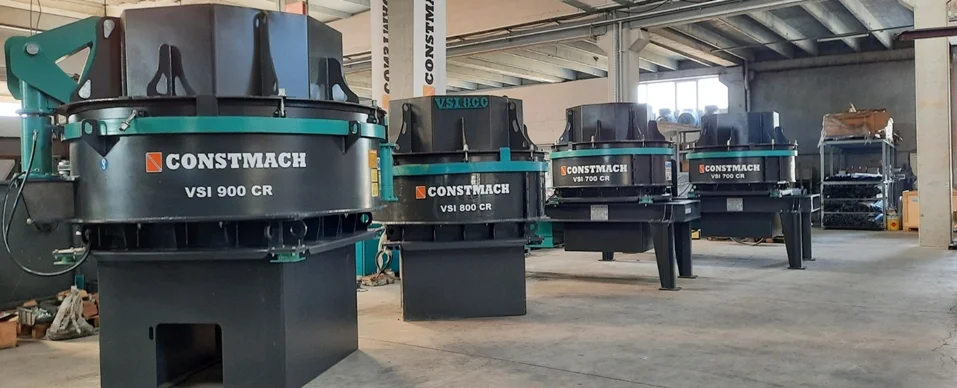

VSI-900-CR | Dik Milli Kırıcı

VSI-900-CR Dik Milli Kırıcı, CONSTMACH'ın VSI serisindeki yüksek kapasiteli, çift motorlu modeldir; kırma kum üretmek ve ikincil kırmadan gelen ince fraksiyonlara küpsel şekil vermek amacıyla son kademe konkasör olarak kullanılır. 900 mm rotoru iki adet 185 kW tahrik gücü ve 14.500 kg çalışma ağırlığıyla birleştirir; aynı kapalı rotor kırma prensibini korurken kompakt VSI-700-CR'ye göre önemli ölçüde daha yüksek debi sağlar.

Dik milli kırıcılar, bir kırma-eleme hattındaki rolleri ikincil kademenin ince ürününü şartnameye uygun kum ve iyi şekillendirilmiş ince agregaya dönüştürmek olduğu için yaygın biçimde kum yapma makinesi olarak bilinir. VSI-900-CR, bunu yüksek tonajda yapacak şekilde boyutlandırılmıştır; çift motorlu tahrik, ağır besleme hızı altında rotor hızını koruyacak gücü sağlar ve bu da onu kum devresinin yüksek kapasiteli bir kırma hattına ayak uydurması gereken büyük tesislere uygun hale getirir.

CR ibaresi, kapalı rotor, taş-örs konfigürasyonunu belirtir. Yüksek hızlı rotorun merkezine beslenen malzeme dışarı doğru hızlandırılır ve kırma odası etrafına yerleştirilmiş sabit örslere fırlatılır. Çelik örslere çarpma taşı kırar ve kenarlarını yuvarlatarak küpsel bir parçacık ve yüksek oranda ince malzeme üretir. Bu örs düzeni, taş-örs darbesinin otojen bir taş yatağına göre daha güçlü bir indirgeme ve daha tutarlı bir ürün sağladığı daha sert kayalar için tercih edilen seçimdir.

VSI-900-CR, ikincil konkasörün ürününü alarak en fazla 45 mm besleme boyutunu kabul eder; rotor, 50-60 m/s uç hızında çalışır. Çift motorlu tahrik, bu hızı yüksek tonajda sürdürmek için gereken gücü sağlar ve darbe hızı, makinenin ürettiği ince malzeme miktarı üzerindeki temel kontroldür. Bazalt ve granit gibi sert taşlar tipik besleme malzemesidir, çünkü kapalı rotor konfigürasyonu aşındırıcı, yüksek mukavemetli malzemeyle uyumludur.

Nominal kapasite, besleme gradasyonu, malzeme özellikleri ve rotor hızı tarafından belirlenerek saatte 200 ila 250 tondur. Değişken hızlı rotor, operatörün malzeme tipi ve ürün şartnamesindeki değişikliklere uyum sağlamasına imkan tanır; daha fazla ince malzeme için uç hızı artırılabilir veya şekli korumak ve aşınmayı azaltmak için düşürülebilir. Darbe yoluyla elde edilen yüksek indirgeme oranı, VSI-900-CR'nin iri ikincil ürünü tek geçişte yüksek hacimde şartnameye uygun kuma dönüştürmesini sağlar.

Makine, ağır hizmet tipi rulmanlar ve büyük simetrik besleme kutusu etrafında inşa edilmiştir; farklı besleme boyutları ve tonaj gereksinimlerine göre yapılandırılabilen dört değiştirilebilir kırma odasına sahiptir. Otomatik gresleme sistemi, sürekli çalışma sırasında yağlamayı korur; yüksek kapasiteli VSI kırmaya özgü yüksek hızlarda ve sürekli yüklerde güvenilir çalışmayı destekler ve manuel bakımı azaltır.

VSI-900-CR, kapalı kamyon dorseleri ve 40 ft üstü açık konteynerlere sığan modüler bir ünite olarak sevk edilir; bu sayede bu çıktı seviyesindeki bir makine için nakliye maliyeti kontrol altında tutulur. Komple bir CONSTMACH tesisinde kum devresinde ikincil konkasörün ardından yer alır; elekleri ve gerektiğinde kum yıkama ekipmanını besler. Daha küçük tesisleri olan işletmeler tek motorlu VSI-700-CR'yi tercih edebilirken, aşınma maliyetinin baskın olduğu en sert besleme malzemesini işleyen işletmeler taş-taş otojen kırma için açık rotorlu VSI-1000-OR'yi tercih edebilir.

VSI-900-CR Teknik Özellikler

Maksimum Besleme Boyutu (mm)45 mm
Ağırlık (kg)14.500 kg
Motor Gücü (kW)2 x 185 kW
Rotor Çapı (mm)Ø900 mm
Rotor Hızı (m/s)50-60 m/s
Üretim Kapasitesi (t/h)200 – 250 t/h

VSI-900-CRVideo

VSI-900-CR Genel Yerleşim

FAQ

The VSI-900-CR Vertical Shaft Impact Crusher, also known as a sand-making machine, is a high-capacity final-stage crusher for manufactured sand and fine cubical aggregate. The following covers feed materials, output products, applications, wear-part service, the rock-on-anvil principle and comparisons with alternatives.

What materials can the VSI-900-CR process?

The VSI-900-CR is built for the fine fractions from secondary crushers, including hard, abrasive stone, at volume. Typical feed includes:

  • Basalt, granite and other hard igneous rock
  • Hard limestone and gravel from secondary crushing
  • Material requiring conversion into manufactured sand

Maximum feed size is 45 mm. The closed-rotor, rock-on-anvil configuration is matched to harder rock, where impact against the anvils gives a stronger, more consistent reduction.

What products does it make?

The VSI-900-CR produces manufactured sand and cubical fine aggregate at high tonnage. Output serves as a sand substitute or supplement in concrete and asphalt and improves the shape of fine aggregate from upstream crushers. The high-velocity impact yields high fines content and a cubical grain shape that benefits the workability of bound mixes.

Which industries and applications use it?

  • High-volume manufactured (crushed) sand production
  • Fine aggregate shaping for asphalt and concrete
  • Large quarries and aggregate plants supplementing natural sand
  • Hard-rock processing where natural sand is scarce

What is the difference between rock-on-anvil (CR) and rock-on-rock (OR)?

In the rock-on-anvil (closed rotor, CR) configuration of the VSI-900-CR, material is thrown by the rotor against fixed steel anvils, giving a stronger reduction and a more consistent product, which is preferred for harder rock. In a rock-on-rock (open rotor, OR) configuration, material is thrown against a bed of the same stone, lowering wear-part consumption but generally yielding a different product mix; it is favoured for very abrasive feed where wear cost dominates.

How are wear parts replaced and how long do they last?

The main wear parts are the rotor wear tips, the anvils and the chamber liners. In the rock-on-anvil configuration the anvils take the direct impact and wear faster on abrasive feed, so they are interchangeable and replaced on a routine schedule. Service life depends on rock abrasiveness, rotor speed and tonnage, and at the VSI-900-CR's output should be tracked against volume. The four interchangeable chambers let the wear arrangement be matched to the duty.

How does a VSI compare with a tertiary impact crusher?

A tertiary impact crusher uses a horizontal rotor with blow bars and breaker plates, giving strong reduction with cubical shaping for non-abrasive stone. The VSI-900-CR accelerates material against anvils and is the better choice for manufactured sand from harder, abrasive rock at volume, with rotor speed giving precise control over fines. For abrasive feed and a sand product, the VSI is normally preferred, and the two types are often combined so a tertiary impactor shapes the coarse fractions while the VSI generates the sand.

How does the VSI-900-CR fit into a complete plant?

The VSI-900-CR is installed after the secondary crusher in the sand circuit, fed from a screen that delivers the correct size fraction, with its output screened again and, where a washed product is needed, passed to sand-washing equipment. The variable-speed rotor lets the operator match fines yield to demand, and the four interchangeable crushing chambers allow reconfiguration as feed or product targets change. It is supplied within complete CONSTMACH plants or as an addition to an existing high-capacity line, with wear parts available from the manufacturer.

Frequently Asked Questions

whatsapp gorsel 2024 01 10 saat 15 28 30 bf9fc1cb 9474
Hızlı İletişim

Talebinizi bırakın, uzman ekibimiz en kısa sürede size dönüş yapsın.

Beton santralleri, kırma-eleme tesisleri veya diğer ürünlerimiz hakkında detaylı bilgi için formu doldurun — ya da doğrudan bizimle iletişime geçin.

Talep bırakarak kişisel verilerinizin işlenmesine onay vermiş olursunuz.

ya da doğrudan

Constmach'ta Neler Yeni

Uzman ekibimiz, projenize özel bir çözüm sunmaya hazır. Sadece bir telefon kadar yakınız — hemen arayın.