







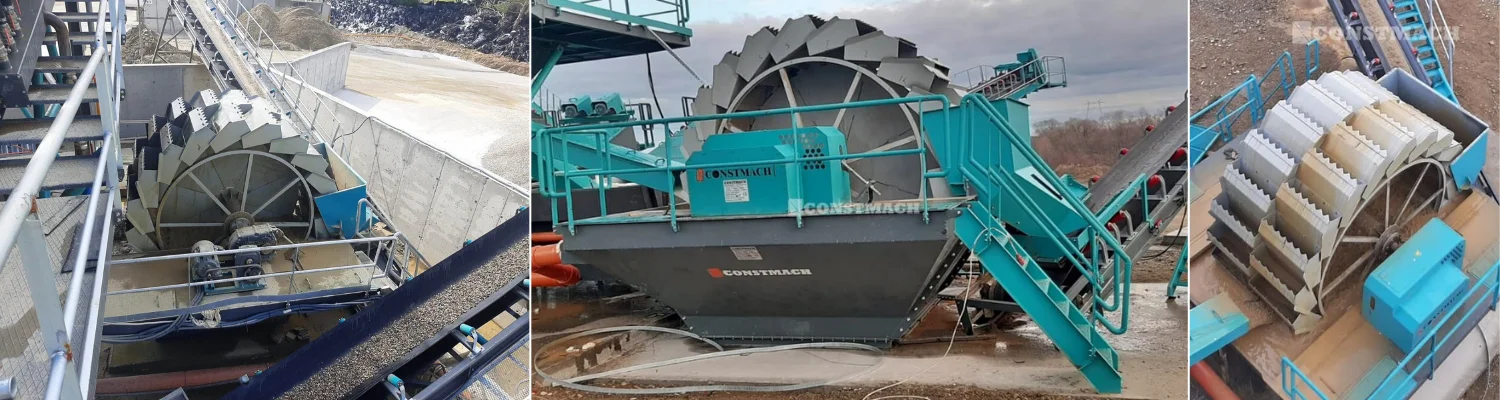

CBW - 800 | Lavasabbia a ruota

Il lavasabbia a ruota CBW-800 è un'unità di lavaggio rotativa costruita da CONSTMACH per rimuovere argilla e limo dalla sabbia e migliorarne così la qualità. È il lavasabbia preferito per alimentazioni ad alto contenuto di argilla: sabbia e acqua vengono agitate in una vasca, l'argilla disciolta e i fini leggeri tracimano come acqua sporca, mentre una ruota a rotazione lenta dotata di tazze forate raccoglie la sabbia pulita e più pesante dal fondo della vasca e la solleva fino allo scivolo di scarico. Il design semplice e robusto è ciò che rende il CBW-800 particolarmente adatto ad alimentazioni gravose e sporche.

Il CBW-800 utilizza una ruota da Ø3,000 mm che porta 40 tazze, ciascuna delle dimensioni di 800 x 550 mm. La ruota gira a soli 2.5 rpm, una velocità volutamente ridotta che dà alla sabbia il tempo di depositarsi e drenare in ogni tazza prima di essere rovesciata nello scivolo di scarico. Questa azione delicata e a bassa velocità è azionata da un motore da 5.5 kW, il principale motivo per cui la ruota a tazze consuma così poca energia per il lavoro che svolge.

Con una capacità di 80–90 m³/h, il CBW-800 è l'unità standard della gamma CBW di CONSTMACH. La capacità è determinata dalla dimensione delle tazze di 800 x 550 mm e dal numero di tazze sulla ruota: tazze più grandi trasportano più sabbia per giro, quindi alla stessa velocità della ruota di 2.5 rpm il CBW-800 fornisce la sua portata nominale. Poiché la ruota solleva e pre-drena la sabbia allo stesso tempo, le tazze sono forate per far defluire l'acqua nella vasca mentre risalgono.

Due caratteristiche definiscono il principio della ruota a tazze: consumo di acqua molto ridotto e consumo di energia molto ridotto. La sabbia viene lavata in una vasca a ricircolo anziché in un flusso a passaggio unico, quindi il reintegro di acqua fresca è minimo, e la lenta rotazione a 2.5 rpm fa sì che l'azionamento da 5.5 kW sia l'unico carico significativo. Per i produttori che lavorano giacimenti ad alto contenuto di argilla, questa combinazione rende il CBW-800 più economico da gestire rispetto ai metodi che dipendono da grandi volumi di acqua di lavaggio.

In un impianto tipico il CBW-800 gestisce il lavaggio primario della frazione sabbiosa, ricevendo spesso alimentazioni troppo sporche perché un lavasabbia a coclea le possa pulire efficacemente da solo. La sabbia che esce dalla ruota è lavata ma ancora bagnata, quindi viene comunemente inviata a un vaglio disidratatore per rimuovere l'acqua residua e recuperare i fini prima dello stoccaggio. Utilizzati in questo modo, la ruota a tazze e il vaglio disidratatore trasformano insieme la sabbia di cava fortemente contaminata in un prodotto pulito, asciutto e commercializzabile.

Il CBW-800 è progettato per una facile installazione e una struttura semplice con poche parti in movimento, che mantiene bassa la manutenzione ed elevata l'affidabilità. La sua costruzione modulare consente anche un trasporto economico, adattandosi a rimorchi chiusi per autocarri e container open-top da 40 ft. CONSTMACH fornisce il CBW-800 con supporto tecnico e ricambi per un funzionamento a lungo termine negli impianti di lavaggio sabbia.

CBW - 800 Specifiche tecniche

Potenza motore (kW)5.5 kW
Capacità (m³/h)80 – 90 m³/h
Dimensione tazza (mm)800 x 550 mm
Velocità di rotazione (rpm)2.5 rpm
Diametro ruota (mm)Ø 3,000 mm
Numero di tazze40

CBW - 800Video

CBW - 800 Layout generale

FAQ

The CBW-800 is used to wash clay and silt out of sand in order to raise its quality, and it is the best choice when the feed carries a high clay content. It is widely used on river-sand and alluvial deposits and on dirty pit-run sand where a screw washer alone would struggle. The wheel scoops settled clean sand from a tank while the clay floats off in the overflow water. Rated at 80–90 m³/h, it is the standard model in the CBW range.

What does it wash and produce?

The CBW-800 treats the sand fraction (broadly 0–5 mm) and produces washed sand suitable for concrete and plaster once it has been dewatered. The 40 perforated buckets of 800 x 550 mm lift the clean sand out of the agitated tank, draining some water as they rise, and tip it into the discharge chute. The clay, silt and organic fines leave with the overflow water for settling.

How much water and power does the CBW-800 use?

Low consumption of both is the hallmark of the bucket wheel. The CBW-800 is driven by just a 5.5 kW motor turning the wheel at 2.5 rpm, so power draw is modest. Water use is also low because washing happens in a recirculating tank rather than a once-through wash; with a settling pond the fresh-water make-up is small. This makes the CBW-800 the most economical washer to operate on heavily clay-bound feed.

How much clay can it handle, and how dry is the output?

The bucket wheel is specifically suited to high-clay feed — more than a screw washer can comfortably clean — because the long residence time in the tank lets stubborn clay disperse before the sand is lifted out. The trade-off is that sand leaving the wheel is fairly wet, generally in the 20–30% moisture range, since the buckets drain only briefly. A dewatering screen downstream is the usual way to bring the product down to a stackable 12–15%.

Bucket-wheel washer vs screw washer vs dewatering screen

  • Bucket-wheel washer (CBW-800) — best for high-clay feed; lowest water and power use; gentle 2.5 rpm action; output is wetter and loses some fines.

  • Screw washer — inclined spiral; good for light to moderate clay; gives a drier discharge and a longer scrubbing path, but is less able to cope with very high clay loads.

  • Dewatering screen — does not wash; a high-frequency screen and hydrocyclone that removes residual water and recovers 90-micron fines from already-washed sand, normally fitted after the wheel.

For a dirty, high-clay deposit the typical line is the CBW-800 for washing followed by a dewatering screen for drying and fines recovery.

What maintenance does the CBW-800 need?

The simple structure means few wear points. Routine attention covers the bucket liners and the wheel bearings, plus periodic checks of the drive and the tank for sand build-up. The slow 2.5 rpm rotation and low 5.5 kW load place little stress on the mechanism, so with basic upkeep the CBW-800 runs reliably at its 80–90 m³/h rating for long periods.
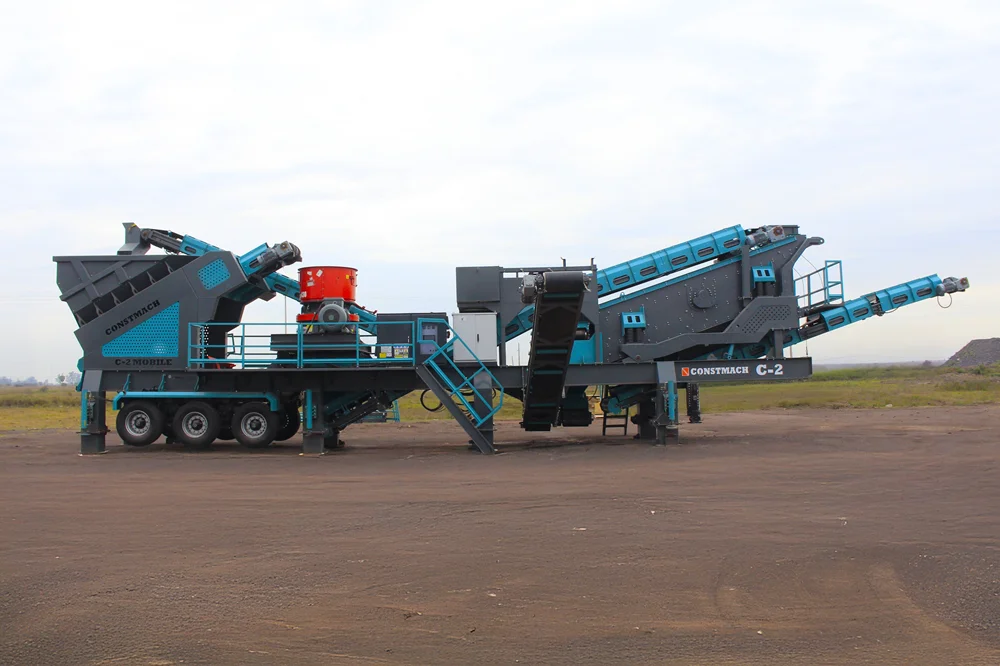

Frequently Asked Questions

whatsapp gorsel 2024 01 10 saat 15 28 30 bf9fc1cb 9474
Contatto rapido

Lascia una richiesta e il nostro team di esperti ti il prima possibile ricontatterà

Compila il modulo per informazioni dettagliate su impianti di betonaggio, impianti di frantumazione e vagliatura o altri nostri prodotti — oppure contattaci direttamente.

Inviando una richiesta, acconsenti al trattamento dei tuoi dati personali.

oppure direttamente

Novità su Constmach

Il nostro team di esperti è pronto a offrirti una soluzione su misura per il tuo progetto. Siamo a portata di telefono — chiamaci subito.