







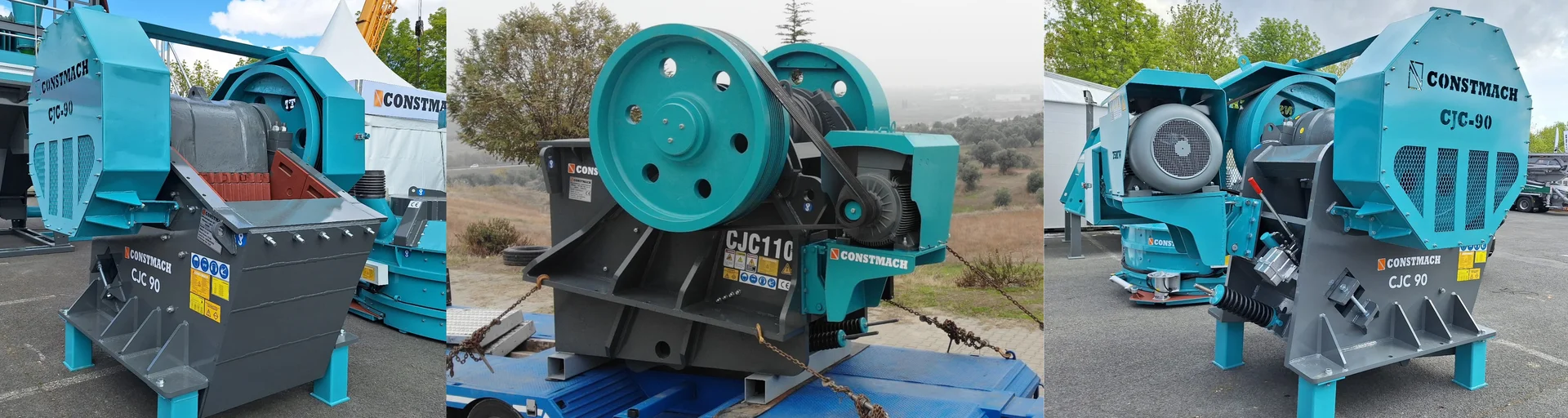

CJC-90 | Frantoio a Mascelle

Il CJC-90 è un modello di fascia media della serie di frantoi a mascelle CONSTMACH, posizionato per il servizio di frantumazione primaria in impianti fissi a media capacità. Con una bocca di carico di 900 x 650 mm, un motore da 75 kW e una portata da 90 a 270 t/h, si colloca un gradino netto sopra il modello di ingresso CJC-60 ed è dimensionato per cave consolidate e produttori di inerti che necessitano di una maggiore accettazione dell'alimentazione e di un tonnellaggio più elevato da un'unica macchina primaria.

Il frantoio opera secondo il principio di compressione a semplice ginocchiera (single-toggle). Il materiale in ingresso nella bocca da 900 x 650 mm viene serrato tra una mascella fissa e una mascella oscillante azionata dall'eccentrico, fratturato a ogni corsa e spinto verso il basso attraverso la camera finché non supera la fessura di scarico. Poiché la riduzione avviene per compressione anziché per urto, il CJC-90 gestisce materiali abrasivi e ad alta resistenza come granito, basalto e ghiaia di fiume che usurerebbero rapidamente un frantoio a percussione.

La regolazione della bocca di scarico del CJC-90 è regolabile da 50 a 150 mm, un intervallo più ampio e grossolano rispetto ai modelli più piccoli, in linea con la sua maggiore capacità. Un CSS più grande porta la portata verso il valore superiore di 270 t/h e produce un prodotto primario più grossolano; un CSS più stretto restringe la curva granulometrica per gli stadi a valle. Il meccanismo di regolazione idraulica consente di modificare questa fessura senza spessoramento manuale, così il frantoio può essere ritarato rapidamente quando cambiano i requisiti di alimentazione o di prodotto.

La macchina è costruita per il carico continuo. Il telaio di base è saldato ad arco e successivamente disteso termicamente, la biella (pitman) è in acciaio al cromo-nichel forgiato a stampo e l'albero eccentrico ruota su cuscinetti a rulli sferici orientabili sovradimensionati. Il volano gira a 277 rpm e accumula l'inerzia necessaria per portare a termine ogni corsa di compressione attraverso la roccia dura. È possibile installare un sistema di lubrificazione automatica per proteggere i cuscinetti in servizio continuo.

Con un peso operativo di circa 11.400 kg, il CJC-90 è ancora abbastanza leggero da consentire una progettazione semplice delle fondazioni e un trasporto modulare, ma al tempo stesso sufficientemente robusto da assorbire i carichi di una frantumazione primaria a tonnellaggio più elevato. Viene tipicamente abbinato a un alimentatore a griglia vibrante (grizzly) che separa i fini prima della camera, per poi alimentare un frantoio secondario e un gruppo di vagliatura a valle. La struttura modulare consente di spedire l'unità in rimorchi e container standard, contenendo i costi di trasporto e montaggio.

In esercizio, il CJC-90 riduce la roccia di cava (tout-venant) a una pezzatura intermedia trasportabile per la frantumazione secondaria, la vagliatura e lo stoccaggio nelle classi di inerti per calcestruzzo e asfalto. L'usura si concentra sulle piastre mascelle reversibili in acciaio al manganese, che si induriscono in esercizio e vengono sostituite secondo un programma pianificato. Il sistema di regolazione idraulica mantiene brevi questi interventi, e il robusto telaio saldato e la biella forgiata sono dimensionati per assorbire i carichi ciclici del servizio continuo a media capacità. Per i produttori che necessitano di una frantumazione primaria affidabile a media capacità senza passare a una pesante macchina della serie 100, il CJC-90 offre una combinazione equilibrata di pezzatura di alimentazione, portata e investimento.

CJC-90 Specifiche tecniche

Dimensioni bocca di carico (mm)900 x 650 mm
Potenza motore (kW)75 kW
Velocità del volano (rpm)277
Peso (kg)11.400 kg
Valore CSS min./max. (mm)50 - 150 mm
Capacità produttiva (t/h)90 - 270 t/h

CJC-90Video

FAQ

The CJC-90 jaw crusher is a primary crushing machine for medium-capacity plants. This section covers the materials it accepts, the products it generates, its typical industries and the operating factors that affect performance and maintenance.

What Materials Can the CJC-90 Process?

The CJC-90 is built for primary crushing of natural rock and recycled mineral feed, including:

  • Limestone and dolomite
  • Granite, basalt and other hard igneous rock
  • River gravel and quarried stone
  • Reinforced concrete and demolition material in recycling work

Feed must be sized to enter the 900 x 650 mm opening; oversized blocks should be reduced before charging. The compression crushing action lets the CJC-90 take on abrasive, high-strength rock that would wear an impact machine quickly.

What Products Does It Produce?

The CJC-90 delivers a coarse, unscreened primary product with a top size governed by the closed side setting (50-150 mm). This is an intermediate feed for secondary crushers and screens, which produce the finished concrete and asphalt aggregate fractions, base course and finer sizes. A tighter CSS narrows the primary gradation and eases the duty on the secondary stage; a wider CSS lifts throughput at a coarser top size.

Which Industries Use This Crusher?

  • Medium-capacity quarries and aggregate plants
  • Concrete and asphalt producers operating their own crushing line
  • Construction and demolition recycling
  • Mining and mineral processing operations

At roughly 11,400 kg with a 75 kW drive, it is a frequent primary choice for established producers stepping up from a small first-stage machine to higher, sustained tonnage.

How Are Wear Parts Managed?

The fixed and moving jaw plates are the main wear parts, made from manganese steel that hardens under load. Their life depends on feed abrasiveness and tonnage, and both are reversible to extend service before replacement. The cheek plates protecting the chamber side walls and the toggle plate are also serviceable items. The toggle plate doubles as a safety device, designed to break if uncrushable tramp metal enters the chamber and so protect the crusher body and drive. Stocking spare jaw plates shortens scheduled changeovers.

What Should Be Considered During Operation?

Choke feeding keeps the chamber full and produces uniform product with even jaw wear. After any plate change, the closed side setting should be verified with the hydraulic mechanism. Maintaining drive belt tension, flywheel balance and consistent lubrication keeps the machine running smoothly at its 277 rpm flywheel speed. A vibrating grizzly feeder ahead of the crusher scalps fines and regulates the feed rate, protecting the jaws and stabilising output.

Jaw Crusher Versus Impact Crusher

The CJC-90 reduces material by compression and is the preferred primary machine for hard, abrasive rock and reinforced concrete. A primary impact crusher reduces by impact and gives a cubical product with a higher reduction ratio, but is better matched to softer, less abrasive limestone. Where feed is hard granite or basalt, the jaw crusher offers lower wear cost and longer component life as the primary stage, because compression handles high-strength rock without the rapid blow-bar wear an impact crusher would suffer.

Frequently Asked Questions

whatsapp gorsel 2024 01 10 saat 15 28 30 bf9fc1cb 9474
Contatto rapido

Lascia una richiesta e il nostro team di esperti ti il prima possibile ricontatterà

Compila il modulo per informazioni dettagliate su impianti di betonaggio, impianti di frantumazione e vagliatura o altri nostri prodotti — oppure contattaci direttamente.

Inviando una richiesta, acconsenti al trattamento dei tuoi dati personali.

oppure direttamente

Novità su Constmach

Il nostro team di esperti è pronto a offrirti una soluzione su misura per il tuo progetto. Siamo a portata di telefono — chiamaci subito.