







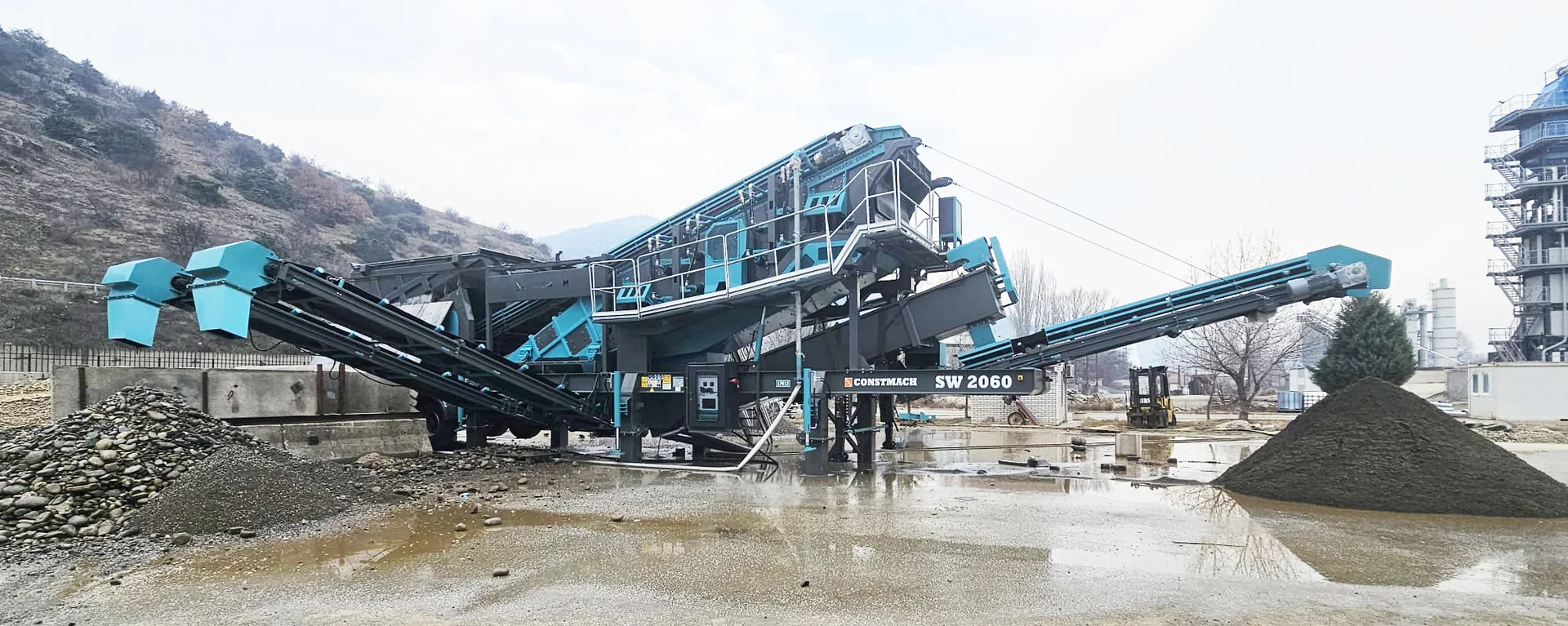

SW-1850 | Impianto mobile di vagliatura e lavaggio

L'impianto mobile di vagliatura e lavaggio SW-1850 è un'unità autonoma su ruote progettata da CONSTMACH per la vagliatura e il lavaggio naturale di sabbia e ghiaia direttamente in cava o sul greto del fiume. Ogni componente necessario al processo — tramoggia di alimentazione, nastro di alimentazione, vaglio vibrante con sistema di lavaggio a spruzzo integrato, nastri di stoccaggio ripiegabili e una lavasabbia a coclea — è montato su un unico telaio su ruote con gambe di supporto idrauliche, consentendo di spostare l'SW-1850 tra i cantieri e di metterlo in funzione in poche ore anziché in giorni.

L'SW-1850 ha una capacità produttiva di 150 t/h, che lo colloca nel segmento ad alta capacità della serie SW di CONSTMACH. Questa produzione è garantita da un vaglio vibrante di 1,800 x 5,000 mm che lavora in linea con una lavasabbia a coclea da 600 x 6,000 mm. Il vaglio separa il materiale in frazioni pulite e classificate, mentre le barre di spruzzo rimuovono limo e argilla aderenti; la lavasabbia a coclea lava quindi e disidrata la frazione di sabbia fine prima che venga scaricata al cumulo. Poiché le fasi di vagliatura e lavaggio sono combinate su un unico telaio, l'impianto fornisce inerti e sabbia lavati e pronti per il mercato in un solo passaggio.

L'alimentazione dell'SW-1850 proviene da una potenza totale installata di 50 kW. Dove non è disponibile la rete elettrica, il telaio può ospitare un gruppo elettrogeno diesel opzionale; si consiglia un'unità di circa 100 kVA per far funzionare l'impianto in modo autonomo. L'altezza di carico di 4,700 mm è adatta al caricamento con pale gommate o escavatori standard e la disposizione tiene l'operatore lontano dai nastri in movimento durante il caricamento.

L'automazione è gestita da un sistema di controllo basato su PLC costruito attorno a componenti Siemens e Schneider. L'SW-1850 è comandato da un unico controller tablet, così l'avvio, la sequenza e l'arresto dei nastri, del vaglio e della lavasabbia sono gestiti da remoto senza che l'operatore debba stare presso la macchina. Ciò riduce il fabbisogno di personale e protegge la trasmissione imponendo la corretta sequenza di avvio e arresto.

Per il trasporto, l'SW-1850 si ripiega in dimensioni conformi al codice della strada di 16 (L) x 3.65 (W) x 4.4 (H) m e pesa 32,000 kg. Questi valori sono definiti in base alle normative stradali internazionali, così l'impianto può essere trasportato su un normale rimorchio a pianale ribassato tra i siti senza permessi speciali nella maggior parte delle regioni. Le gambe idrauliche e i nastri ripiegabili fanno sì che non sia necessaria alcuna gru per posare l'impianto e riportarlo in produzione.

Una caratteristica pratica dell'SW-1850 è la sua flessibilità: se un progetto richiede solo la vagliatura, la lavasabbia a coclea può essere rimossa e l'impianto può funzionare come unità mobile di vagliatura. Unita all'ingombro ad alta produttività e a un fabbisogno di terreno relativamente ridotto, questa flessibilità rende l'SW-1850 una scelta versatile per le imprese che si spostano tra cave di sabbia, banchi di ghiaia e attività di produzione di pietrisco.

CONSTMACH fornisce l'SW-1850 con supporto completo alla messa in servizio, disponibilità di ricambi e documentazione tecnica, così gli operatori possono mantenere l'unità in produzione di sabbia lavata e inerti classificati con tempi di fermo minimi lungo una lunga vita utile.

SW-1850 Specifiche tecniche

Capacità produttiva150 t/h
Dimensioni del vaglio1.800 x 5.000 mm
Dimensioni della lavasabbia a coclea600 x 6.000 mm
Altezza di carico4.700 mm
Potenza totale installata50 kW
Potenza generatore richiesta100 kVA
Dimensioni di trasporto16 (L) x 3.65 (W) x 4.4 (H) metri
Peso32.000 kg

SW-1850Video

FAQ

The SW-1850 Mobile Screening & Washing Plant is used wherever sand and gravel must be both graded and cleaned on site: riverbed and alluvial sand deposits, gravel pits, and crushed-stone quarries producing washed 0–5 mm sand and graded aggregate fractions. Its mobile chassis suits contractors who work several deposits in a season and need to move the plant rather than build a fixed installation. The 150 t/h rated capacity defines the daily tonnage the unit can sustain.

What does the plant wash and produce?

Feed material — pit-run sand, gravel or crushed stone — is screened on the 1,800 x 5,000 mm deck into clean graded fractions, while spray water removes silt, dust and light clay. The 600 x 6,000 mm screw washer scrubs the fine sand fraction and lifts it clear of the wash water on its inclined flight, draining most of the water back into the tank. The output is washed concrete or plaster sand plus one or more clean gravel sizes, depending on how the screen decks are meshed.

How much water and power does it need?

The SW-1850 carries a total installed power of 50 kW, or about 100 kVA of generator capacity if run off-grid. Water consumption depends on feed cleanliness, but the screw washer is designed so that the bulk of the process water settles and recirculates rather than being lost. Pairing the plant with a settling pond or a thickener markedly cuts fresh-water make-up.

How does it handle clay, and how dry is the output?

The combination of spray-washed screening and a screw washer copes well with low to moderate clay contamination. For lightly to moderately dirty feed the SW-1850 produces clean sand directly. Where the feed carries heavy, sticky clay, a bucket-wheel washer or an attrition stage ahead of the plant is the better route. Sand leaving the screw washer is partially dewatered and typically holds residual moisture in the 15–25% range; a downstream dewatering screen can bring this down to a stackable 12–15%.

How does it compare with stand-alone washers?

  • Screw washer alone washes and dewaters fine sand but does not screen or grade — the SW-1850 integrates a screw washer with a vibrating screen on one mobile chassis.

  • Bucket-wheel washer handles higher clay content and uses less water, but again only treats the sand fraction; it is not a complete screening-plus-washing plant.

  • Dewatering screen removes residual water and recovers fines, and is best added downstream of the SW-1850 when very dry, low-loss sand is required.

In short, the SW-1850 is the all-in-one mobile solution; the other machines are specialised stages that can be added when feed conditions or product specifications demand them.

What feed size and site preparation does the SW-1850 need?

The SW-1850 is designed for sand and gravel feed; oversize rock should be removed or crushed upstream so that material reaching the 4,700 mm feeding height stays within the screen's capacity. Site preparation is minimal because the plant stands on its own hydraulic legs — a level, compacted pad and access for a loader and the water supply line are usually enough. A simple settling pond or clarifier downstream lets the wash water recirculate and keeps fresh-water demand low. With the fold-up conveyors deployed, the plant builds separate stockpiles for washed sand and each graded gravel size, ready for direct loading.

What maintenance does the SW-1850 require?

Routine maintenance focuses on the wear items common to washing plants: screen meshes, screw washer paddles and conveyor belts. The screw washer flights and rubber paddles are replaceable, and the gearbox is oil-lubricated for a long service interval. Because the SW-1850 concentrates all stages on one chassis, inspection and greasing points are grouped together, which shortens daily checks and keeps the 150 t/h output stable over time.

Frequently Asked Questions

whatsapp gorsel 2024 01 10 saat 15 28 30 bf9fc1cb 9474
Contatto rapido

Lascia una richiesta e il nostro team di esperti ti il prima possibile ricontatterà

Compila il modulo per informazioni dettagliate su impianti di betonaggio, impianti di frantumazione e vagliatura o altri nostri prodotti — oppure contattaci direttamente.

Inviando una richiesta, acconsenti al trattamento dei tuoi dati personali.

oppure direttamente

Novità su Constmach

Il nostro team di esperti è pronto a offrirti una soluzione su misura per il tuo progetto. Siamo a portata di telefono — chiamaci subito.