








CDS - 1225 | Vaglio disidratatore e idrociclone

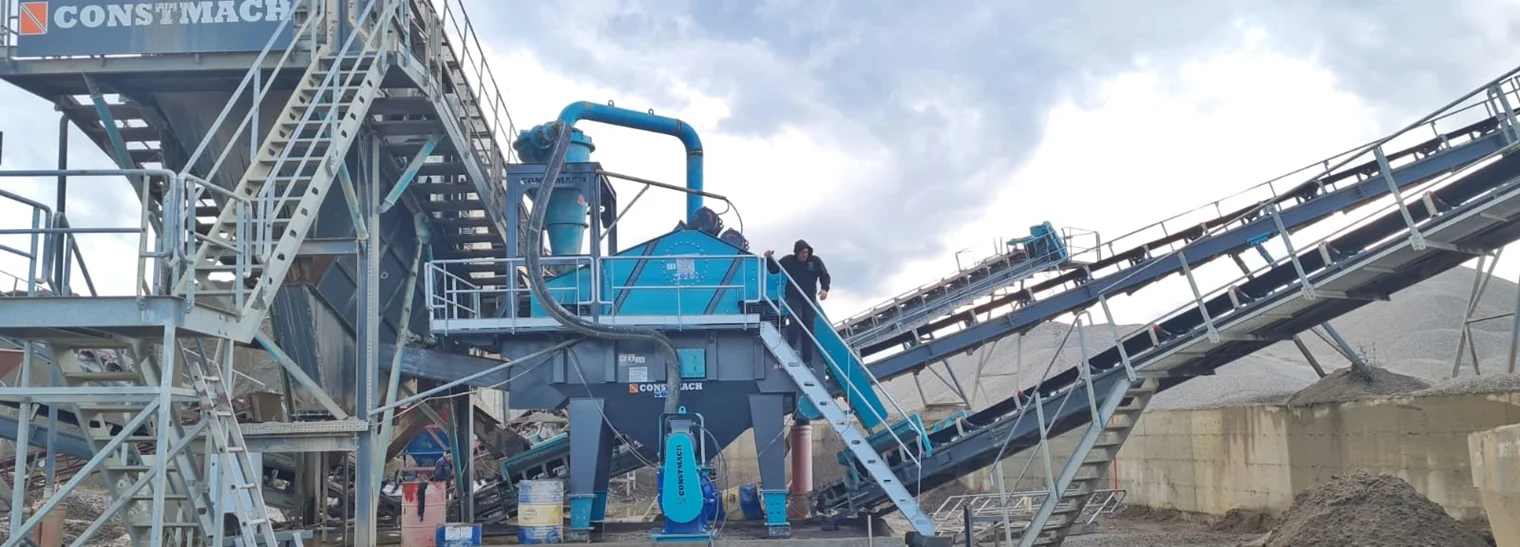
Il vaglio disidratatore CDS-1225 è un gruppo composto da vaglio vibrante ad alta frequenza e idrociclone, costruito da CONSTMACH per recuperare e disidratare la sabbia fine lavata. A differenza di una lavasabbia a coclea o a ruota, il CDS-1225 non rimuove l'argilla dai grani; il suo compito interviene dopo il lavaggio, quando elimina l'acqua residua dalla sabbia e recupera le particelle molto fini che altrimenti andrebbero perse nel troppopieno. Il risultato è un prodotto asciutto e stoccabile che può essere convogliato direttamente al cumulo di stoccaggio.

Il CDS-1225 abbina un piano vagliante disidratatore da 1,200 x 2,500 mm a un singolo idrociclone da 20 pollici. La torbida di sabbia viene pompata da una pompa per fanghi da 37 kW verso il ciclone, dove l'azione centrifuga ispessisce la torbida e la scarica sul vaglio. L'idrociclone è la chiave del recupero dei fini: cattura particelle fino a circa 90 micron che le classiche lavasabbia a coclea e a ruota tendono a espellere con l'acqua sporca, così la sabbia mantiene la frazione fine necessaria a rispettare molte curve granulometriche per calcestruzzo e intonaco.

Sul piano vagliante, due motovibratori da 2 x 4.5 kW generano il movimento lineare ad alta frequenza che spinge l'acqua attraverso la maglia in poliuretano mentre la sabbia forma un letto drenante e avanza verso la bocca di scarico. I pannelli vaglianti in poliuretano sono impiegati perché resistono all'abrasione della sabbia tagliente e garantiscono una lunga durata di servizio. L'alta frequenza è ciò che distingue un vaglio disidratatore da un comune vaglio classificatore: è calibrata per allontanare l'acqua anziché per separare le pezzature.

Il CDS-1225 è il modello base della gamma CONSTMACH CDS, con capacità di 60–80 t/h. Questa capacità è determinata dall'area del piano da 1,200 x 2,500 mm, dalla configurazione del ciclone da 20" e dalla pompa da 37 kW che lavorano insieme, per cui i tre elementi sono abbinati come un pacchetto anziché specificati singolarmente. Alimentare il vaglio alla sua portata di progetto mantiene il letto di sabbia alla profondità corretta per un drenaggio efficiente.

In un impianto di lavaggio sabbia il CDS-1225 viene installato a valle della fase di lavaggio — tipicamente una lavasabbia a coclea o a ruota — e viene alimentato con la torbida di sabbia lavata. Rimuovendo l'acqua residua riduce il contenuto di umidità del prodotto dai valori elevati che escono da un lavatore a un livello stoccabile, il che significa che la sabbia può essere venduta o utilizzata prima e drena meno nel cumulo. Il recupero contemporaneo dei fini a 90 micron migliora sia la resa sia la qualità del prodotto.

La manutenzione si concentra sui pannelli vaglianti in poliuretano e sui componenti soggetti a usura della pompa per fanghi, entrambi progettati per una sostituzione semplice. Con una manutenzione agevole, maglie in PU a lunga durata e un prodotto finale asciutto e facile da stoccare, il CDS-1225 è un modo pratico per elevare la qualità e la resa di una linea di lavaggio. CONSTMACH fornisce l'unità con supporto alla messa in servizio e disponibilità di ricambi per un funzionamento continuo.

CDS - 1225 Specifiche tecniche

Dimensioni del vaglio disidratatore1,200 x 2,500 mm
Diametro idrociclone20”
Potenza motore pompa per fanghi (kW)37 kW
Potenza motovibratore (kW)2 x 4.5 kW
Capacità produttiva (ton/ora)60 - 80 t/h

CDS - 1225Video

CDS - 1225 Layout generale

FAQ

The CDS-1225 is used at the end of a sand-washing line to dewater washed sand and to recover the ultra-fine particles that ordinary washers lose. It does not wash or remove clay itself — it takes already-washed sand slurry, drives the water out through a high-frequency polyurethane screen, and uses a single 20-inch hydrocyclone to capture fines down to about 90 microns. The output is a dry, stackable sand at a controlled gradation.

Where is it used and what does it produce?

It is used in concrete-sand, plaster-sand and manufactured-sand plants where both a dry product and a precise fine fraction matter. Because the CDS-1225 recovers 90-micron material that screw and wheel washers flush away, the producer can hold the fine end of the grading curve and tailor the sand to project specifications. Rated at 60–80 t/h, it is matched to the entry-level throughput band of the CDS range.

How much power and water does the CDS-1225 use?

The CDS-1225 is driven by a 37 kW slurry pump and two vibrator motors rated 2 x 4.5 kW. A dewatering stage is not a heavy water consumer in itself — its purpose is to take water out — but the water and fines it recovers in the cyclone underflow are returned to the sand rather than lost, and the overflow water can be sent to a settling pond for recirculation, which lowers the fresh-water demand of the whole plant.

How dry is the sand, and how does it handle clay?

The CDS-1225 is a dewatering device, not a clay scrubber. Any clay must already have been washed out upstream by a screw or bucket-wheel washer; the dewatering screen then takes the washed slurry and reduces its moisture to roughly 12–15%, low enough that the sand can be stockpiled and handled immediately. If the feed still contains clay, that clay will simply pass through with the sand, so correct upstream washing is essential.

Dewatering screen vs screw washer vs bucket-wheel washer

  • Dewatering screen (CDS-1225) — high-frequency screen plus hydrocyclone; removes residual water and recovers 90-micron fines from already-washed sand. Does not wash.

  • Screw washer — inclined spiral that washes and partially dewaters fine sand; good for light to moderate clay.

  • Bucket-wheel washer — washes high-clay feed with low water and power use, but leaves the sand wetter and loses more fines.

The three are complementary: a washer (screw or wheel) cleans the sand, and the CDS-1225 finishes the job by drying it and saving the fines.

What maintenance does the CDS-1225 need?

The main wear items are the polyurethane screen panels, which resist abrasion and are designed for easy replacement, and the slurry-pump impeller and liners. Routine checks cover the vibrator-motor mounts and the cyclone apex for wear. Keeping the screen fed at the 60–80 t/h design rate and the PU panels in good condition maintains efficient drainage and consistent fines recovery.

Why add a dewatering screen to an existing washing line?

Two reasons. First, product quality: a screw or wheel washer flushes the finest particles away with the dirty water, which can leave the sand short of fines and outside the target grading curve. The hydrocyclone on the CDS-1225 captures that 90-micron material and returns it to the sand. Second, handling and yield: wet sand from a washer drains in the stockpile, ties up storage and loses saleable tonnage. By cutting moisture to roughly 12–15%, the CDS-1225 gives a sand that can be stocked, loaded and sold immediately, which is why a dewatering screen is a common final stage in entry-level and larger washing plants.

Frequently Asked Questions

whatsapp gorsel 2024 01 10 saat 15 28 30 bf9fc1cb 9474
Contatto rapido

Lascia una richiesta e il nostro team di esperti ti il prima possibile ricontatterà

Compila il modulo per informazioni dettagliate su impianti di betonaggio, impianti di frantumazione e vagliatura o altri nostri prodotti — oppure contattaci direttamente.

Inviando una richiesta, acconsenti al trattamento dei tuoi dati personali.

oppure direttamente

Novità su Constmach

Il nostro team di esperti è pronto a offrirti una soluzione su misura per il tuo progetto. Siamo a portata di telefono — chiamaci subito.