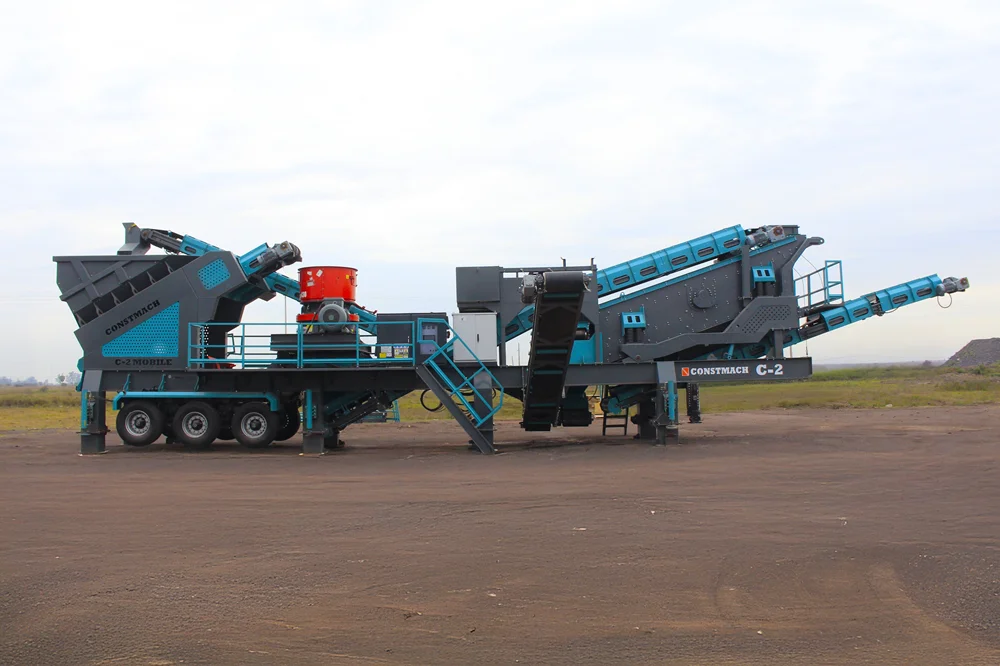






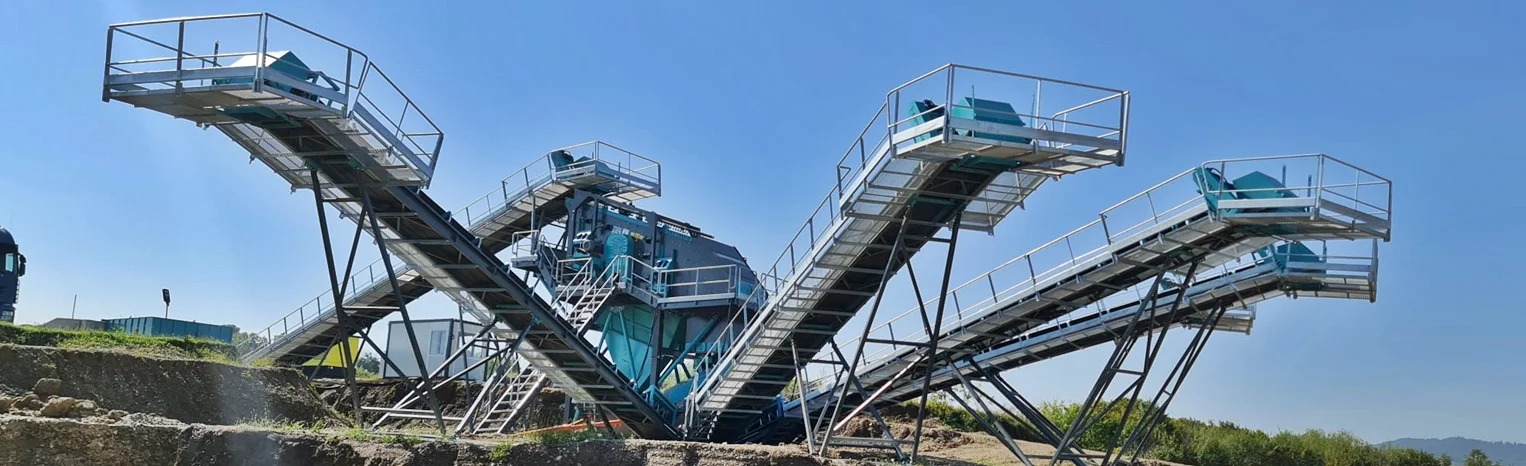

The CONSTMACH CBC-1.000 belt conveyor is a high-capacity material-transport machine within a crushing and screening or concrete batching plant. Rather than processing material, it moves large volumes continuously between machines and out to stockpile. Understanding where it fits in the flowsheet, the belt and component choices, the incline it can handle, and its maintenance helps operators keep high tonnages moving without spillage or downtime.
Where the CBC-1.000 Sits in the Plant
Conveyors link every stage of the plant. The CBC-1.000 is suited to high-tonnage main transfer lines, primary discharge conveyors and long stockpiling conveyors. With its metre-wide belt it carries far more than the CBC-800 and narrower models.
What It Handles and Belt Types
- The 1.000 mm belt suits high flows of crushed stone, gravel, sand and primary-crushed rock.
- A smooth rubber belt is used on horizontal and gently inclined runs; a ribbed belt is used on steeper inclines to prevent roll-back.
- A 4-ply (4 tarpaulin) belt is fitted as standard, with the grade selected for the material and conditions.
Incline Limits
- With a smooth belt, conveyors are generally kept within roughly 18-20 degrees before material begins to slip back.
- A ribbed or chevron belt extends the workable incline beyond that of a smooth belt.
- The exact limit depends on material type, particle size and moisture; steeper lifts require belt and drum selection accordingly.
Maintenance
- Keep the belt tracked and correctly tensioned using the drum tightening rings, which is essential at this width and tonnage.
- Inspect the RV-shaped rubber scraper and replace it when worn to control carry-back and spillage.
- Lubricate the SN-housed spherical roller bearings and check the support rollers for free rotation.
- Inspect drum lagging, the larger drive package, and ensure walking platforms and emergency stops are functional along the length.
Comparison With Alternatives
Against screw or chain conveyors, a belt conveyor moves abrasive aggregate over longer distances with lower wear and energy use, though it is less suited to steep vertical lifts. Within the CONSTMACH range the CBC-1.000 is a high-capacity unit, wider than the CBC-800, CBC-650 and CBC-500; only the CBC-1.200 offers a wider belt for the heaviest transfer duties.
Components and Construction
The CBC-1.000 is built on a durable, heavy steel chassis with troughing idler sets that form the metre-wide belt into a deep, high-capacity channel, and flat return idlers beneath. The driving and transfer drums are rubberized and vulcanized with diamond grooves to maximise grip on the wide belt and carry tightening rings on the axis to hold tracking and tension under the substantial belt loads. Bearings are double-row spherical roller bearings in SN-type split housings, replaceable without dismantling the shaft and able to absorb the misalignment and shock of heavy aggregate handling. The drive is a correspondingly larger reducer motor, or a motor and reducer with V-belt transmission, sized to the length, lift and high tonnage of the run.
Safety and Optional Features
- Walking platforms run the length of the conveyor for safe inspection and maintenance access.
- Emergency stop buttons allow the belt to be halted instantly from any point along its length.
- An optional cover reduces dust emission when handling dry material at high volume.
- The RV-shaped rubber scraper controls carry-back, which accumulates quickly on a high-tonnage belt and must be managed to limit spillage.
Selection Guidance
Choose the CBC-1.000 for high-tonnage main transfer lines, primary discharge conveyors and long stockpiling conveyors in large plants. For lighter duties the CBC-800 and narrower models are more economical, while only the CBC-1.200 exceeds it in capacity for the heaviest coarse-rock duties. Confirm belt length, lift and material bulk density when specifying the larger drive and belt grade.