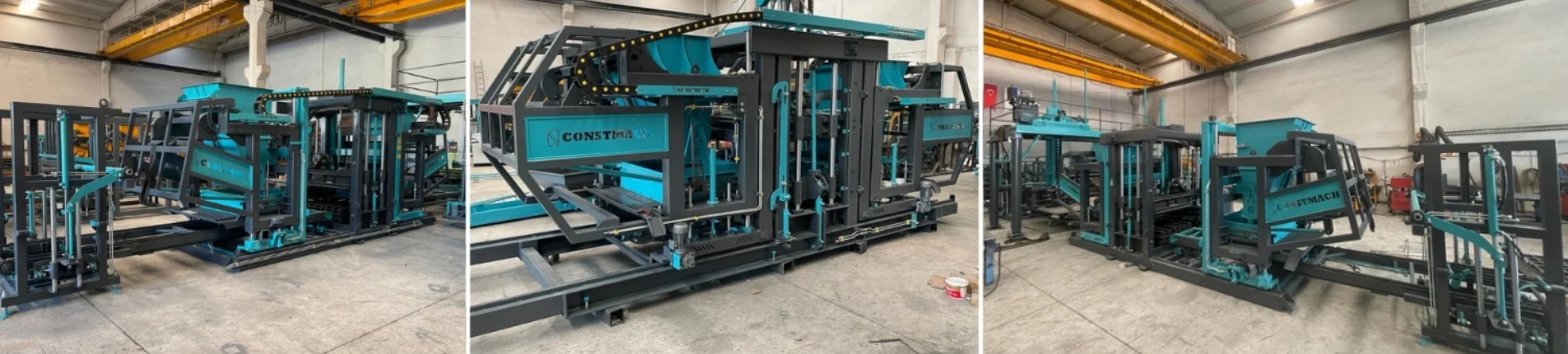
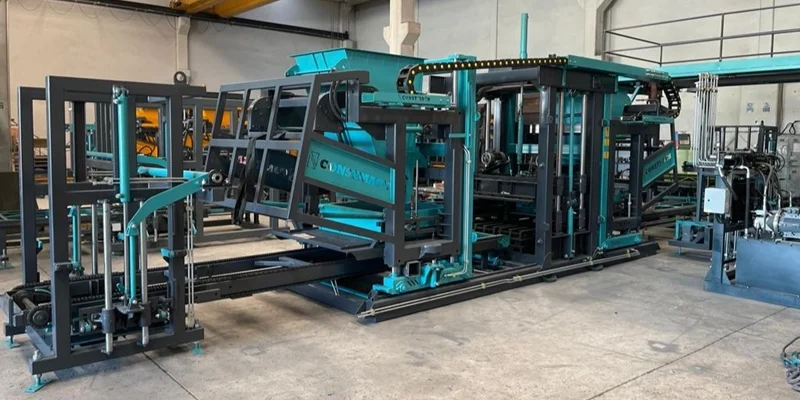
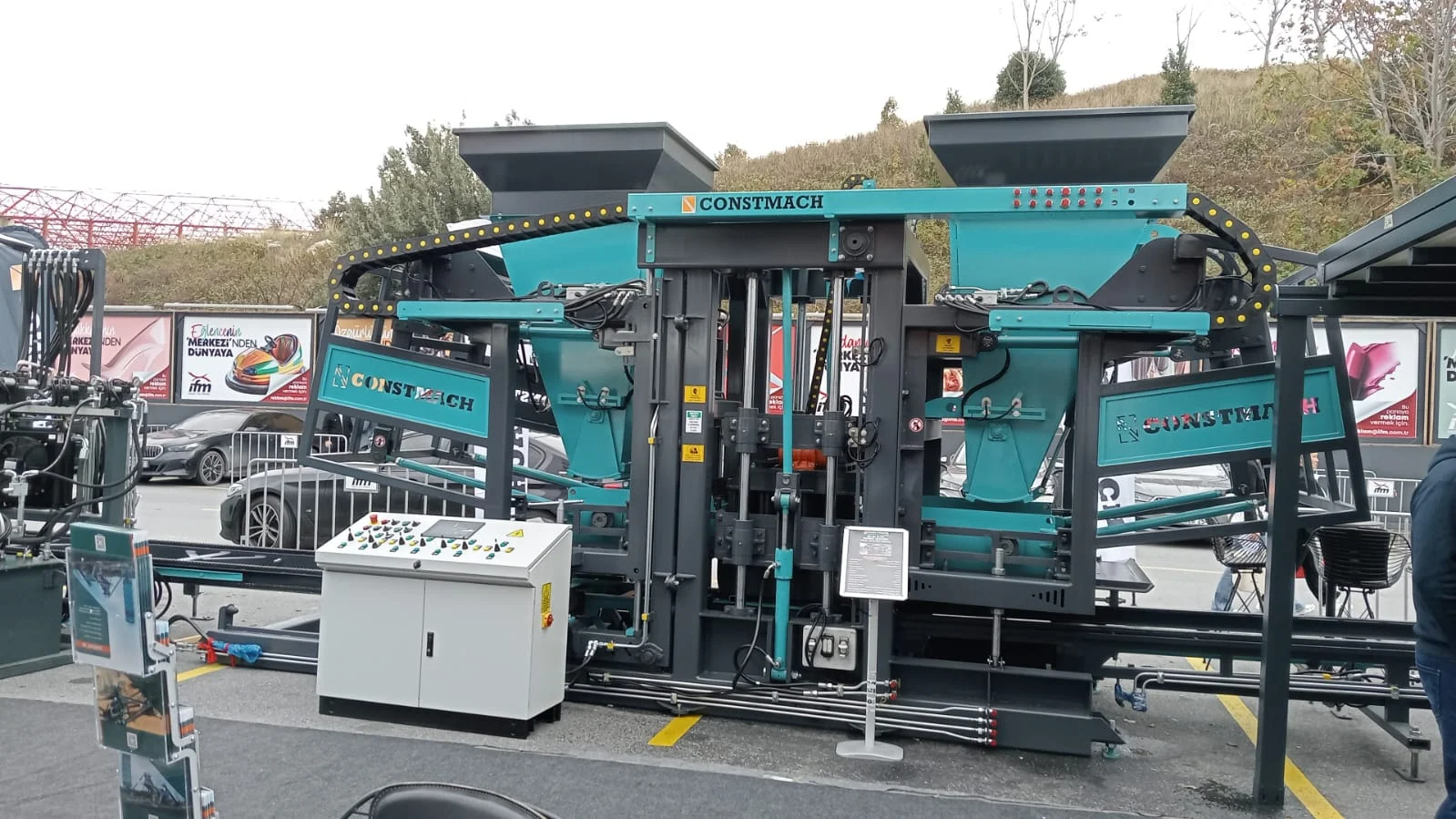
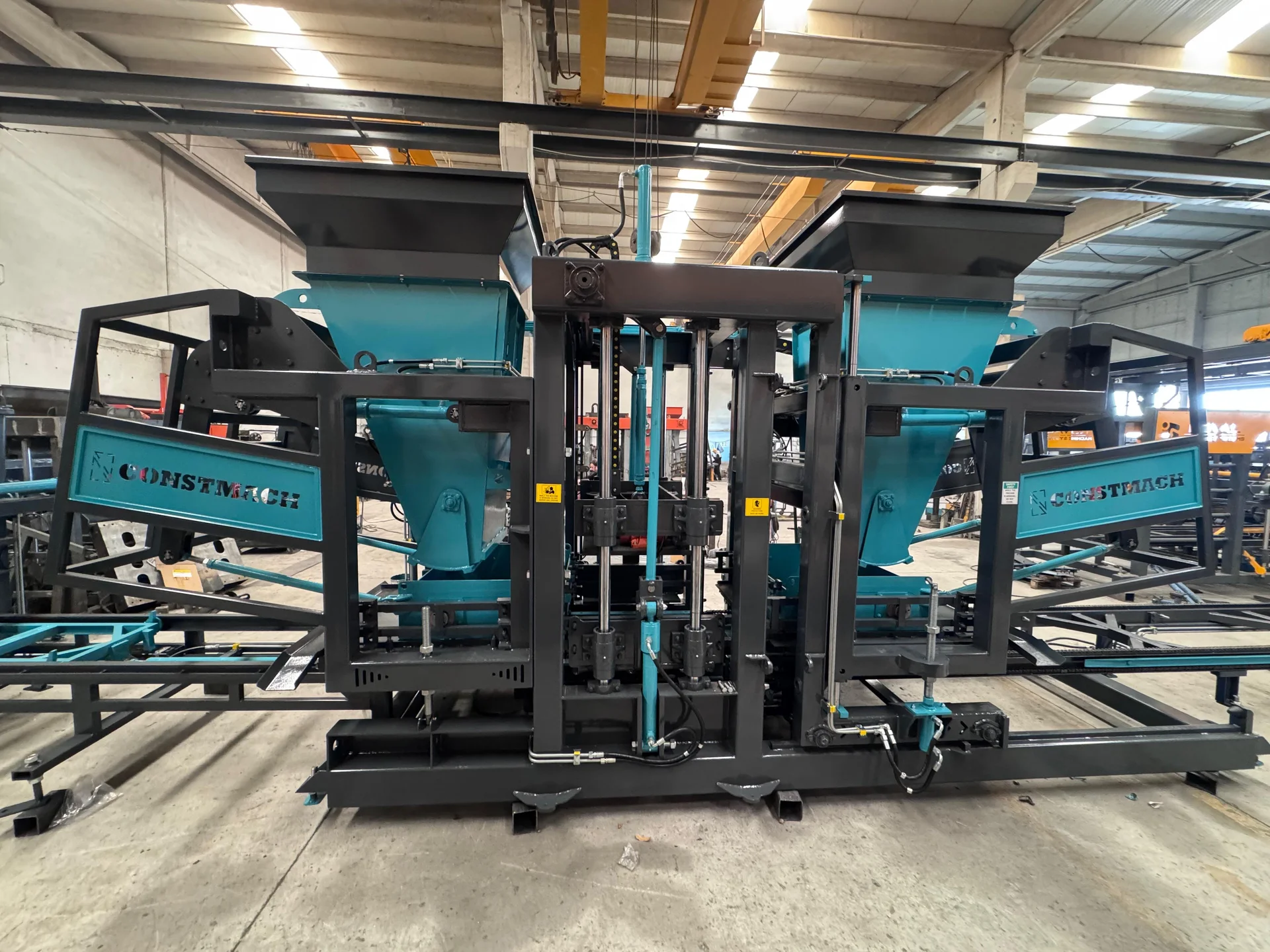
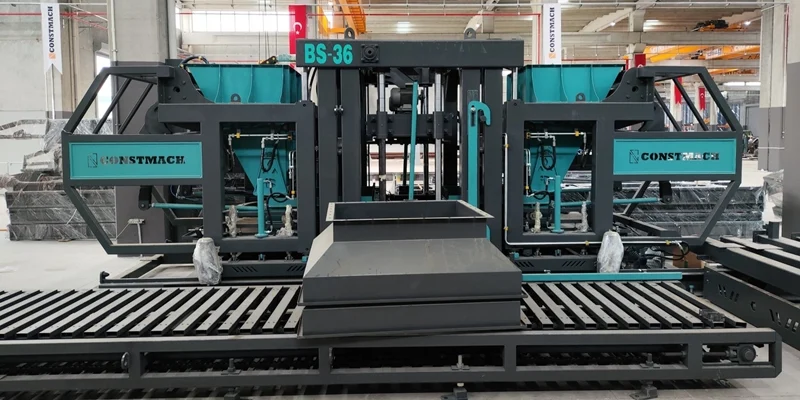
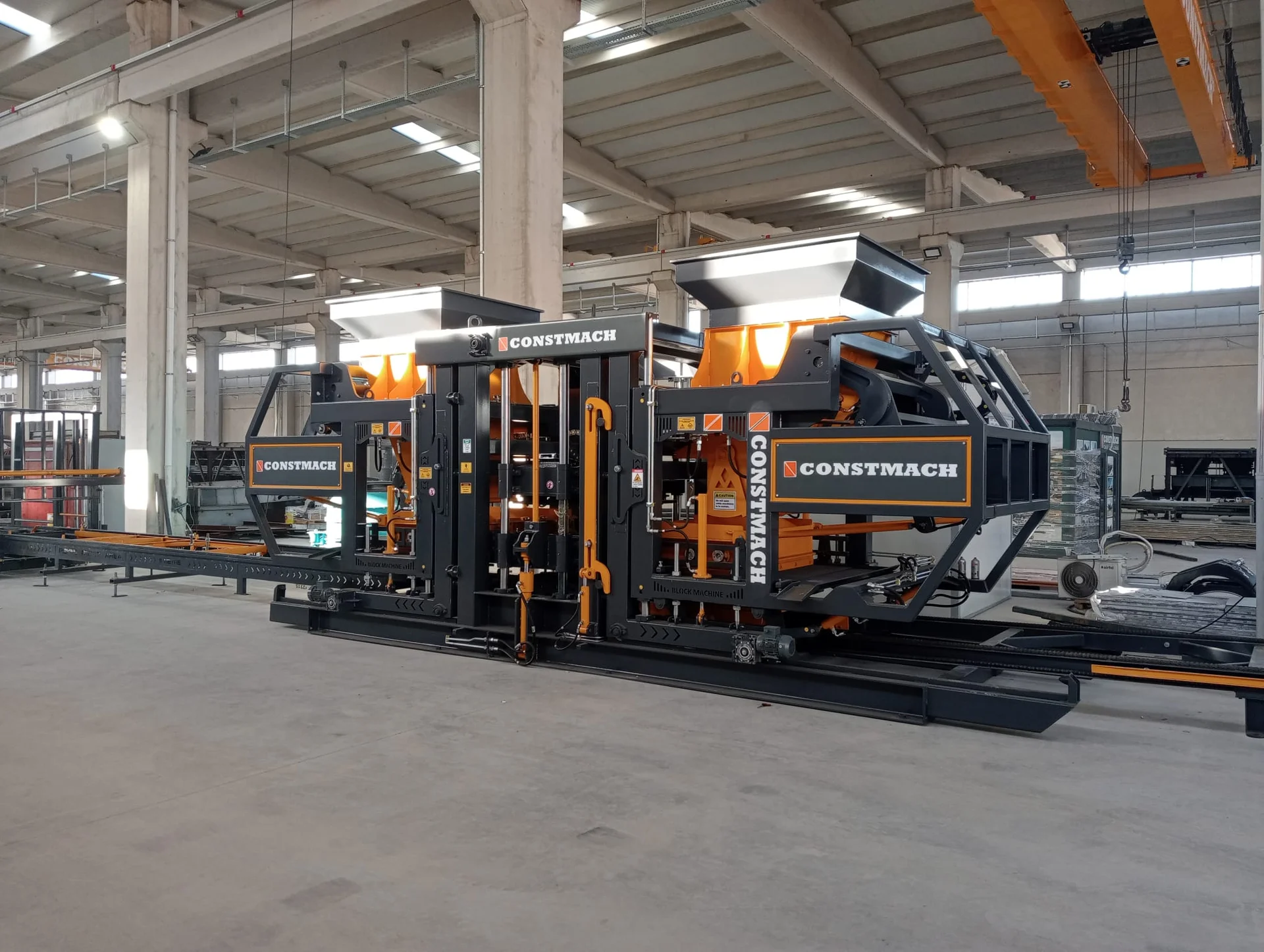
A concrete block making machine produces concrete blocks, paving stones and similar precast units by pressing and vibrating a stiff concrete mix in steel moulds on a pallet. Constmach builds hydraulic, automatic block making machines in the BS range, from the BS-20 up to the PLC-controlled BS-42 with robotic product picking. The mix comes from a dedicated batching plant, and changing the mould lets one machine make different products, so a single line can turn out hollow blocks one day and interlocking pavers the next.
What Is a Concrete Block Making Machine?
A concrete block making machine forms precast concrete products by compacting a low-slump concrete mix under combined vibration and hydraulic pressure. The mix is fed into a mould, the machine vibrates and presses it to drive out air and compact the concrete hard, and the finished products are demoulded straight onto a pallet that carries them away to cure. Because the concrete is stiff and heavily compacted rather than poured, the blocks hold their shape immediately and reach good strength.
The product depends entirely on the mould. The same Constmach machine makes hollow and solid blocks, paving stones, kerbstones and other units simply by fitting the right mould. That flexibility is a large part of the appeal: one investment can serve several markets, from building blocks to landscaping pavers, by changing tooling rather than machines.
What These Machines Produce
A block making machine is really a precast platform. With the right moulds, a Constmach BS machine produces:
- Hollow and solid concrete blocks for walls, in standard sizes such as 20×40×20 cm
- Paving stones, including interlocking pavers for roads, yards and pedestrian areas
- Kerbstones and edging units for roads and landscaping
- Other precast units the moulds are made for
Each cycle presses a full mould of products at once. A BS-20, for example, produces 8 blocks of 20×40×20 cm and 20 paving stones in a single pressing, while a larger BS-30 presses 12 blocks and 30 paving stones per cycle. Output rises with the model.
The Constmach BS Range
The BS range runs from a compact entry machine to a fully automated line, so the machine matches the production you need.
| Model | Output per cycle (example mould) | Notes |
|---|
| BS-20 | 8 blocks + 20 paving stones | Hydraulic press, 100–120 bar, forklift option |
| BS-25 | Higher than BS-20 | Hydraulic, automatic |
| BS-30 | 12 blocks + 30 paving stones | Hydraulic press, 120–130 bar |
| BS-36 | Higher capacity | Hydraulic, higher automation |
| BS-42 | Largest in the range | PLC-controlled, 100–160 bar, robotic product picking |
Output per cycle depends on the mould as well as the machine, since a mould for small pavers fits more pieces than one for large blocks. The progression up the range brings larger pressing area, higher automation and, on the BS-42, a product-picking robot that moves cured products without manual handling.
How Does a Concrete Block Making Machine Work?
The cycle repeats the same steps to turn fresh concrete into finished products:
- Batching. A dedicated batching plant mixes a stiff, low-slump concrete and feeds it to the machine's hopper.
- Filling. The mix is fed into the mould sitting on a pallet, and a shuttle spreads it evenly into every cavity.
- Vibration and pressing. The machine vibrates the mould while a hydraulic head presses down, compacting the concrete hard and driving out air.
- Demoulding. The mould lifts to leave the finished products standing on the pallet, holding their shape because the mix is stiff and well compacted.
- Curing. The pallet of products is moved away, by forklift or by an automatic system, and left to cure before the products are stacked.
The machine then repeats with the next empty pallet. The whole sequence is controlled automatically, so once a recipe and mould are set, the line turns out consistent products cycle after cycle.
Vibration and Hydraulic Pressing: Where Block Strength Comes From
The strength and finish of a concrete block depend on how well the mix is compacted, and that is the job of combined vibration and pressure. Vibration settles the stiff mix into every corner of the mould and removes trapped air, while the hydraulic head presses the concrete to a high density. The result is a dense, accurately shaped product with sharp edges and reliable strength. Constmach machines work at hydraulic pressures in the region of 100 to 160 bar depending on the model, and matching the vibration and pressure to the product is what gives clean blocks and pavers rather than weak or crumbling ones. This is why a purpose-built block making machine produces far better units than hand-casting ever could.
Moulds: One Machine, Many Products
The mould is the heart of what a block making machine makes. Each mould is a steel tool that forms one pallet-load of a particular product, and changing it switches the machine from blocks to pavers to kerbstones. Good moulds are made to hold their shape under repeated high-pressure pressing, because mould wear shows up directly in the products. Investing in the moulds you need, and looking after them, lets a single Constmach machine serve several product lines, which spreads the cost of the machine across more of your market.
Automation and Control
Constmach block making machines are automatic and, in the larger models, PLC-controlled, with the BS-42 running both the machine and its batching plant under PLC. A control panel developed by Constmach engineers uses sensors to manage the cycle, and the operator selects a program for the product being made, which sets the timing for that block or paver. The system offers automatic and manual modes, and it can stop, wait and then resume production from the point where it paused, so an interruption does not waste a part-finished batch. The panel also keeps a record of daily production. On the BS-42, a product-picking robot handles the cured products, reducing manual work on the highest-output line.
The Batching Plant Behind the Machine
A block making machine is only as good as the concrete it presses, so it is paired with a batching plant that mixes a consistent, stiff mortar. The plant weighs aggregate, cement and water to a set recipe and delivers the mix to the machine. The same plant arrangement that supplies dry, low-slump mortar for blocks can also be set up to produce wet concrete where that is needed. Getting the mix right, low water content, well graded aggregate and accurate cement dosing, is essential, because the machine cannot compensate for a poor mix. Constmach supplies the machine and its batching plant together so the two are matched.
Pallets and Product Handling
Each cycle of products is formed on a pallet, usually wooden, which carries the fresh units away to cure without disturbing their shape. The number of pallets you need depends on how long the products take to cure and how fast the machine runs, because pallets stay in the curing area until the products are firm enough to destack. On the larger machines, products can be moved by forklift or by an automatic carrying system, and the BS-42 uses a robot to pick products, which keeps the highest-output line moving with less manual handling. Planning enough pallets and the right product handling for your output is part of setting up a block plant that runs smoothly.
Capacity and Daily Output
The output of a block making machine comes from two things: how many products each cycle presses and how many cycles the line completes in a shift. A larger machine presses more pieces per cycle, and higher automation keeps the cycles coming steadily. Real daily output also depends on the curing time, the pallet supply and how product handling is organised, so a machine and its supporting equipment should be sized together. Choose a model whose cycle output and automation match your target daily production, with the batching plant, pallets and handling sized to keep up.
Build Quality and Standards
Constmach block making machines are built to recognised standards and for efficient running. They use EFF3-class and energy-saving electric motors, carry a CE declaration for European standards, and are made with materials compliant with DIN and TSEK standards. The control system complies with low-voltage directives, and Constmach backs the machines with trained-personnel support. These are the kinds of details that matter on a machine expected to press tens of thousands of cycles, where build quality and electrical standards translate directly into reliability.
Where Concrete Block Making Machines Are Used
Block making machines serve construction and landscaping wherever precast concrete units are needed. Building contractors and block producers make hollow and solid blocks for walls. Municipalities and landscapers use the same machines for interlocking paving stones and kerbstones for roads, squares, pavements and yards. Precast businesses run them to supply a region with a steady stream of standard units. Because one machine makes many products through mould changes, a single line can serve several of these markets at once.
Colour and Surface Finish
Paving stones and blocks are not only structural; for many jobs their appearance matters. Colour comes from pigments added to the concrete mix, so a Constmach machine can make pavers and blocks in a range of shades by dosing pigment at the batching stage. The heavy compaction the machine applies also gives the products a dense, even surface with sharp, accurate edges, which is what makes pressed pavers look crisp and lock together well on the ground. Consistent colour depends on consistent batching, since pigment, cement and water have to be dosed the same way every cycle, another reason the matched batching plant is part of the line. If colour and finish are important for your market, plan the pigment dosing and mix when the line is specified.
Energy Efficiency and Running Costs
Running cost matters on a machine that works long shifts, and Constmach builds its block making machines with efficiency in mind. They use EFF3-class and A-plus energy-saving electric motors, which cut the power drawn over thousands of cycles compared with older, less efficient motors. Lower energy use feeds straight into the cost per block, and on a high-output line that runs every day it makes a real difference to the bottom line over a year. Efficient motors also tend to run cooler and harder for longer, which supports reliability as well as cost.
Common Mistakes to Avoid When Choosing a Block Making Machine
The first mistake is getting the mix wrong, usually too much water, which gives weak, slumping products no machine can rescue; the mix has to be stiff and well graded. The second is sizing the machine without sizing the rest of the line, so a fast machine is starved by a small batching plant, too few pallets or slow product handling. The third is overlooking curing space, since fresh products need somewhere to sit and firm up, and a cramped site bottlenecks the whole operation. The fourth is treating moulds as an afterthought; worn or poorly made moulds show up directly in the products, so good tooling and care of it are part of making quality blocks. Planning the mix, the supporting equipment, the curing area and the moulds together is what turns a good machine into a productive line.
How to Choose the Right Block Making Machine
A few questions usually settle the choice:
- What daily output do you need? Match the model's cycle output and automation to your target. BS-20 suits smaller production; BS-36 and BS-42 are built for high, automated output.
- What products will you make? Blocks, pavers, kerbstones or a mix, which decides the moulds you need alongside the machine.
- How much automation do you want? Higher models add PLC control and robotic product picking, which cut manual handling on busy lines.
- What supporting equipment is needed? Size the batching plant, pallets and product handling to the machine so the line is not held back by its weakest link.
Answering these before the order gives you a block making line matched to your production rather than a machine on its own. Constmach manufactures the machines and their batching plants in-house, supplies the moulds, and backs the line with free spare parts, a warranty, operator training and online remote troubleshooting.