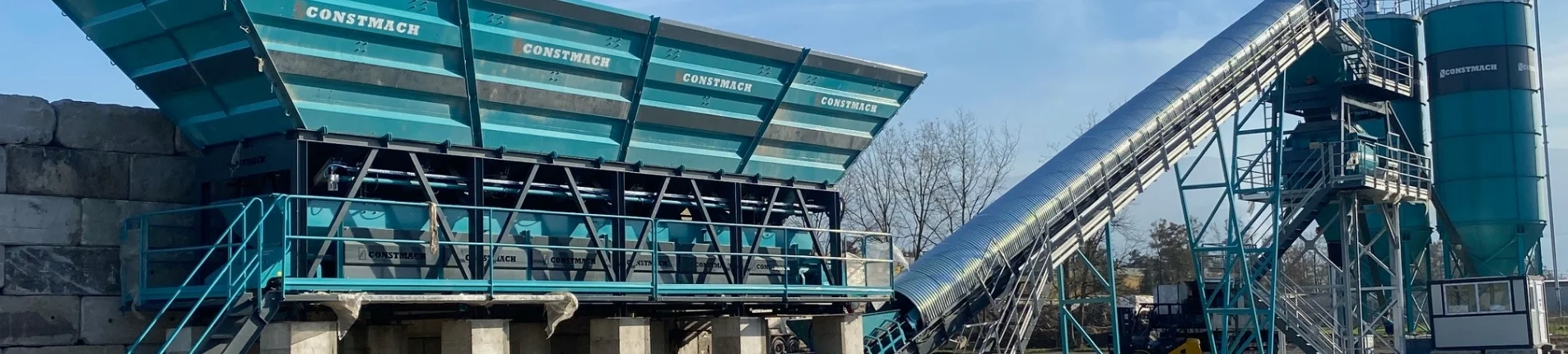
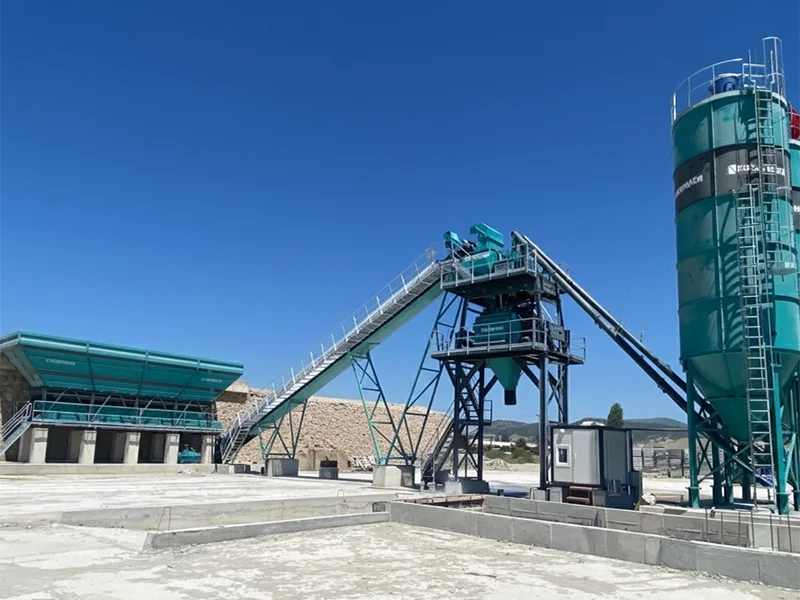
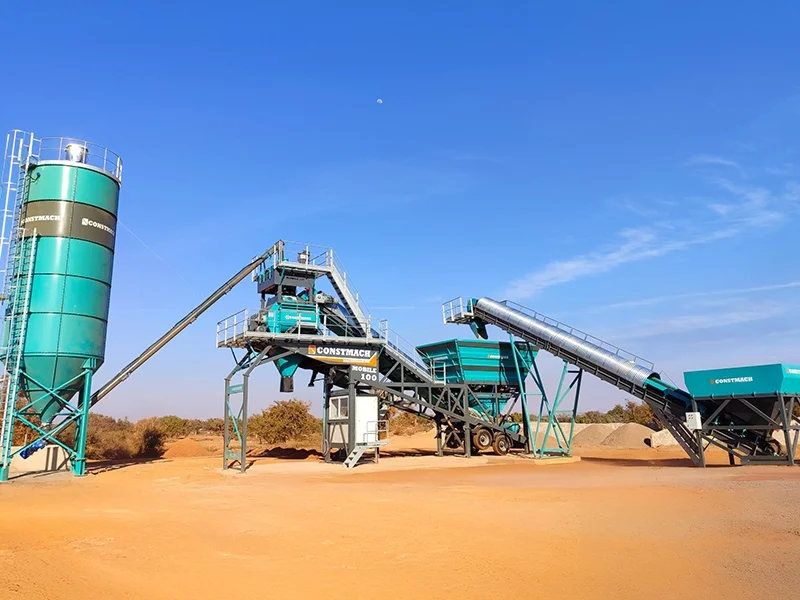
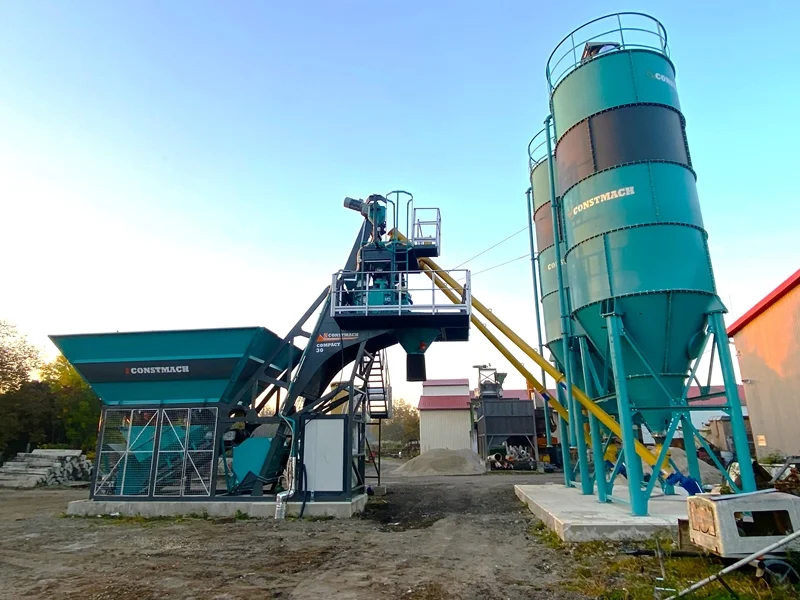
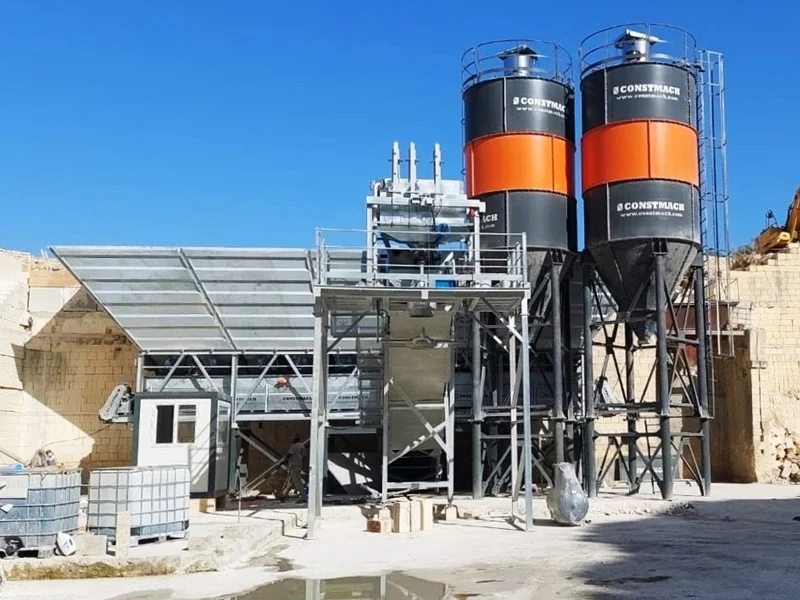
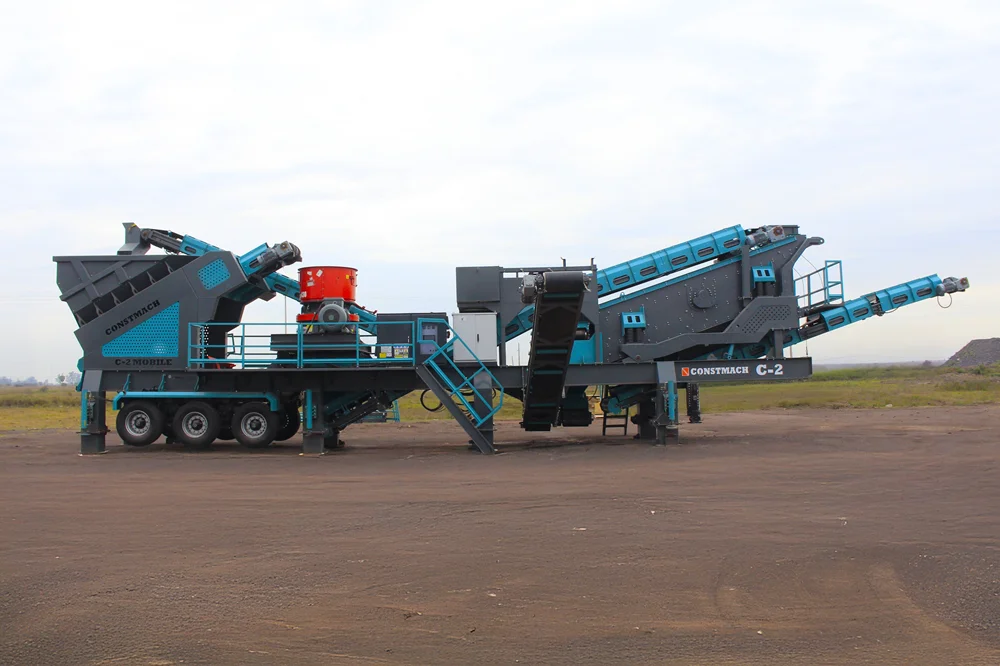
A concrete batching plant combines aggregates, cement, water and chemical admixtures in precise, weighed proportions to produce fresh concrete at a controlled and repeatable quality. Constmach manufactures these plants in stationary, mobile, compact and dry-type designs, with outputs from 15 to 300 m³/h, so a single contractor or a permanent ready-mix supplier can find a plant matched to the work.
What Is a Concrete Batching Plant?
A concrete batching plant, also called a concrete mixing plant or simply a concrete plant, is the industrial system that turns raw materials into ready concrete. It stores sand, stone, cement, water and admixtures, measures each one by weight against a recipe, and combines them in a mixer or in a truck. The finished concrete is then poured for ready-mix delivery, precast production, or direct use on site.
Plants differ in size, layout and mobility, but the purpose behind every model is the same: produce concrete that matches its mix design, batch after batch, with as little variation as possible. A plant that cannot hold its tolerances wastes cement, weakens the concrete, and creates problems that only show up later in the structure.
The Core Job: Accurate and Repeatable Concrete
Concrete is a designed material. A given mix specifies how much cement, water, sand, stone and admixture go into each cubic metre, and the strength and durability of the hardened concrete depend on hitting those figures. The batching plant exists to hit them reliably.
Accuracy comes from weighing. Volume measuring drifts as materials compact or change moisture, so a serious plant weighs every ingredient on load-cell scales. Repeatability comes from automation. Once a recipe is set, the control system reproduces it without the operator re-entering figures, which removes a common source of human error during long pours.
How Does a Concrete Batching Plant Work?
A plant runs a clear, repeatable cycle. The steps below describe a typical wet-mix plant:
- Aggregate feeding. Sand and stone are held in separate bins or an in-line bunker. Feed gates release each size, and a belt conveyor or skip hoist carries the aggregate toward the weigh hopper.
- Aggregate weighing. Each size is weighed in turn on a scale fitted with load cells, building up the correct aggregate portion for the batch.
- Cement supply and weighing. Cement is drawn from a silo by screw conveyor and weighed in its own hopper. Water and admixtures are weighed or metered separately.
- Mixing. All weighed materials are discharged into the mixer and combined until the batch is uniform in colour and consistency.
- Discharge. The finished concrete is released into a truck mixer, a concrete pump, or a transfer bucket for placing.
A modern plant automates this loop end to end. The control system manages weighing tolerances, corrects for the moisture already present in the sand, and logs each batch. The operator selects a recipe; the plant repeats it load after load.
Wet Plants and Dry-Type Concrete Plants: What Is the Difference?
Concrete plants fall into two broad families based on where the mixing happens. A wet plant mixes the concrete on the plant, in a central mixer, and discharges ready concrete. A dry-type concrete batching plant weighs and loads the dry materials and water into the truck mixer, which then does the mixing on the way to site.
Wet plants give tighter control over the mix and suit precast work or any job that needs consistent, fully mixed concrete at the point of discharge. Dry-type concrete plants, such as the Constmach DryMix series, reach very high throughput because the plant is not waiting on a mixer cycle, which makes them a common choice for large ready-mix operations feeding a fleet of trucks.
Types of Concrete Batching Plants
Constmach builds four main plant families. Each one answers a different way of working, and choosing among them is usually the first real decision a buyer makes.
| Plant type | Best suited to | Typical output | Mobility |
|---|
| Stationary | Large, long-term projects and ready-mix supply | 60–240 m³/h | Fixed foundation |
| Mobile | Jobs that relocate; fast setup and teardown | 30–120 m³/h | Towable chassis |
| Compact | Smaller or space-limited sites | 30–120 m³/h | Small footprint |
| Dry-Type (DryMix) | High-output ready-mix, mixing in the truck | 60–120 m³/h | Fixed / semi-fixed |
Stationary Concrete Batching Plants
Stationary concrete plants are built for permanence and the highest sustained output. The Constmach Stationary range runs from Stationary 30 up to Stationary 240, covering small operations through to high-capacity ready-mix facilities. Because they sit on a fixed foundation, they can carry larger aggregate storage, bigger silos and heavier mixers, which is what allows the top models to hold their output through a long working day. A stationary concrete batching plant is the usual answer when concrete demand is steady and the location will not change for years.
Mobile Concrete Batching Plants
Mobile concrete plants mount the main units on a towable chassis so a crew can set up, pour, fold the plant down and move to the next site. The Constmach Mobile range spans Mobile 30 to Mobile 120, with the Mobicom models adding a particularly quick-to-install layout. For contractors who chase projects across a region, a mobile concrete batching plant removes the cost and delay of building a new fixed plant for every job. Setup is measured in days rather than weeks, and the same plant can serve several sites over its life.
Compact Concrete Batching Plants
Compact concrete plants keep a small footprint for tight, urban or short-term sites where a full stationary layout will not fit. The Constmach Compact series (Compact 30 to Compact 120, including a belt-fed version) packs the weighing, mixing and control functions into a tighter arrangement without giving up automated batching. They are a practical middle ground for medium projects that still need reliable, measured concrete.
Dry-Type (DryMix) Plants
DryMix plants are built for output. By loading weighed dry materials straight into the truck mixer, they avoid the central mixing cycle and can keep a busy ready-mix fleet supplied. The DryMix 60, 100 and 120 cover the common high-throughput ranges. This layout works best where transport distances are short enough for truck mixing to deliver consistent concrete on arrival.
Main Components of a Concrete Batching Plant
Whatever the configuration, a plant is built from the same functional blocks. Understanding them helps when comparing models or specifying a plant for a project.
- Aggregate storage and feeding. In-line bunkers or star bins hold the sand and stone fractions. Feed gates and a belt conveyor or skip hoist move the aggregate to the weighing stage.
- Aggregate weighing system. A load-cell weigh hopper or weigh belt measures each fraction against the recipe.
- Cement silos and screw conveyors. Silos store the binder; screw conveyors transfer it to the cement weigh hopper on demand.
- Cement, water and admixture weighing. Separate weighing and metering keep the binder, water and chemicals accurate, since these have the largest effect on strength and workability.
- The concrete mixer. The mixing unit blends the batch. Mixer type and volume set the quality and the per-cycle output.
- Control system. A PLC-based control cabin runs the sequence, holds the recipes, and records production.
- Dust collection. Filters on the silos and mixer keep cement dust contained, which protects both the workforce and the surrounding area.
Concrete Mixers: Twin-Shaft, Single-Shaft, Planetary and Pan
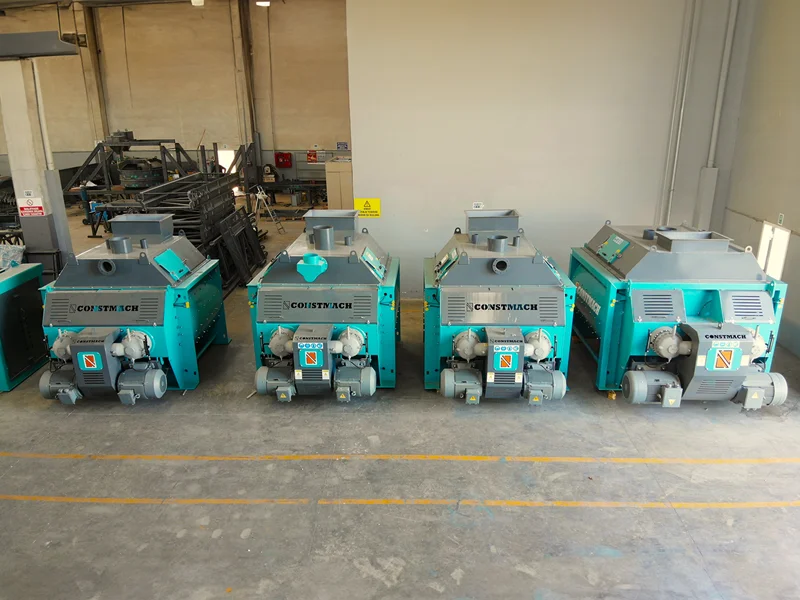
The mixer decides batch quality and a large part of the plant's output, so it deserves attention. Constmach supplies four mixer families, and the right one depends on the concrete you produce.
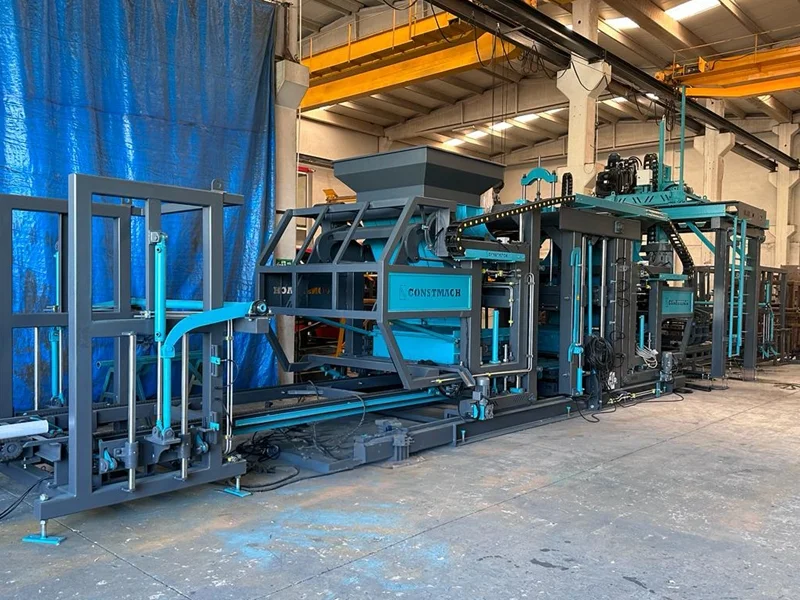
Twin-shaft mixers (the CTS series) use two counter-rotating shafts for fast, intensive mixing. They handle stiff, low-slump and high-strength mixes well and are the common choice for high-output stationary concrete plants. Single-shaft mixers (CSS) are simpler and suit lighter or more fluid mixes. Planetary mixers (CPLN) drive blades through every part of the pan and give a very even mix in smaller batches, which is why they are favoured for precast and coloured concrete. Pan mixers (CPM) serve block, paving and precast production where small, uniform batches matter more than volume.
Cement Silos: Bolted, Welded and Horizontal
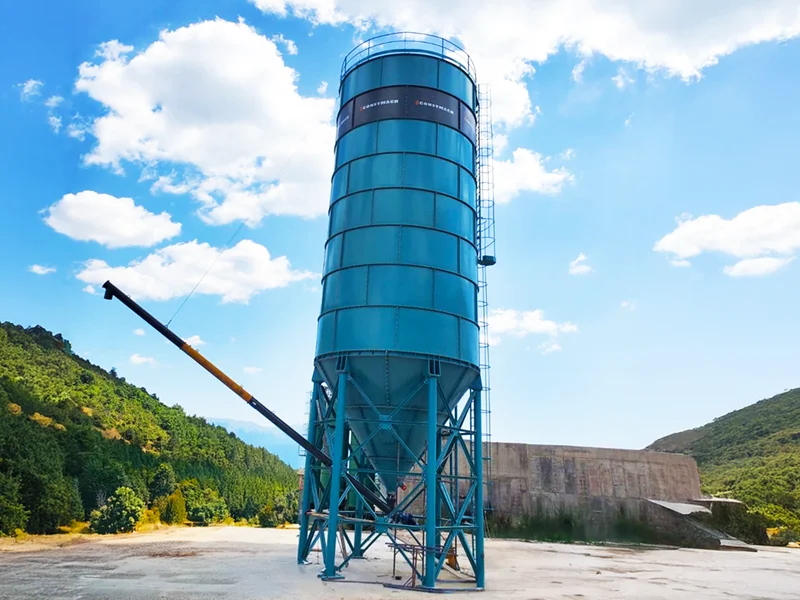
Cement storage links directly to how long a plant can pour without interruption. Constmach offers silos from 30 to 1000 tons in bolted, welded and horizontal designs. Bolted silos (CS-200 through CS-3000) ship flat-packed and assemble on site, which keeps freight cost down and makes them practical for export. Welded silos arrive ready and suit projects within reasonable transport distance. Horizontal silos help where height is restricted. Sizing the silo to the pour rate matters: a silo too small for a continuous cast forces stops that show up as cold joints in the concrete.
Control Systems, Automation and Batch Records
Automation is what turns a collection of weigh hoppers and conveyors into a plant that produces consistent concrete. Constmach plants use PLC-based control with European-origin components, including SIEMENS and SCHNEIDER. The control system stores recipes, runs the weighing sequence within set tolerances, and corrects the added water for the moisture already in the aggregate so the water-to-cement ratio stays on target.
Just as important is the record. The control software logs each batch, which gives the producer a traceable history for quality control and for any dispute over a delivered load. For ready-mix suppliers, that record is part of the product.
Production Capacity: Rated Output and Real-World Output
Plant capacity is quoted in cubic metres per hour, and the Constmach range covers 15 to 300 m³/h across its families. The rated figure assumes ideal conditions: a fast mixer cycle, ready trucks, and no waiting. Real output is usually lower because trucks have to position, mixes vary, and the plant pauses between loads. When sizing a plant, treat the rated figure as a ceiling and plan around realistic cycle times for your site and logistics.
Where Concrete Batching Plants Are Used
Batching plants supply nearly every kind of concrete construction. Ready-mix suppliers run them to serve a city or region. Large infrastructure projects, such as dams, bridges, ports and highways, often install a dedicated plant on or near the site to guarantee supply and control the mix. Precast factories use them to feed moulds for beams, pipes, panels and blocks. The plant family chosen usually follows the job: stationary for fixed, high-volume supply; mobile for projects that move; compact for confined sites.
Site Requirements: Foundation, Power and Water
A plant needs three things from its site: a sound base, electricity and water. Stationary concrete batching plants require an engineered concrete foundation sized to the plant load and the local ground conditions. Mobile and compact concrete batching plants need far less, because the units are pre-mounted, though a level, firm surface is still essential. All plants run on a three-phase industrial supply, with the load set by capacity and mixer type, and all need a clean water source for batching and washdown. Planning these early prevents delays between delivery and the first pour.
Operating in Hot and Cold Climates
Climate changes how a plant should be specified. In hot conditions, concrete can lose workability quickly, so producers may add chilled water, ice systems or shade over aggregate to control the temperature of the fresh mix. In cold conditions, water heating, insulated or heated silos, and protection for pipework keep the plant working and stop the concrete from freezing before it sets. A plant bought for a four-season site is worth specifying with these options from the start rather than retrofitting later.
Maintenance and Wear Parts
A batching plant earns its keep only while it runs, so maintenance planning matters. The mixer is the main wear point: liners, mixing arms and blades wear against the abrasive mix and need periodic checks and replacement. Conveyor belts, screw conveyors, feed gates and load cells also need routine attention, and scales should be calibrated on a schedule to keep weighing accurate. Keeping common wear parts in stock is the simplest way to avoid a small failure stopping production during a pour.
How to Choose the Right Concrete Batching Plant
Start with peak hourly demand, not the daily average. A plant sized only for the average will fall behind on the busiest days, while one sized for the peak keeps the trucks moving. From there, weigh four factors:
- Project length and mobility. A long, fixed ready-mix contract points to a stationary concrete plant; a job that relocates points to mobile or compact.
- Site and foundation. The space, ground conditions and any height limits narrow the options quickly.
- Mix and mixer type. Stiff, high-strength or precast concrete suits a twin-shaft or planetary mixer; lighter mixes can use simpler units.
- Automation and traceability. Ready-mix sale usually needs full batch records; a captive site plant may need less.
Sizing cement silos to the pour rate and allowing for future growth rounds out a sensible specification. Getting these decisions right at the order stage costs nothing and saves expensive changes once the plant is built.