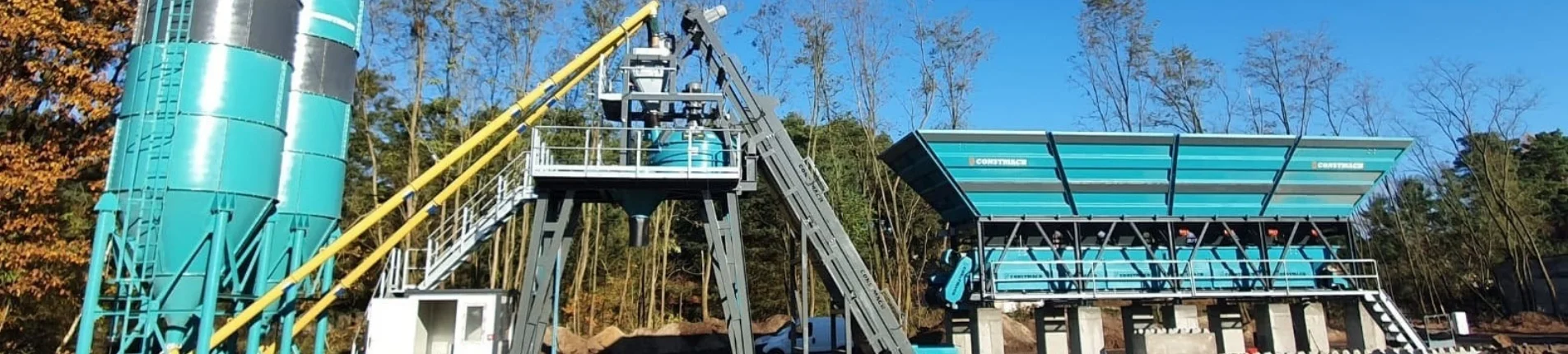
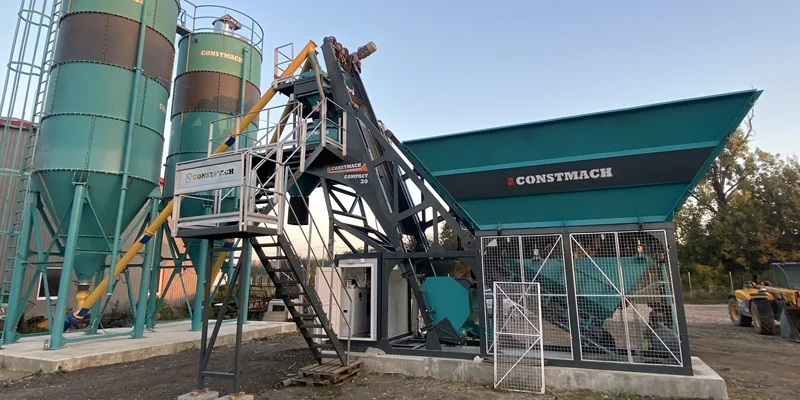
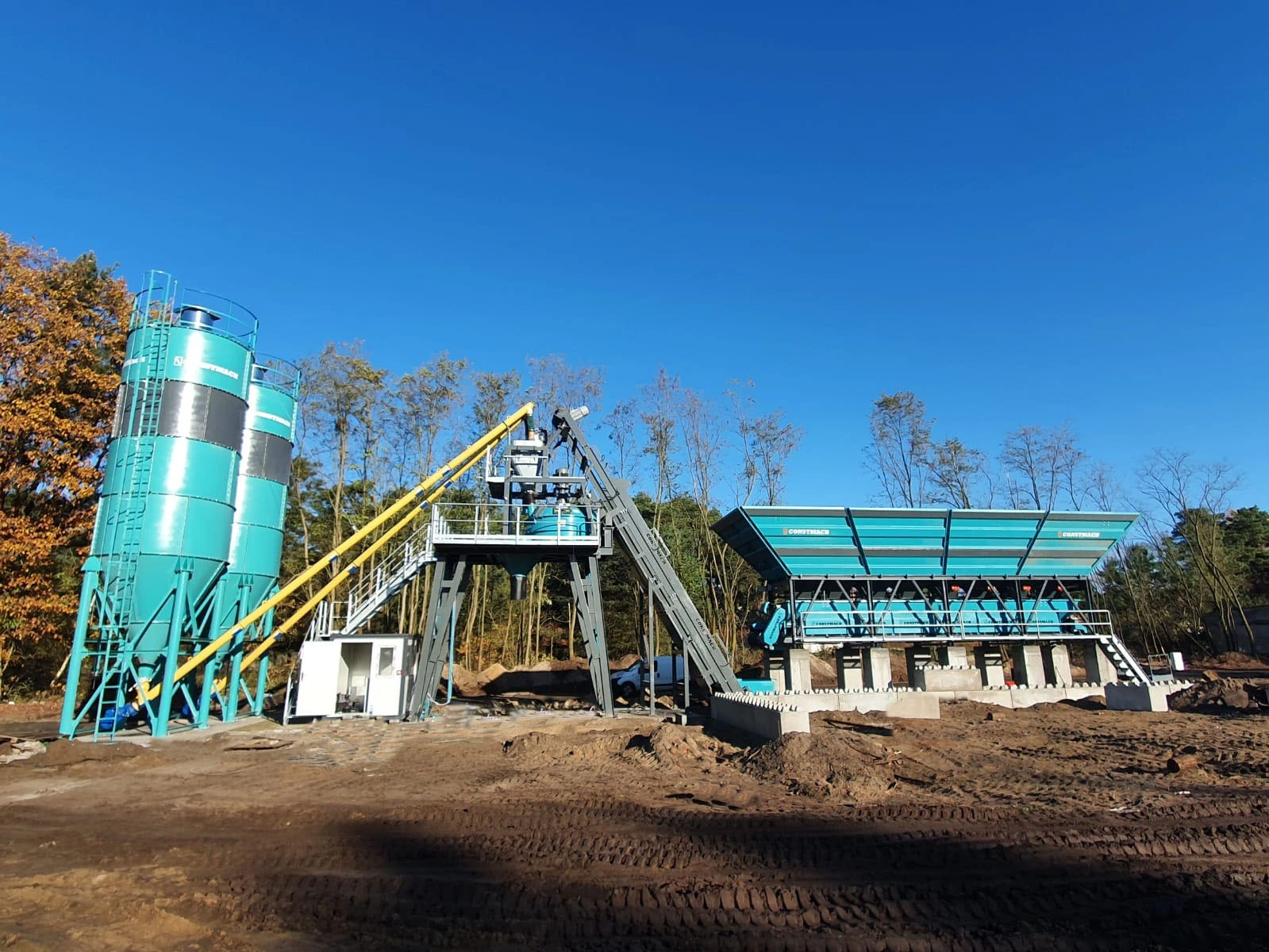
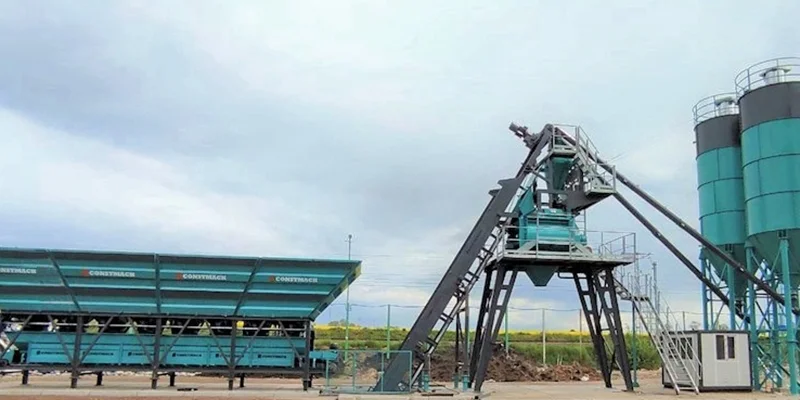
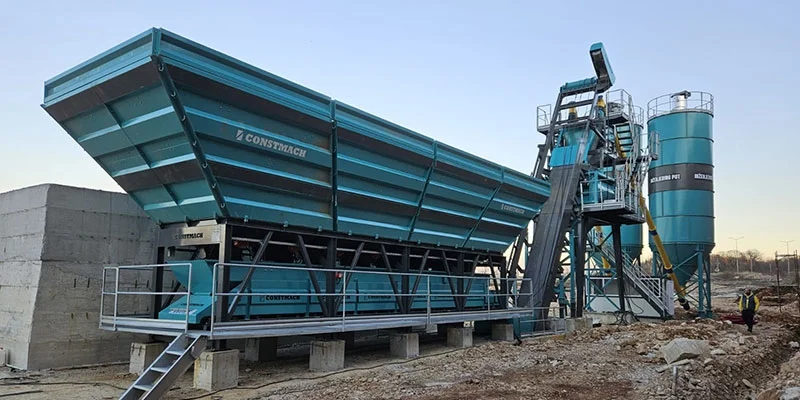
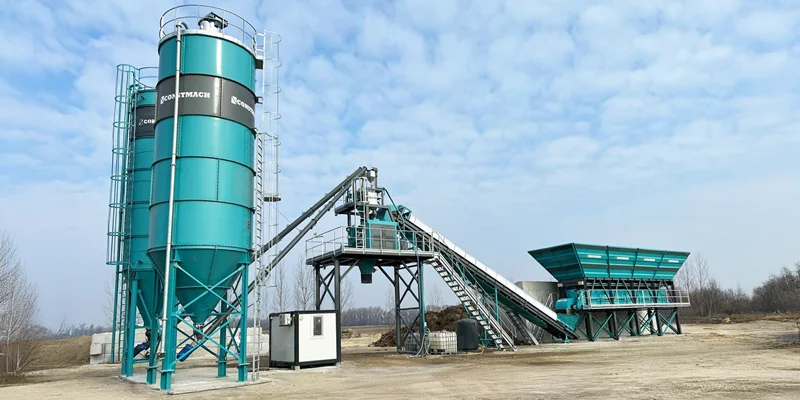
A compact concrete batching plant is a container-type plant built to ship in a single tractor-trailer or a 40 ft container and to set up on a small footprint with very little groundwork. Constmach compact concrete plants run from 30 to 120 m³/h, are manufactured to CE standards, and suit sites where space is tight or where the plant has to move without heavy civil work.
What Is a Compact Concrete Batching Plant?
A compact concrete batching plant carries the full set of concrete-production equipment in a tightly arranged, transport-friendly layout. The aggregate bins, weighing systems, mixer, control unit and cement silo are designed to fold or stack into the smallest practical space, so the whole plant travels as one load and stands on a modest area once it arrives. The point is to keep accurate, automated batching while removing the size and civil work of a full stationary installation.
Because a Constmach compact concrete plant fits inside a 40 ft container envelope, it is sometimes called a container-type concrete plant. That shipping format matters in practice: it cuts freight cost on export routes and makes the plant straightforward to move when a project ends.
How a Compact Concrete Plant Differs from Stationary and Mobile Concrete Plants
A stationary concrete plant is built for permanence and the highest sustained output, with a large footprint and an engineered foundation. A mobile concrete plant tows on a chassis and sets up fastest of all. A compact concrete batching plant sits between the two. It is more transportable and far smaller than a stationary concrete batching plant, yet it offers a fixed, organised layout that suits a site where the plant will stay for the length of a project rather than move every few weeks.
The choice usually comes down to space and duration. Where the area is limited, or where shipping the plant in a single container is an advantage, the compact format earns its place.
How Does a Compact Concrete Batching Plant Work?
A compact concrete plant runs the same batching cycle as any other plant, arranged to save space:
- Aggregate feeding. Sand and stone are held in bins and charged from a feeding ramp, then transferred to the weigh stage.
- Weighing. Aggregates, cement, water and admixtures are each weighed on load-cell scales to match the mix design.
- Cement supply. Cement is drawn from a silo, which on a compact concrete plant stands on its own steel legs, and fed by screw conveyor to its weigh hopper.
- Transfer and mixing. Weighed aggregate is lifted to the mixer by a skip hoist or a belt, and the materials are combined until the batch is uniform.
- Discharge. Finished concrete drops into a truck mixer or transfer point.
A PLC-based control system runs the sequence, so once a recipe is set the plant repeats it accurately, load after load.
The Constmach Compact Range
The Compact series covers four outputs with a skip-hoist transfer, plus a belt-fed option, so the plant can be matched to both the demand and the way aggregate is handled.
| Model | Output | Aggregate transfer |
|---|
| Compact 30 | 30 m³/h | Skip hoist |
| Compact 60 | 60 m³/h | Skip hoist |
| Compact 100 | 100 m³/h | Skip hoist |
| Compact 120 | 120 m³/h | Skip hoist |
| Compact 60 with Belt | 60 m³/h | Belt conveyor |
The skip-hoist models keep the footprint small by lifting aggregate vertically rather than along a conveyor, which is a large part of why the compact concrete batching plant fits where larger layouts cannot. The Compact 60 with Belt offers a belt-conveyor alternative for operators who prefer continuous aggregate feed at that output.
Skip Hoist vs. Belt Transfer
The transfer method shapes both the footprint and the feed style. A skip hoist lifts a measured bucket of aggregate straight up to the mixer, which uses very little ground length and keeps the plant compact. A belt conveyor feeds aggregate along an inclined path, which some operators prefer for steady, continuous charging. On the Constmach compact concrete plant range, the skip models are the space-savers, while the belt option suits sites with room for the conveyor and a preference for that feed.
Space-Saving Design and Small Footprint
Everything about a compact concrete batching plant is arranged to save space. The vertical skip transfer, the tightly grouped weighing and mixing units, and the silo on steel legs all reduce the ground area the plant needs. For an urban site, a quarry with limited level ground, or any project boxed in by existing structures, that smaller footprint can be the deciding factor.
Cement Silos with Steel Legs
On a Constmach compact concrete plant, the cement silo stands on its own steel legs. That detail removes the need for a separate concrete foundation under the silo, which cuts both cost and the civil work required before the plant can run. Fewer foundations also means a faster set-up and an easier teardown when the plant moves on.
Aggregate Feeding and the Metal-Wall Ramp
Charging the aggregate bins is kept simple. The metal side walls of the bins act as a support for a feeding ramp, so a wheel loader can drive up and tip aggregate straight into the bins without a separately built earth or concrete ramp. That removes another piece of site preparation and keeps the plant self-contained.
From there the feed path stays short. On the skip-hoist models, the weighed aggregate is lifted vertically to the mixer in a measured bucket; on the Compact 60 with Belt, an inclined conveyor carries it up instead. Either way, the layout keeps both the footprint and the groundwork to a minimum, which is the whole point of a compact concrete batching plant.
Main Components of a Compact Concrete Plant
- Aggregate bins with a feeding ramp formed against the metal walls
- Skip hoist or belt conveyor for aggregate transfer
- Aggregate, cement, water and admixture weighing on load cells
- Cement silo on steel legs with screw conveyor
- The concrete mixer
- Automated control cabin with PLC
- Dust collection on the silo and mixer
Mixer Options
The mixer sets batch quality, and Constmach can fit a compact concrete batching plant with the type that fits the work. Twin-shaft mixers give fast, intensive mixing for stiff and high-strength concrete. Single-shaft mixers suit lighter mixes. Planetary and pan mixers give a very even mix in smaller batches, which is why they are common in precast and dry-concrete production. Matching the mixer to the concrete you make keeps quality high without paying for capacity you will not use.
Applications
Compact concrete plants serve a wide range of work. They supply ready-mix concrete on space-limited sites, produce dry concrete where that is the requirement, and feed precast production lines. Because the plant ships in a container and sets up quickly, it suits projects in cities, on islands or in remote areas where a larger installation would be hard to deliver or build. On work like this, the ability to truck in a complete plant and have it producing concrete within a short time is often what makes reliable local supply viable.
Fast Installation and Minimal Infrastructure
A compact concrete batching plant needs only minimum site preparation: a firm, level area able to carry the plant load, a three-phase power connection and a water supply. There is no large foundation programme, and the silo's steel legs remove one of the foundations a stationary layout would require. The plant is delivered, positioned, connected and brought into production in a short time, which matters on a project with a tight start date.
Galvanizing and Corrosion Protection
For sites with harsh weather, coastal air or long service expectations, Constmach offers hot-dip galvanizing on request. A galvanized coating protects the steel structure against corrosion and extends the working life of the plant in demanding conditions. Specifying this option at the order stage is far simpler than trying to add protection later.
Maintenance and Wear Parts
A compact concrete batching plant earns its keep only while it runs, so routine maintenance matters. The mixer is the main wear point: liners, arms and blades work against the abrasive mix and need periodic checks and replacement. The skip hoist or belt, the screw conveyors, feed gates and load cells also need regular inspection, and the scales should be calibrated on a schedule to keep weighing accurate.
Because Constmach manufactures its plants and major equipment in-house, spare parts can be supplied through the working life of the plant. Keeping a small stock of common wear parts on hand is the simplest way to stop a minor failure from interrupting a pour.
Operating in Hot and Cold Climates
Climate changes how a compact concrete plant should be specified. In hot conditions, fresh concrete can lose workability quickly, so measures such as chilled water or shaded aggregate help control the temperature of the mix. In cold conditions, water heating and insulation or heating for the silo and pipework keep the plant working and protect the concrete from freezing before it sets. For a coastal or severe-weather site, the galvanizing option adds long-term corrosion protection. Choosing the right options for the conditions at the order stage is far easier than adding them once the plant is on site.
Automation, Recipes and Batch Records
A compact concrete plant runs on PLC-based automation that stores mix recipes, weighs each material within set tolerances, and corrects the added water for the moisture already in the aggregate so the water-to-cement ratio stays on target. The operator selects a recipe and the plant repeats it without re-entering figures, which removes a common source of error during long pours. The control software logs each batch, giving the producer a traceable record for quality control and for any question over a delivered load.
Production Capacity and Output
The compact range covers 30 to 120 m³/h. As with any plant, the rated figure assumes ideal conditions, while real output depends on truck cycle times, the mix and how smoothly the site runs. Size the plant to your peak hourly demand with some margin so it keeps up on the busiest pours, and treat the rated figure as a ceiling rather than a guarantee.
The Economics of a Compact Concrete Plant
A compact concrete batching plant lowers several costs at once. Shipping in a single container or trailer cuts freight. The silo on steel legs and the small footprint reduce foundation and civil work. Quick installation shortens the gap between delivery and the first pour, so the plant starts earning sooner. For an operator who needs reliable on-site concrete without the expense of a full stationary concrete plant, the compact format often gives the better return. When you compare options, count the full cost of transport, foundations, setup and supply over the life of the plant, not just the purchase price.
Common Mistakes to Avoid When Choosing a Compact Concrete Plant
A few errors recur. The first is sizing for average rather than peak demand, which leaves the plant behind on busy days; size for the peak with margin. The second is choosing the transfer type without thought: a skip hoist saves the most space, while a belt suits sites with room and a preference for continuous feed. The third is underestimating cement storage, since a silo too small for the pour rate forces stops that can show as cold joints. The fourth is skipping the galvanizing option on a coastal or harsh-weather site, where corrosion protection pays for itself over the plant's life.
How to Choose the Right Compact Concrete Batching Plant
Three questions usually settle the choice:
- How much concrete, at peak? Compact 30 to 120 covers most needs; match the output to your busiest demand.
- Skip or belt? Choose the skip-hoist models for the smallest footprint, or the Compact 60 with Belt where continuous belt feed is preferred.
- What conditions will it face? For coastal or severe climates, add hot-dip galvanizing, and match the mixer type to the concrete you produce.
Settling these before the order gives you a compact concrete plant that fits both the site and the way you work.