






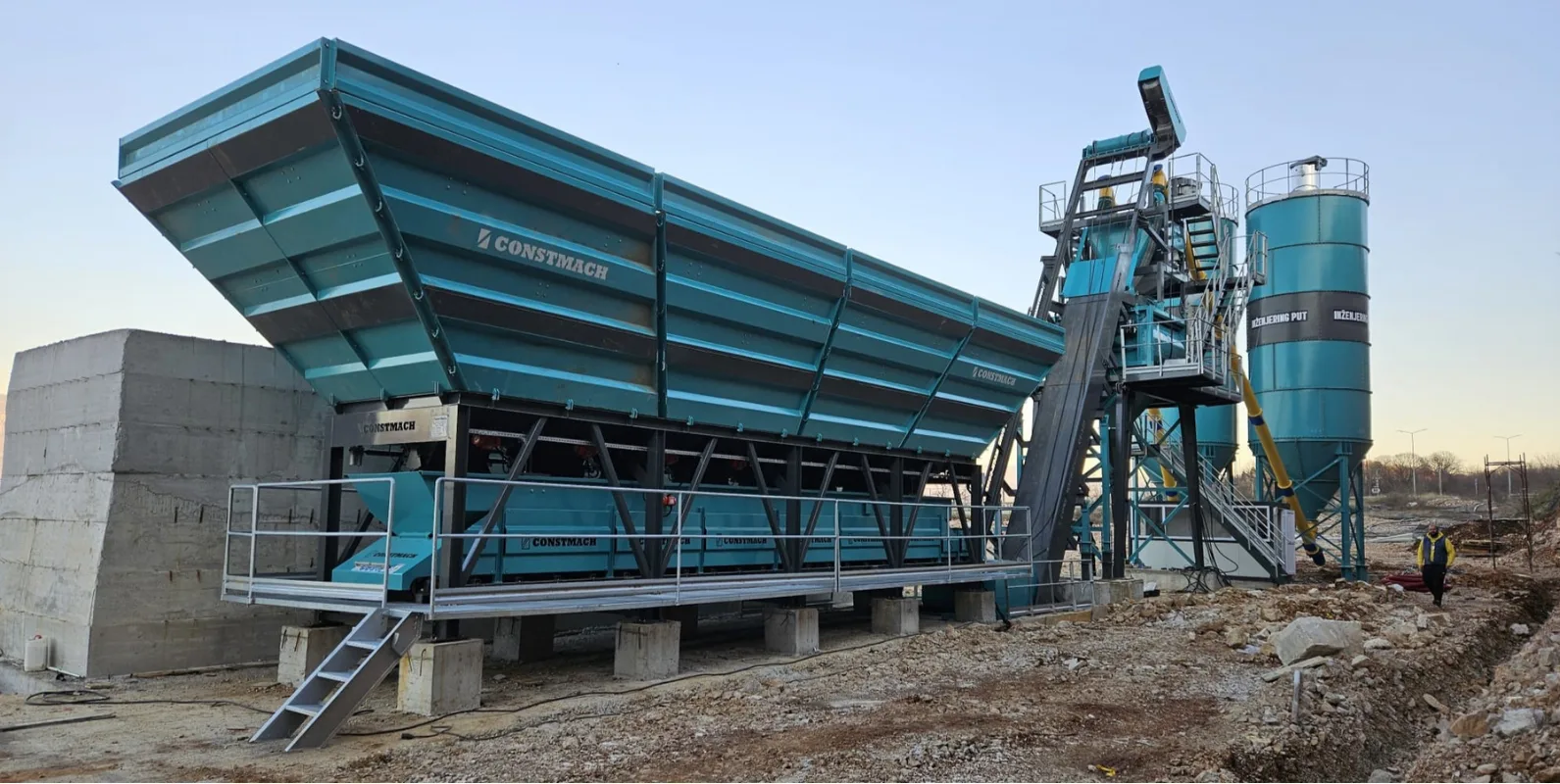
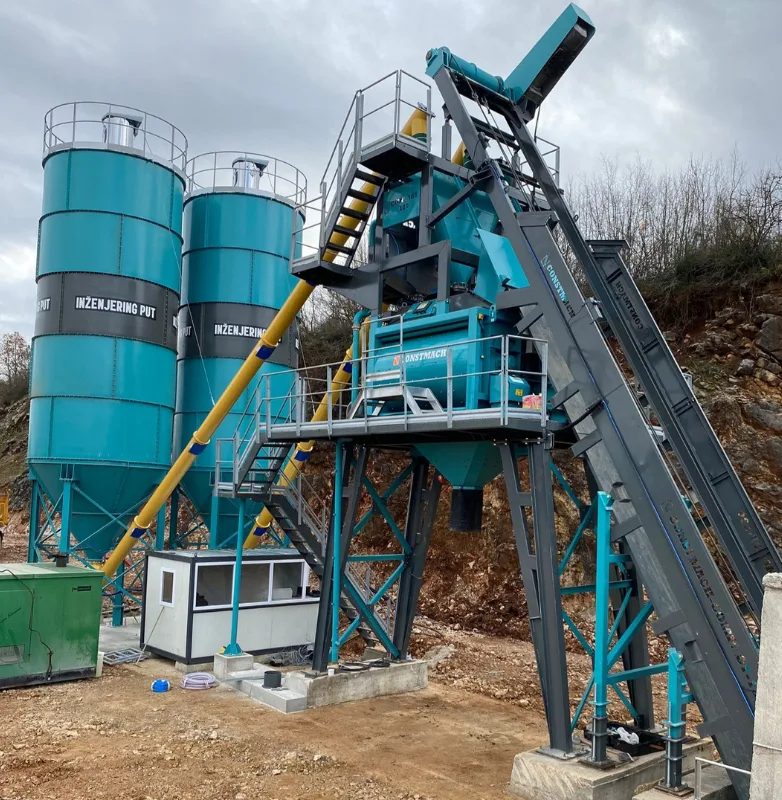
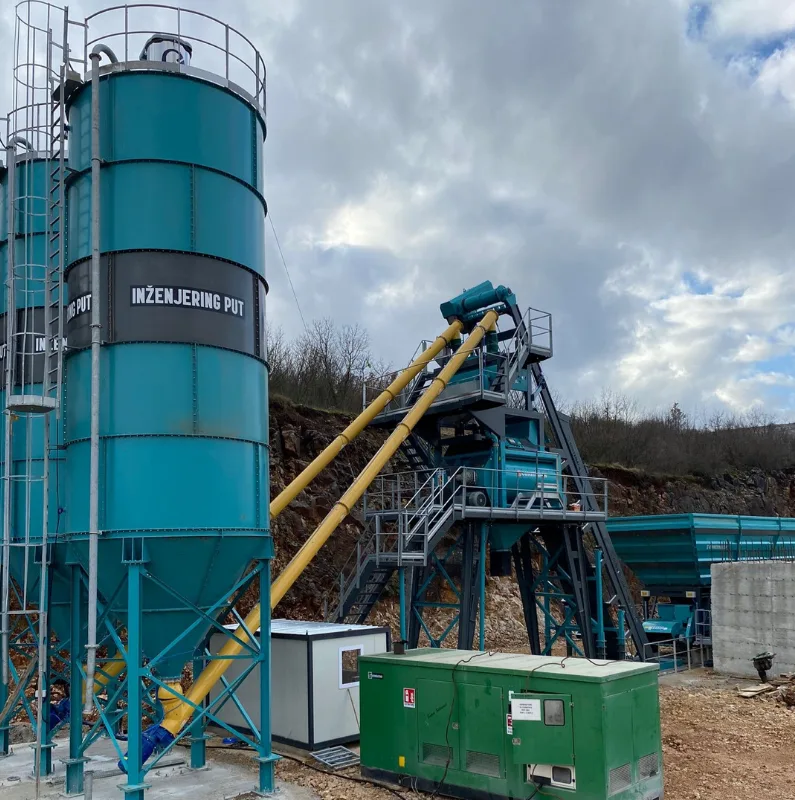
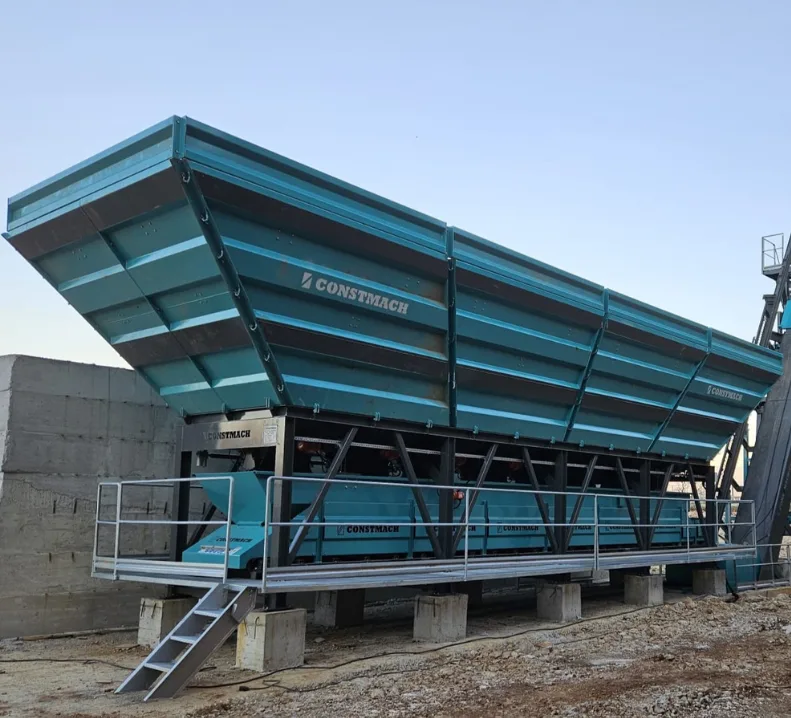
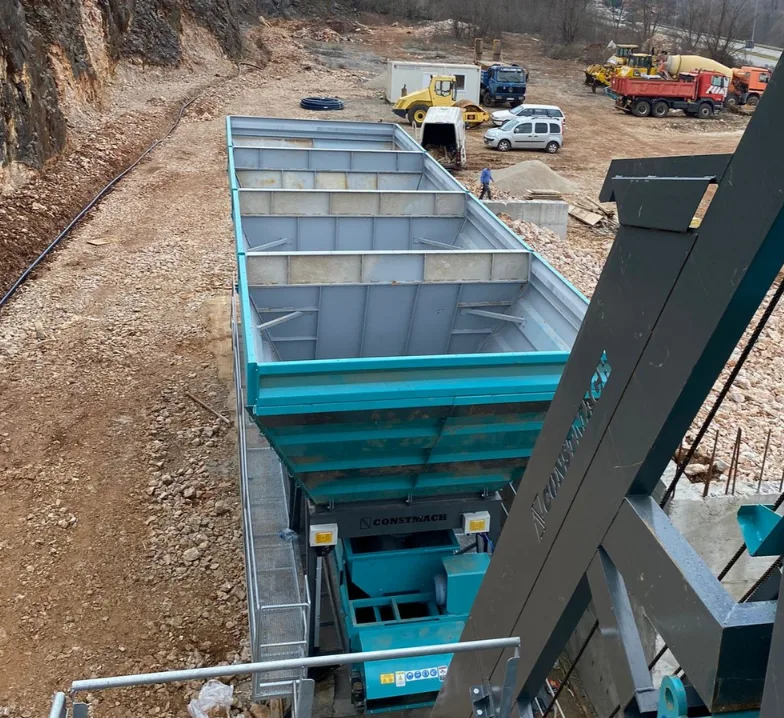
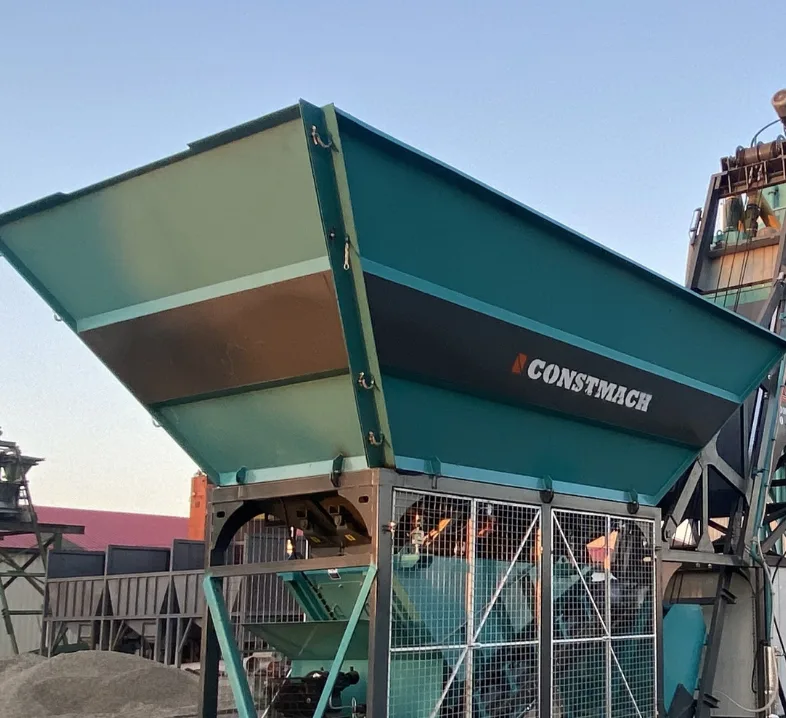
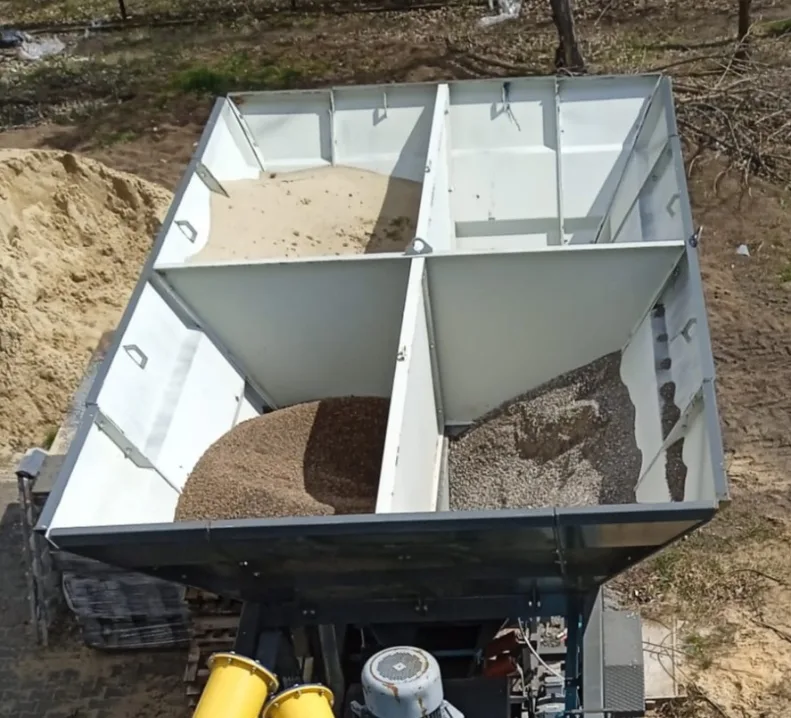
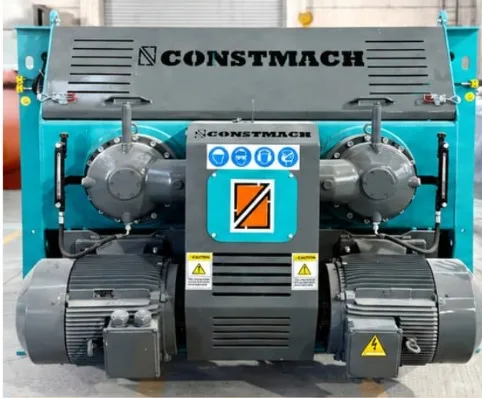
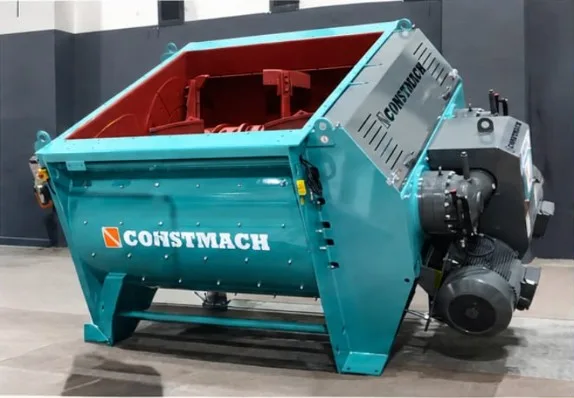
Compact 120 is purchased by contractors who need substantial concrete production capacity at jobsites where a full stationary layout would not fit — restricted urban sites, project-specific batching plants on short-to-medium-term contracts (12–36 months), island construction with restricted equipment delivery options, and ready-mix operations with non-standard footprint constraints. The compact design preserves stationary-class capability in a smaller footprint.
What Compact 120 Produces
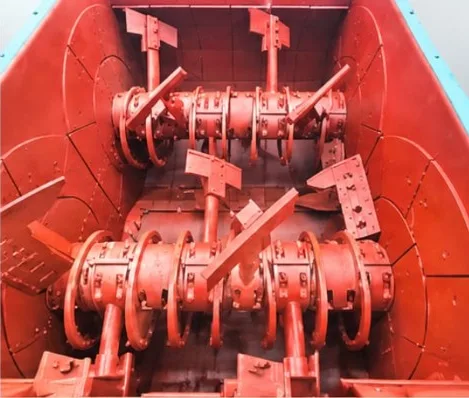
Compact 120 produces ready-mixed concrete at a rated capacity of 120 m³/h. The product range covers the same recipes as stationary plants of equivalent size — structural concrete, ready-mix, precast feedstock and specialty mixes — limited only by the mixer choice (single-shaft, twin-shaft, planetary or pan) selected at the engineering stage.
Suitability Factors
Compact 120 is appropriate where the site has limited area (500 m²), where civil-works budget is constrained, or where the project schedule requires fast deployment. The skip-hoist transfer eliminates the need for a permanent loading ramp, which is one of the biggest civil-works items in a stationary plant layout. Container-shippable design simplifies international logistics.
Operating Considerations
Compact 120 runs on a daily/weekly maintenance schedule matched to its operating hours. The skip-hoist bucket and rope are inspected weekly; mixer wear plates monthly. Because the skip-hoist replaces a continuous belt conveyor, cycle time is slightly longer than a belt-fed plant of equivalent capacity — a trade-off the customer accepts for the footprint and civil-works savings.
Comparison To Alternatives
Compared to stationary plants of equivalent capacity, Compact 120 saves footprint and civil works but produces slightly less per shift due to skip-hoist cycle time. Compared to mobile plants, Compact 120 requires more site preparation (the chassis is not road-legal as-is) but offers higher capacity and longer service life on a single permanent site.