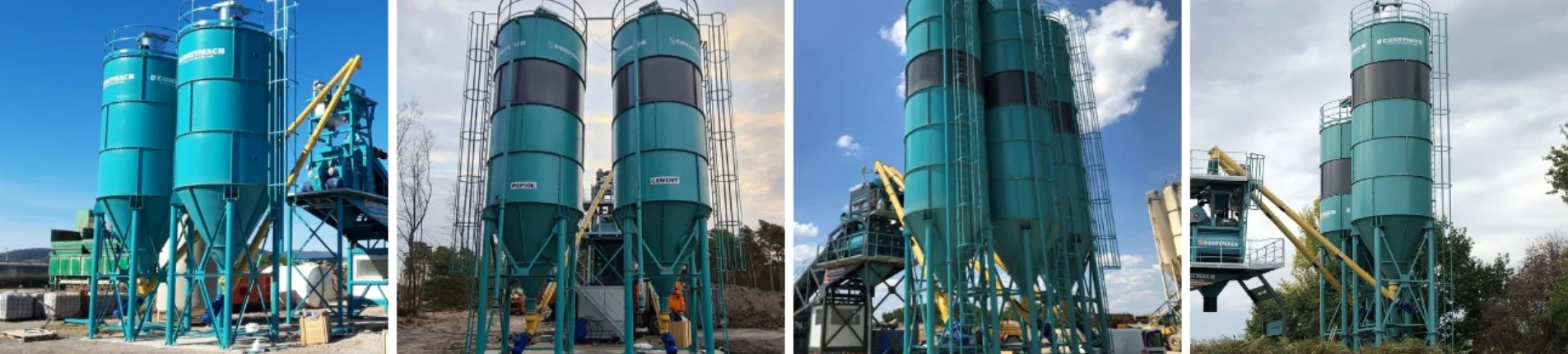
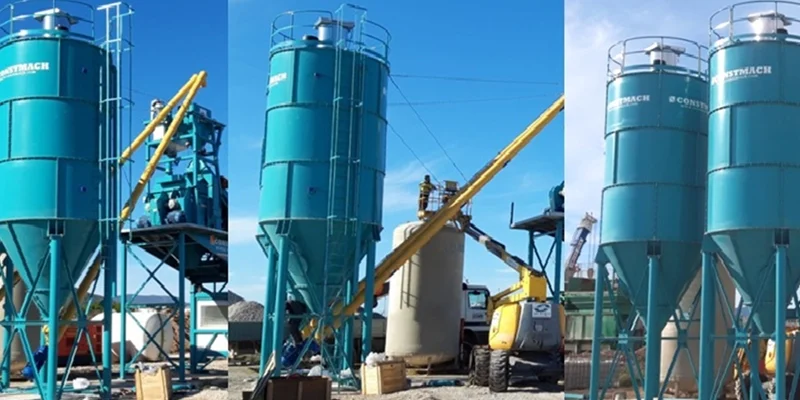
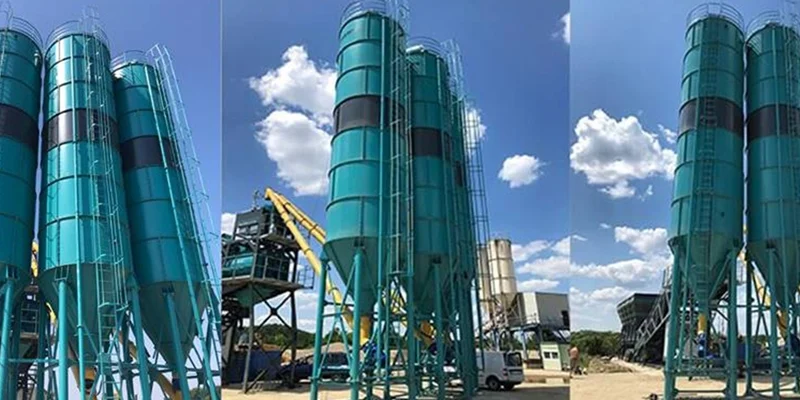
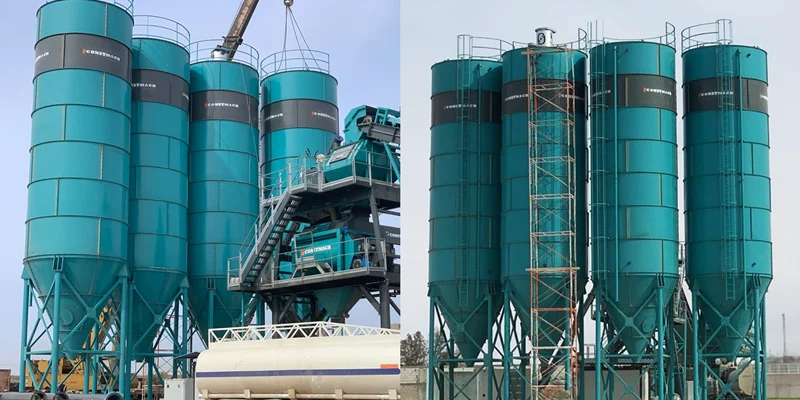
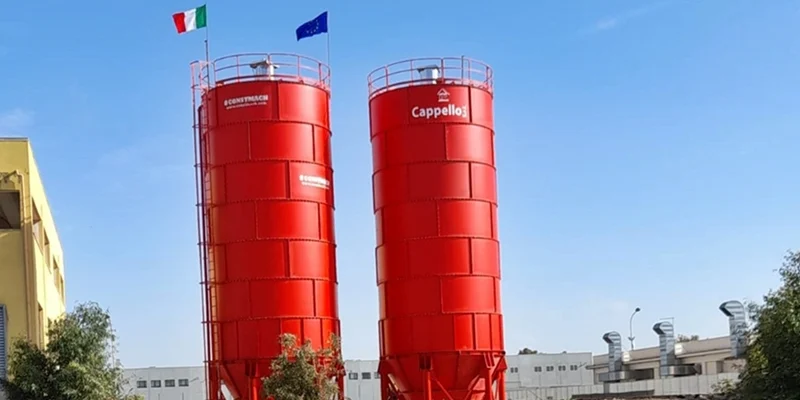
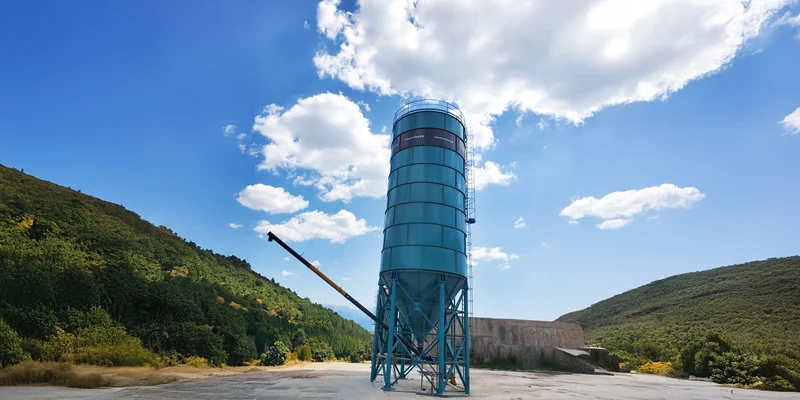
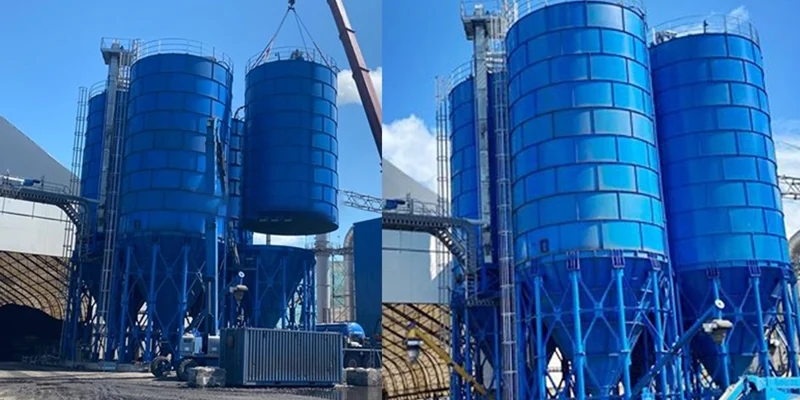
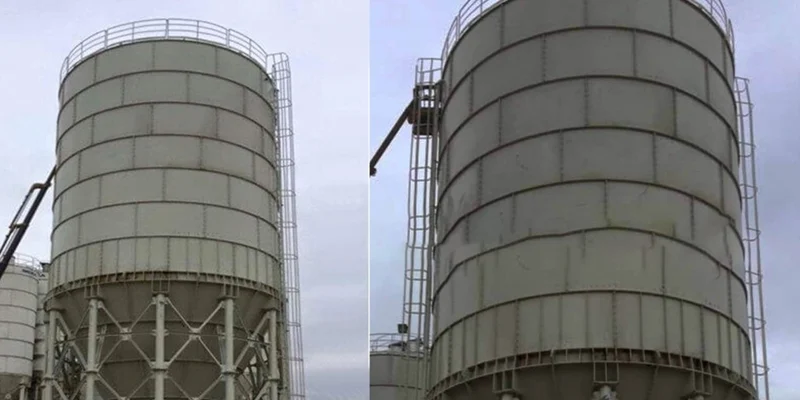
A cement silo is a steel storage tank that holds cement and other powder binders in bulk and feeds them to a concrete plant, block machine or similar process on demand. Constmach builds cement silos from 50 up to 3,000 tonnes, in bolted and welded types, plus a mobile horizontal silo for fully portable setups. Each silo is supplied with the equipment it needs to store cement safely and discharge it under control: a screw conveyor, a top filter, a pressure safety valve, level indicators, air fluidisation nozzles and a butterfly valve.
What Is a Cement Silo?
A cement silo stores cement in bulk so a plant has a steady supply on hand without relying on bagged cement or constant deliveries. Cement arrives by bulk tanker and is blown into the silo through a filling pipe; it is then held until the plant draws it off, usually by a screw conveyor that carries it to the weigh hopper. The same silos store other fine powders used in concrete and ground works, such as fly ash and limestone powder.
For any concrete operation, the silo is what lets the plant keep pouring. A silo sized to the work holds enough cement to batch at full rate between deliveries, so the plant is not waiting on the next tanker. Constmach cement silos serve concrete batching plants, block and paving machines, cement terminals, cement factories and soil-stabilisation projects, with a capacity for each duty.
The Constmach Cement Silo Range
The range covers a wide span of capacities, so the silo matches the plant and the pour rate rather than being guessed at.
| Model | Capacity | Type |
|---|
| Horizontal (mobile) | Mobile, trailer-mounted | Welded, road-portable |
| CS-50 | 50 tonnes | Bolted or welded |
| CS-75 | 75 tonnes | Bolted or welded |
| CS-100 | 100 tonnes | Bolted or welded |
| CS-200 | 200 tonnes | Bolted |
| CS-300 | 300 tonnes | Bolted |
| CS-500 | 500 tonnes | Bolted |
| CS-1000 | 1,000 tonnes | Bolted |
| CS-2000 | 2,000 tonnes | Bolted |
| CS-3000 | 3,000 tonnes | Bolted |
Smaller silos suit single plants and block machines. The larger bolted silos, from several hundred up to 3,000 tonnes, are used where storage has to be substantial: cement terminals, cement factories and limestone-powder stocking. The horizontal silo is a different idea again, built for mobility rather than capacity.
Bolted vs. Welded Cement Silos
Constmach offers smaller silos, up to around 100 tonnes, in both bolted and welded types, while larger silos are bolted. The difference is in how the silo is built and shipped.
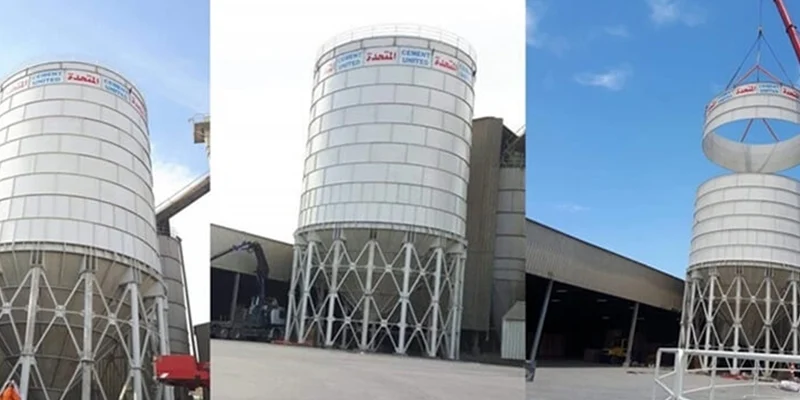
A welded silo arrives as one finished body. It is simple and quick to set up on site because there is nothing to assemble, but its fixed size makes it bulky to transport over long distances. A bolted silo is manufactured as flat and curved panels, cut and drilled by laser for an accurate fit, then bolted together on the jobsite. That makes a real difference for shipping: bolted panels pack flat, so two sets of a 100-tonne bolted silo, for example, fit into a single 40-foot open-top container or onto a truck. For export and for very large capacities, bolted construction is usually the practical choice; for a nearby site where transport is easy, a welded silo can be simpler.
The Horizontal Mobile Cement Silo
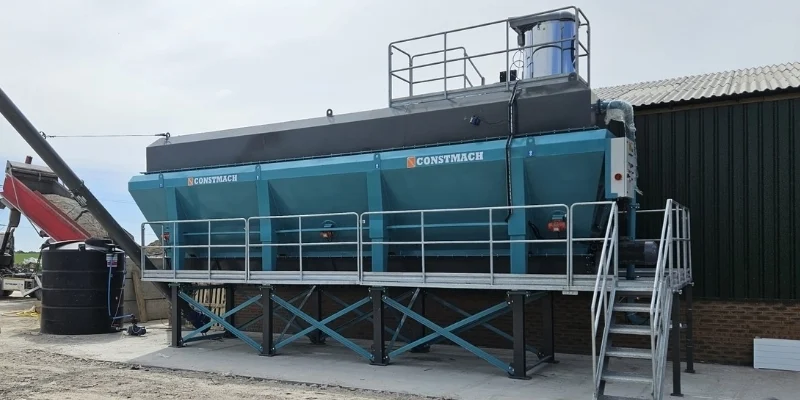
The Constmach horizontal cement silo is built to make a concrete plant fully mobile and to cut the site preparation a vertical silo would need. The silo body lies on a trailer with double axles and wheels, so it travels by road like any towed load and needs no foundation of its own. A V-shaped horizontal screw conveyor runs under the body to move cement out, and the body is fitted with vibrators, pneumatic elements and air nozzles to keep the cement flowing despite the low, wide shape. A top filter and a safety valve sit on the roof, just as on a vertical silo. For contractors who relocate often, or who want the lowest possible setup at each site, the horizontal silo removes the lifting and foundation work that a tall vertical silo brings.
How a Cement Silo Works
The cycle from delivery to use is straightforward:
- Filling. A bulk tanker connects to the filling pipe and blows cement into the silo. Air displaced from inside passes out through the top filter, which traps the dust.
- Storage. Cement sits in the silo body. Level indicators show how full it is, so the operator knows when to reorder and avoids overfilling.
- Fluidisation. Air pads or nozzles near the cone keep the cement loose and flowing, preventing it from bridging or compacting above the outlet.
- Discharge. A screw conveyor draws cement from the cone and carries it to the plant's weigh hopper. A butterfly valve at the cone allows manual cut-off.
The pressure safety valve guards the silo against over-pressure during filling, and the filter keeps cement dust contained. Together these parts let the silo store a large mass of fine powder safely and give it up only when the plant asks for it.
Standard Silo Equipment
Each Constmach cement silo is supplied as a working unit, not a bare tank. The standard equipment includes:
- Cement screw conveyor in the diameter and length needed for the plant
- Top air filter to trap dust during filling
- Pressure safety valve against over-pressure
- Top and bottom level indicators
- Air fluidisation nozzles and a pulse valve to keep cement flowing
- Cone butterfly valve for manual cement discharge
- Maintenance platform between the legs, with safety guards
- Cement filling pipe, inner and outer manholes, and roof flanges for the filter and safety valve
On larger silos used for cement terminals, the screw conveyor can be arranged to load cement out to trucks, so the same silo that feeds a plant can also serve as a distribution point.
Sizing the Silo to Your Plant
Choosing a capacity is mostly about matching storage to how fast you use cement. A silo too small for the pour rate empties before the next tanker arrives, which stops the plant and can leave cold joints in the work. A silo with sensible headroom keeps the plant batching through the day and lets you take cement deliveries on a practical schedule rather than at the mercy of the plant running low. Think about your peak daily cement use, your delivery distances and how reliable tanker supply is, and choose a silo that covers a comfortable run between fills. Many plants also run more than one silo, which allows different binders, such as cement and fly ash, to be stored and weighed separately.
Foundation and Installation
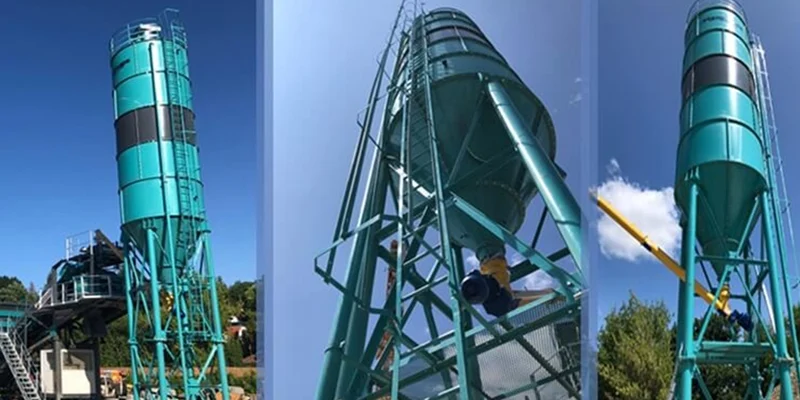
A vertical cement silo stands on a reinforced concrete foundation sized for the full silo and the dynamic loads of filling and discharge. Constmach provides the foundation and load data for the chosen capacity. For bolted silos, the panels are delivered flat and assembled on the jobsite, where the laser-cut holes make for an accurate, repeatable build; a welded silo is lifted into place as a finished body. The horizontal mobile silo avoids the foundation altogether, sitting on its own trailer. Planning the foundation and the lifting or assembly early keeps installation smooth, because a silo is a tall, heavy structure that has to be erected safely.
Safety and Dust Control
Two risks define silo safety: over-pressure during filling and cement dust. Constmach silos address both as standard. The top filter captures dust as air leaves the silo during a tanker fill, which keeps emissions down and protects the surrounding area. The pressure safety valve releases if pressure climbs too high, for instance if a filter blocks, protecting the silo body. Level indicators help the operator avoid overfilling, which is itself a common cause of over-pressure incidents. Keeping the filter clean and the safety valve free is the core of safe silo operation, and it is a light routine compared with the consequences of neglecting it.
What a Cement Silo Can Store
Although they are called cement silos, these units store a range of fine powders used in concrete and ground works. Cement is the main one, but the same silos hold fly ash, limestone powder and similar binders and fillers. On a plant that uses a supplementary cementitious material alongside cement, a second silo lets each be stored and dosed separately. Constmach can advise on the right configuration for the materials you use, since flow behaviour varies between powders and the fluidisation and discharge equipment is matched to it.
Where Constmach Cement Silos Are Used
Cement silos serve any operation that uses bulk cement or fine binders. Concrete batching plants are the most common, where the silo feeds cement to the weighing system. Block and paving machines draw cement the same way. Cement terminals and cement factories use large bolted silos for bulk storage and distribution, and similar silos stock limestone powder. Soil-stabilisation and ground-improvement projects use cement silos to supply binder on site. Across all of these, the job is the same: hold a large quantity of fine powder and give it up cleanly and safely when needed.
Why Bulk Storage Pays Off
Storing cement in bulk changes the economics of running a plant. Bulk cement delivered by tanker costs less per tonne than bagged cement, and it removes the labour of handling and emptying bags batch after batch. A silo sized to the work also lets you buy cement on a sensible delivery schedule and ride out short gaps in supply, instead of stopping the plant whenever stock runs low. On a busy operation, the saving on cement price and handling adds up quickly, and the silo usually pays for itself well within its long service life. The larger the throughput, the stronger the case for ample bulk storage, which is why high-volume plants and terminals run the bigger capacities.
Fitting the Silo into a Plant Layout
A cement silo does not stand alone; it has to sit where its screw conveyor can reach the weigh hopper and where a tanker can pull up to fill it. Positioning matters. A conveyor run that is too long or too steep makes cement harder to move, so the silo is best placed to give a short, direct feed to the plant. Where a plant uses more than one binder, the silos are arranged so each conveyor reaches the weighing system cleanly. Constmach sizes the screw conveyor to the run and the rate for the layout, and can advise on silo placement so the plant flows well. Getting this right at the design stage avoids awkward conveyor routing later, when the foundations are already in.
Common Mistakes to Avoid When Choosing a Cement Silo
The first mistake is under-sizing the silo for the plant's output, so the plant keeps running short of cement. Size the silo to your peak use with headroom for deliveries. The second is overlooking transport and assembly: for a distant or export site, a bolted silo that ships flat is far easier to deliver than a welded body, while for a nearby site a welded silo may set up faster. The third is treating the equipment as optional. The filter, safety valve, level indicators and fluidisation system are what make a silo safe and reliable, not extras to trim. The fourth is forgetting the foundation; a tall silo needs a properly engineered base, and planning it late delays the whole installation.
How to Choose the Right Cement Silo
A few questions settle the choice:
- How much cement do you use, at peak? Size the silo to keep the plant batching between deliveries. CS-50 to CS-3000 covers small plants up to cement terminals.
- How will it be transported? For export or long hauls, a bolted silo ships flat in containers; for a nearby site, a welded silo can be simpler.
- Do you need to move it? If the plant relocates often, the horizontal mobile silo travels on its own trailer and removes the foundation work.
- What will it store? Cement, fly ash or limestone powder, and whether you need separate silos for separate binders.
Answering these at the order stage gives you a cement silo matched to your plant, your logistics and your materials. Constmach manufactures the silos in-house, supplies them complete with the necessary equipment, and supports them through installation and after-sales service and spare parts.