





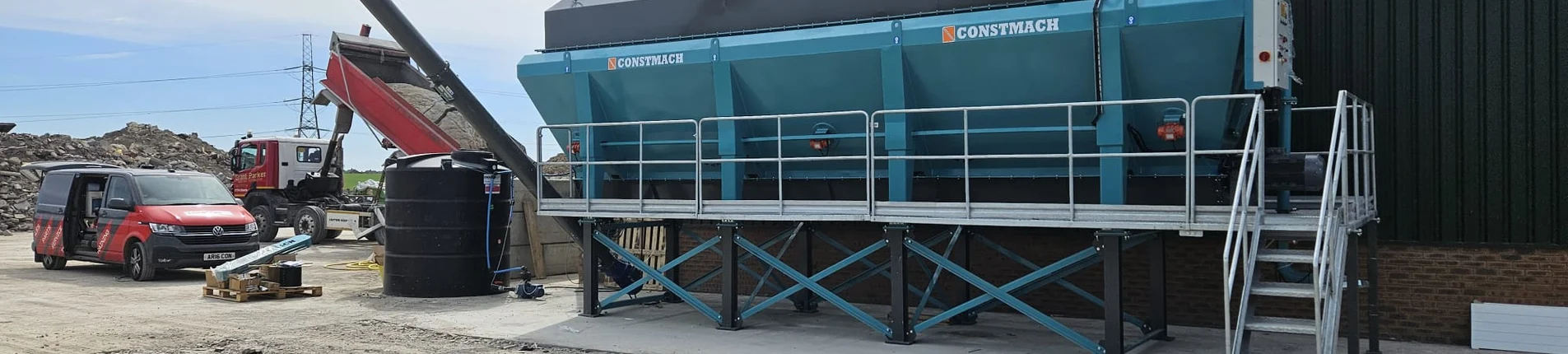

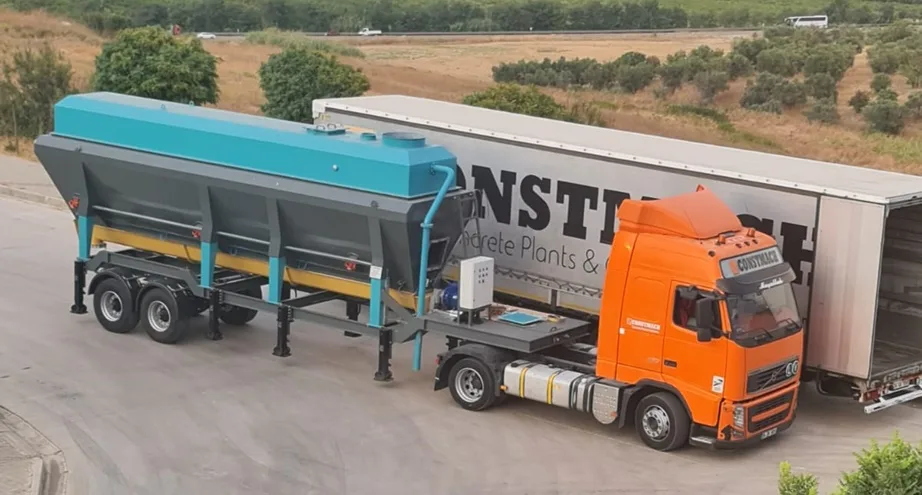
The Horizontal Cement Silo, also known as a Mobile Cement Silo, is preferred in situations where cement needs to be stored near a concrete plant but a permanent foundation is not required. Because it can be transported on its own trailer and requires only a flat, compacted surface, it is suitable for a variety of applications unlike stationary vertical silos.
Where It Is Used
Mobile and semi-mobile concrete batching plants that relocate between job sites
Road, highway, bridge and tunnel projects where the plant follows the work front
Remote, rural or island sites where pouring a silo foundation is impractical
Short-term projects where the cost of a permanent silo cannot be justified
Rental fleets and contractors who need a silo that can be redeployed quickly
What It Stores and Handles
The vessel is designed for bulk powder binders, principally Portland cement, and the 39-tonnes / 30 m³ rating is quoted at a cement density of 1.3 ton/m³. Actual stored tonnage varies with the bulk density of the specific binder, so lighter materials such as fly ash or certain blended cements occupy more volume per tonne. Cement is loaded pneumatically from a bulk tanker through the 4-inch charging pipe and discharged by the V-type screw conveyor toward the plant's weighing system.
Installation and Operating Considerations
Site preparation is limited to a level, load-bearing surface; no concrete foundation or anchoring is required, which is the main reason contractors choose the Mobile Cement Silo over a vertical unit. The silo must be parked, levelled and chocked before filling. Electrical supply is needed for the three 0.37 kW vibrators and the screw conveyor drive, and a compressed-air supply feeds the fluidization nozzles and pneumatic elements that keep the cement flowing.
Maintenance And Wear Parts
Inspect and clean the top filter cartridges regularly; a blocked filter raises internal pressure during filling
Check the safety valve before each filling cycle to confirm it relieves freely
Verify the vibrators and fluidization nozzles operate before charging to avoid bridging
Inspect the V-type screw conveyor flighting and seals for wear, since abrasive cement gradually erodes them
Use the side and roof maintenance doors for periodic interior inspection and cleaning
Touch up the 140-micron epoxy coating where transport or handling has damaged it
Comparison Versus A Vertical Cement Silo
A vertical bolted or welded silo offers larger capacities (often 50 to 100+ tonnes) and a smaller ground footprint, but it requires a concrete foundation, crane erection and anchoring, and it cannot be relocated without dismantling. The Horizontal Cement Silo trades maximum capacity for mobility: it ships and tows as a single trailer-mounted unit, needs no foundation, and can be on site and producing the same day. For high-volume, permanent central plants a vertical silo is usually the better economic choice; for mobile plants and projects that move, the horizontal type is the practical option. The bolted version is also compact in transport, with two sets shipping inside a single 40 ft open-top container or on a truck trailer.