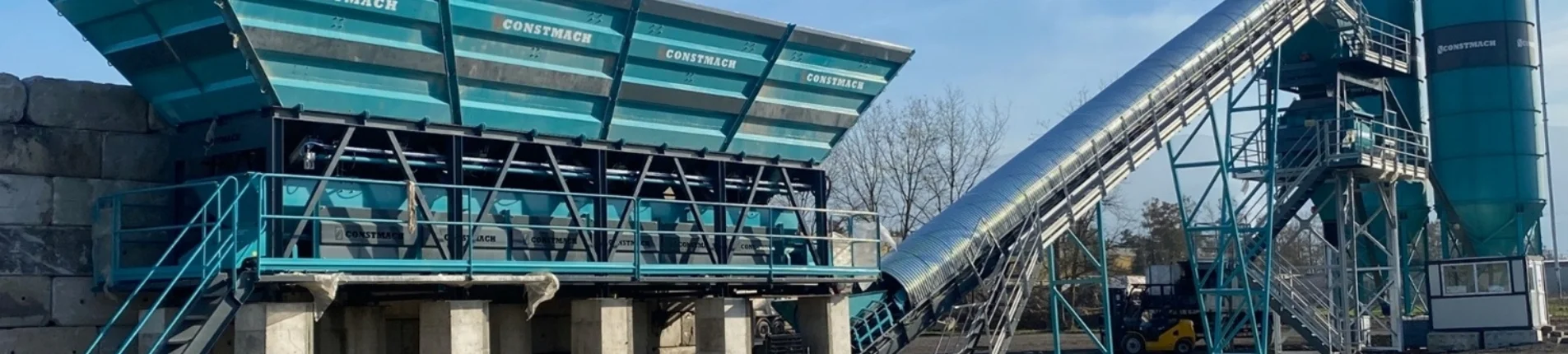
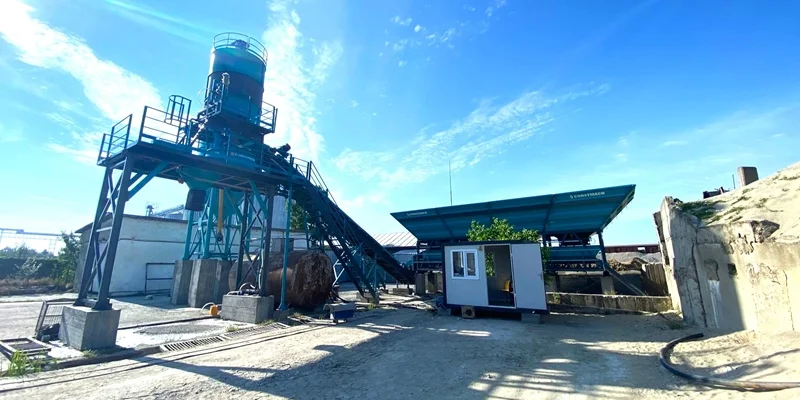
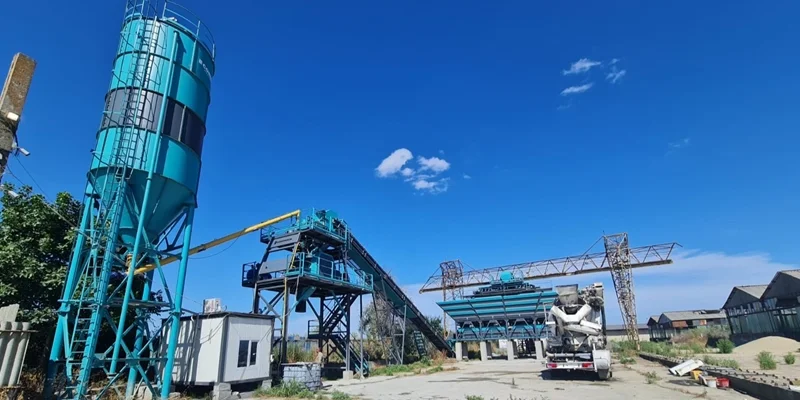
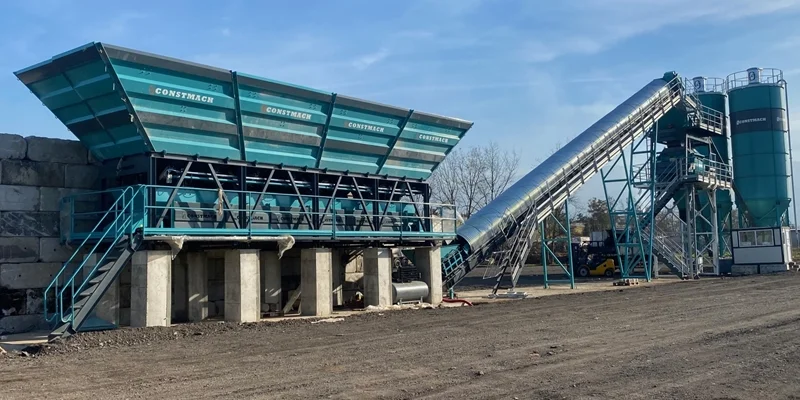
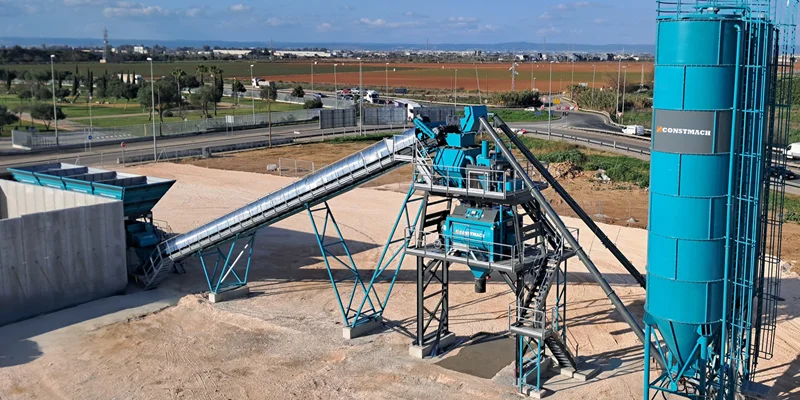
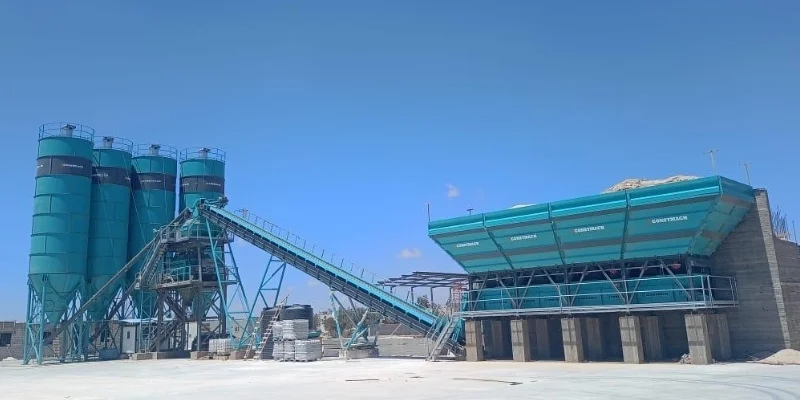
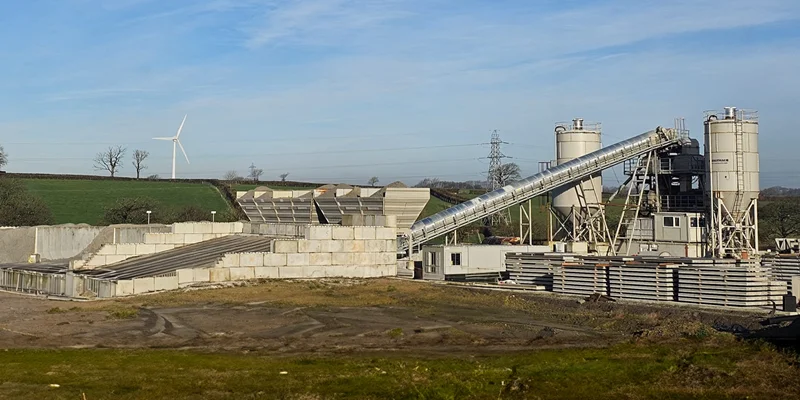
A stationary concrete batching plant is a fixed installation that produces ready-mixed concrete in high volume from a permanent, foundation-mounted setup. Constmach stationary concrete plants cover 30 to 240 m³/h across six models, with larger aggregate and cement storage, heavier structural steel and the highest sustained outputs in the concrete batching plant range. They are built for sites where demand is steady and the plant will stay in one place for years.
What Is a Stationary Concrete Batching Plant?
A stationary concrete batching plant is a permanently installed plant that weighs, mixes and discharges concrete from a fixed position. Unlike a mobile unit, it sits on an engineered foundation and is assembled on site, which lets it carry larger equipment: bigger aggregate bins, taller cement silos and a more powerful mixer. That extra size is the whole point of a fixed plant. It reaches outputs a transportable plant cannot sustain and stores enough material to keep pouring without constant resupply.
Constmach builds its stationary concrete plants for ready-mix producers, precast factories and large construction projects where the same plant runs day after day. The range starts at 30 m³/h for smaller operations and reaches 240 m³/h for high-volume supply, so the plant can be matched to demand rather than bought oversized.
Stationary vs. Mobile: What Changes
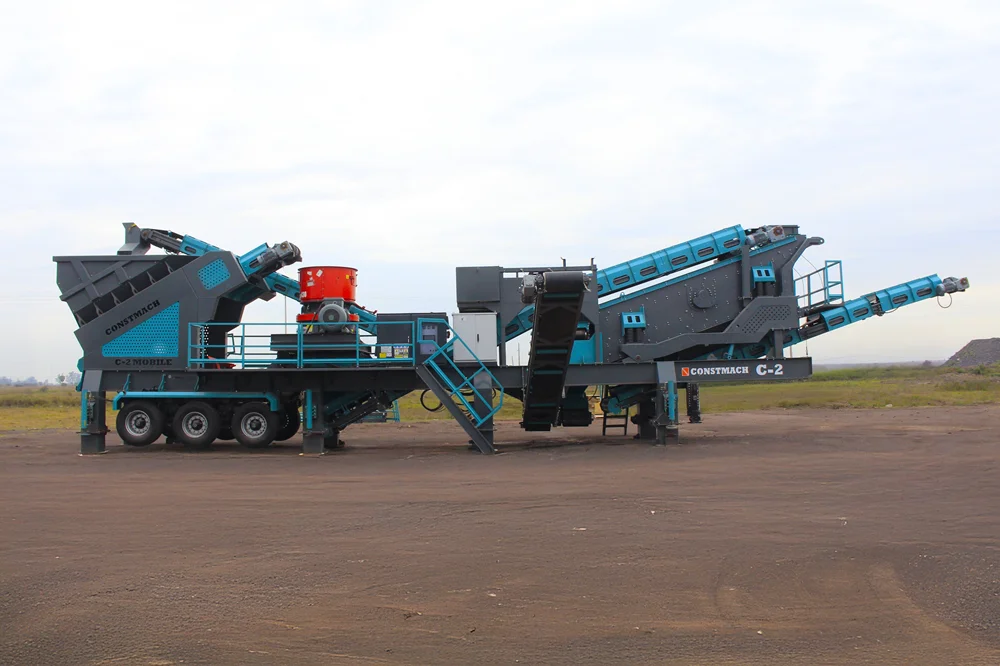
The choice between a stationary and a mobile concrete plant comes down to permanence against portability. A mobile concrete plant arrives mostly pre-assembled and asks for little more than firm, level ground, which suits work that moves from site to site. A stationary concrete plant needs a proper foundation and on-site assembly, and in return it gives you higher sustained output, larger storage and a longer service life in heavy duty.
The logic is simple. If the work is fixed and high-volume for years, a stationary concrete batching plant earns its foundation many times over. If supply has to follow projects that relocate, a mobile concrete batching plant makes more sense. For a ready-mix company serving a city, or a precast plant running fixed production lines, the stationary concrete plant is almost always the right tool because it is designed to run continuously at high capacity from one location.
How Does a Stationary Concrete Plant Work?
A stationary concrete batching plant runs a repeating batch cycle, controlled by a central automation system:
- Aggregate storage and feeding. Sand and stone are held in separate bins and released by feed gates onto a weigh conveyor or into a weigh hopper.
- Weighing. Aggregates, cement, water and admixtures are each weighed on load-cell scales to match the chosen mix design.
- Cement supply. Cement is drawn from the silo and carried by screw conveyor to its weigh hopper.
- Mixing. The weighed materials combine in the mixer until the batch is uniform.
- Discharge. Finished concrete drops into a truck mixer, a bucket or a transfer point for placing.
An operator selects a recipe and the PLC-based control system repeats it load after load, holding each material within tight tolerances. Because the plant is fixed, the layout can be designed around a smooth material flow, which is part of why a stationary concrete plant holds high output through long shifts.
The Constmach Stationary Range
The stationary series spans six outputs, so the plant matches demand instead of being over- or under-sized.
| Model | Output | Typical use |
|---|
| Stationary 30 | 30 m³/h | Small producers, precast workshops |
| Stationary 60 | 60 m³/h | Medium ready-mix and site supply |
| Stationary 100 | 100 m³/h | Busy ready-mix operations |
| Stationary 120 | 120 m³/h | High-demand ready-mix and infrastructure |
| Stationary 160 | 160 m³/h | Large-scale projects, high continuous output |
| Stationary 240 | 240 m³/h | Mega projects and central batching |
The smaller models suit producers who need reliable supply at modest volume. The 120, 160 and 240 are built for sustained high output, where the plant runs through long shifts and downtime is costly. Across the range, the same engineering principles apply: accurate weighing, a capable mixer and automation that keeps every batch on recipe.
Twin Mixers for Very High Output: The DoubleMix Option
Where a single mixer cannot keep up with demand, two mixers can be installed in one plant. Constmach offers this as the DoubleMix 100 and DoubleMix 160 configuration, running two mixing units in the same installation so the plant produces concrete at a higher rate without building a second plant. For central batching operations and continuous large pours, a twin-mixer layout adds capacity while keeping a single material-handling and control system. It is worth considering when peak demand outgrows what one mixer can deliver but a separate plant would be hard to justify.
Main Components of a Stationary Concrete Batching Plant
- Aggregate bins with feed gates, sized for several materials
- Weigh conveyor or weigh hopper with load cells
- Cement silos and screw conveyors
- Cement, water and admixture weighing
- The concrete mixer (twin-shaft, single-shaft, planetary or pan)
- Automated control cabin with PLC
- Dust collection on silos and the mixer
- Aggregate prefeeding system where a loading ramp is not wanted
Mixer Options
The mixer decides batch quality, and Constmach fits the type that suits the concrete being produced. Twin-shaft mixers give fast, intensive mixing and are the usual choice on higher-output stationary concrete plants, especially for stiff and high-strength mixes. Single-shaft mixers handle general ready-mix work. Planetary and pan mixers suit precast, coloured and other specialised concretes where a very even mix matters. Matching the mixer to the work keeps quality high without paying for capacity you will not use.
Cement Silos and Material Storage
Storage is where a stationary concrete batching plant shows its advantage. Constmach supplies cement silos from 30 up to 1,000 tons, so the plant can hold enough cement to keep pouring at full rate between deliveries. Smaller silos, up to about 50 tons, are available in bolted or welded types; larger silos are bolted, which simplifies transport and on-site erection. Each silo comes with the safety and operating equipment it needs as standard: dust filters to control emissions, pressure relief valves, a level indicator, a butterfly valve and air nozzles to keep cement flowing. Sizing the silo to your pour rate is one of the more important decisions in plant design, because a silo too small for the demand forces stops that can show up as cold joints in the work.
Automation and Control
What makes a stationary concrete batching plant reliable is its control system. Constmach plants run PLC-based automation built around European-manufactured components, including SIEMENS and SCHNEIDER. The software stores mix recipes, weighs each material to set tolerances, and corrects the batch water for the moisture already in the aggregate so the water-to-cement ratio stays on target.
The interface is designed to be clear for the operator, and a manual emergency mode keeps the plant controllable if it is ever needed. The system also logs every batch, which gives the producer a traceable record for quality control and for any query over a delivered load. On a plant that may run thousands of batches a month, that record is part of running a credible ready-mix operation.
Aggregate Handling and the Prefeeding System
Aggregate is usually charged into the bins by a wheel loader. A common arrangement uses a built loading ramp so the loader can drive up and tip into the bins, but that ramp is a civil-works item in itself. Constmach offers an aggregate prefeeding system that replaces the ramp: the loader feeds at ground level and the system transfers material up to the bins. This cuts the groundwork at the plant and can save both time and cost during installation, while keeping the bins supplied at the rate a busy plant needs.
Foundation and Site Requirements
A stationary concrete plant needs an engineered foundation designed for the model and the ground conditions. The plant also needs a three-phase industrial power supply sized to the equipment, a clean water source for batching and washdown, and enough space for aggregate stockpiles, silos and truck movement. Because the layout is fixed, it pays to plan the site properly: material flow, truck access and stockpile placement all affect how smoothly the plant runs once it is in production. Constmach provides the load, power and layout data for the chosen model and can adapt the arrangement to the conditions on site.
Adapting the Plant to Climate
Concrete quality is sensitive to temperature, and a fixed plant that runs all year often needs to handle both extremes. For cold climates, Constmach can supply steam generators and insulated panels so the plant keeps working and the mix is protected from freezing before it sets. For hot climates, chillers cool the batch water, which helps control the temperature of the fresh concrete and protects strength. If the plant will face hard winters or hot summers, it is better to specify these options at the order stage than to add them later.
Layout and Site Arrangement
No two sites are identical, so a stationary concrete plant should be arranged around the space and the workflow available. Constmach offers different layout plans depending on installation conditions, from compact arrangements where space is tight to wider layouts that ease truck movement and stockpile management. Getting the layout right early avoids bottlenecks later, because on a fixed plant the flow of aggregate in and concrete out is set for the life of the installation.
Production Capacity and Real Output
The stationary range covers 30 to 240 m³/h, with a twin-mixer DoubleMix option above that for the heaviest duty. As with any plant, the rated figure assumes ideal conditions. Real output depends on truck cycle times, the mix design, how well the site is organised and how fast aggregate and cement are replenished. Size the plant to your peak hourly demand with some margin so it keeps up on the busiest days, and pair it with enough silo and stockpile capacity to feed that rate without interruption. A plant sized only for average demand will struggle exactly when you need it most.
Where Stationary Concrete Plants Are Used
Stationary concrete plants suit any operation where supply is steady and based in one location. Ready-mix producers rely on them for continuous daily output to construction sites across a region. Precast factories use them to feed fixed production lines with a consistent, controlled mix. Large infrastructure projects, dams, ports, power stations and similar mega works often install a central stationary concrete plant for the duration of the job. In each case, the appeal is the same: high, dependable output from a plant designed to run hard for years.
Common Mistakes to Avoid When Choosing a Stationary Concrete Plant
A few errors come up repeatedly. The first is sizing the plant for average demand instead of peak, which leaves it struggling on the busiest days; size for the peak with margin. The second is under-sizing cement and aggregate storage, so the plant runs out of material faster than it can be resupplied and pours stop. The third is treating the foundation and layout as an afterthought; on a fixed plant, poor material flow or truck access is hard to fix once everything is built.
The fourth is choosing the wrong mixer for the concrete. A producer making stiff, high-strength or precast mixes needs a mixer suited to that work, not a general-purpose unit pushed beyond its strengths. Settling these questions before the order, rather than after installation, gives you a plant that matches how you actually produce concrete.
How to Choose the Right Stationary Concrete Batching Plant
Three questions usually settle the choice:
- How much concrete, at peak? Match the output to your busiest demand, not the average. Stationary 30 to 240 covers most needs, with the DoubleMix option for very high duty.
- How much storage do you need? Size cement silos and aggregate bins to keep the plant pouring between deliveries at your peak rate.
- What concrete are you making? The mixer type, the climate options and the layout should all follow from the mixes you produce and the conditions on site.
Answering these at the order stage gives you a stationary concrete plant that fits the work, instead of one that looks right only on paper. Constmach engineers the plant around your output, your storage needs and your site, and supports it from installation and commissioning through after-sales service and spare parts.