





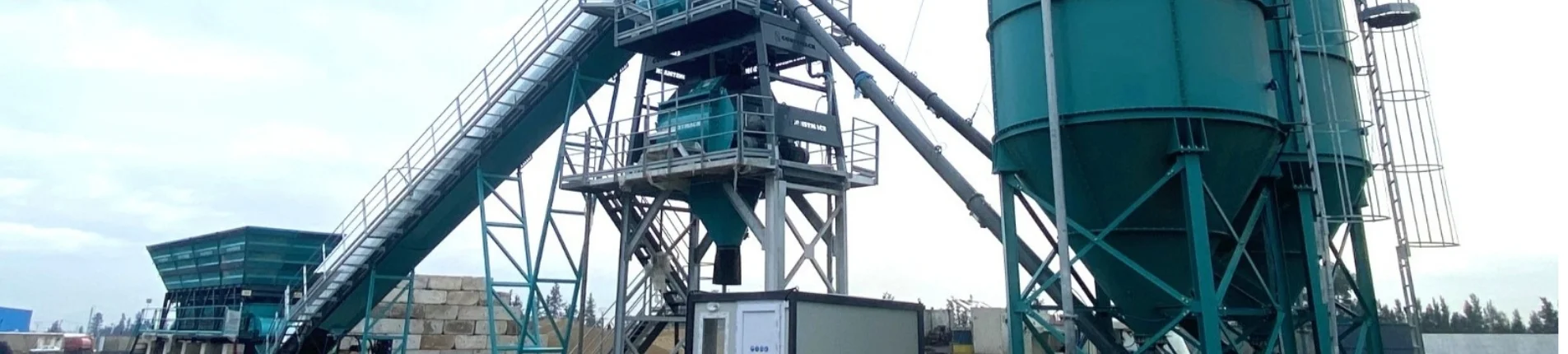

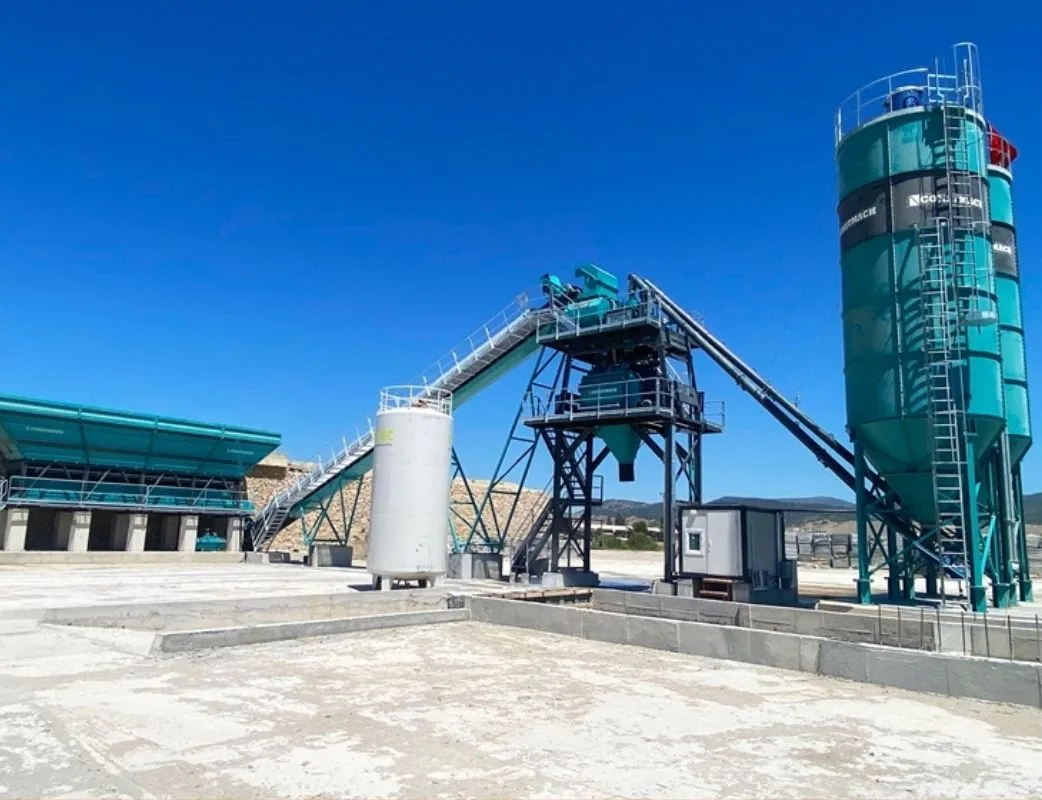
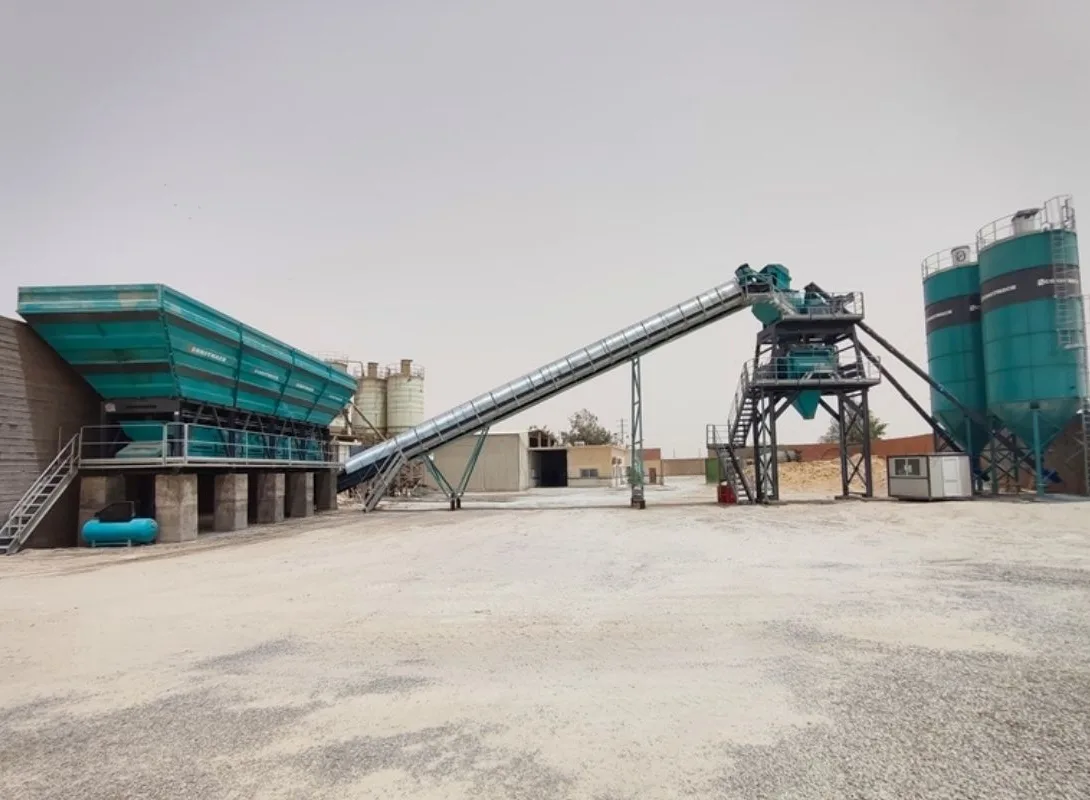
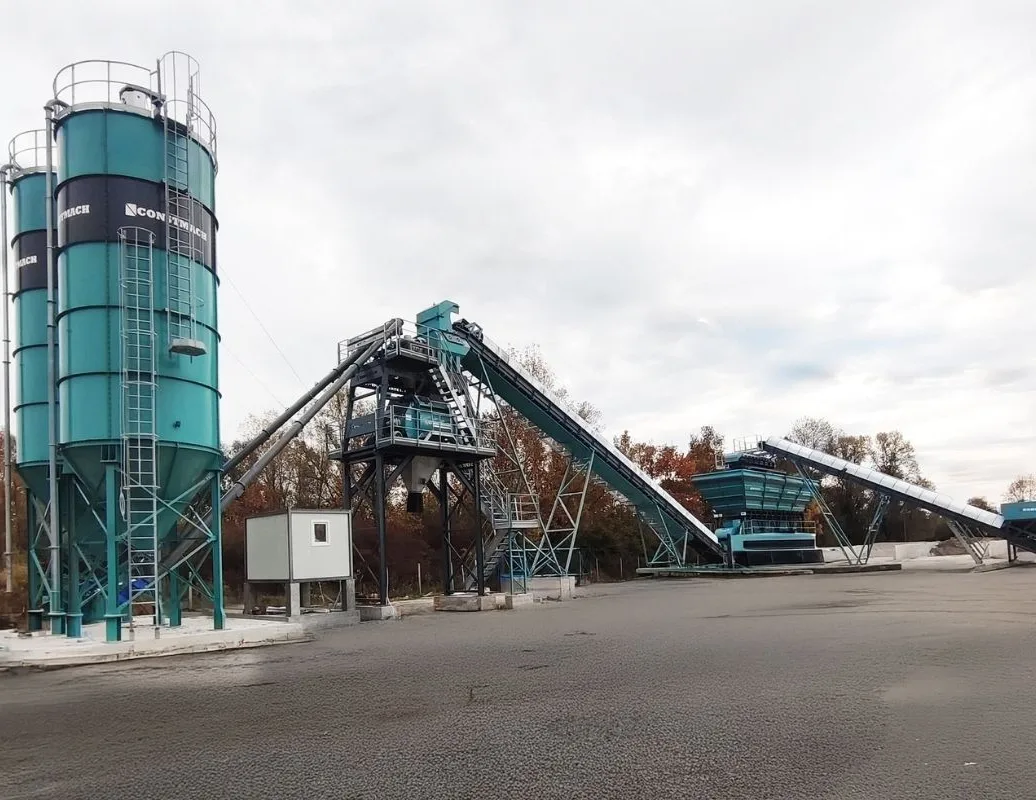
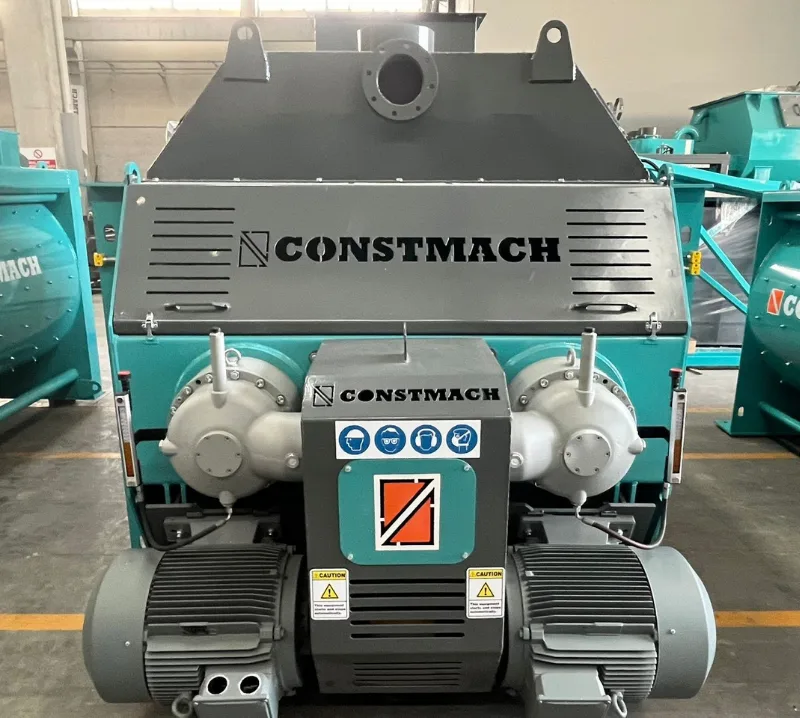
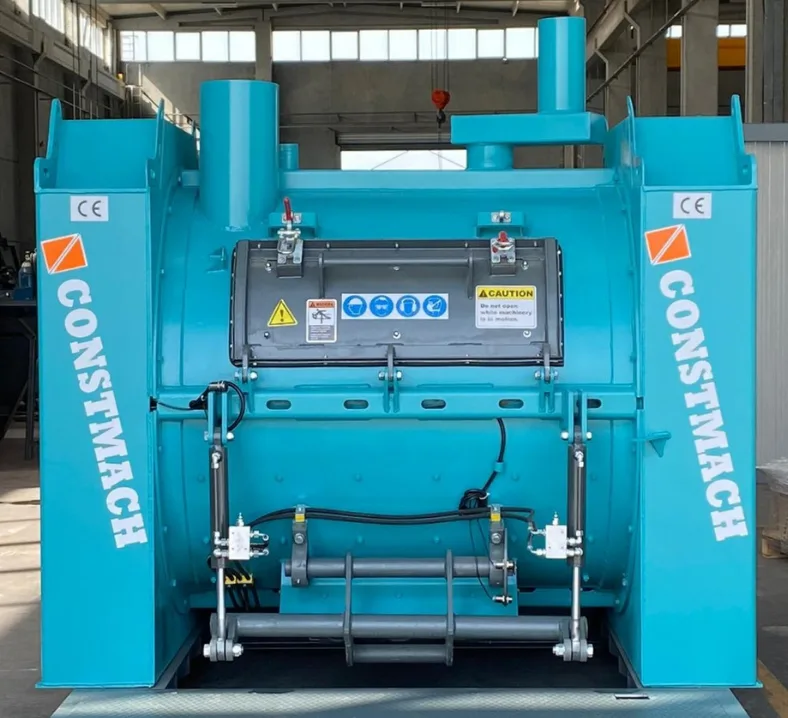
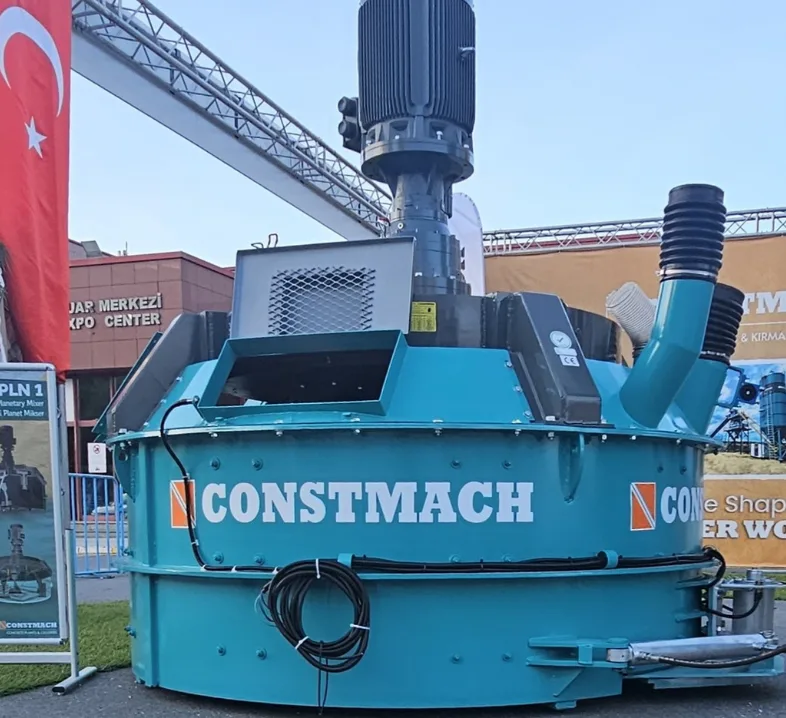
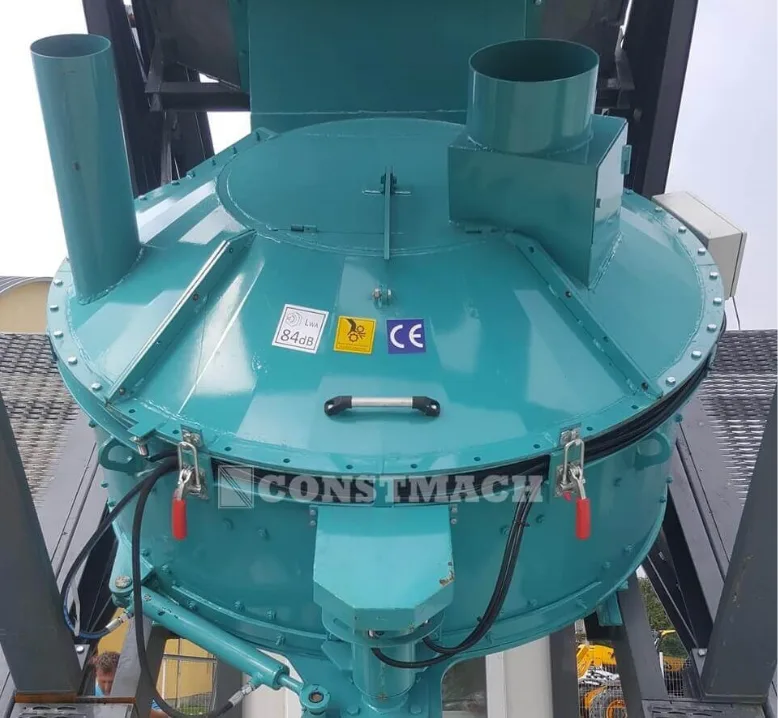
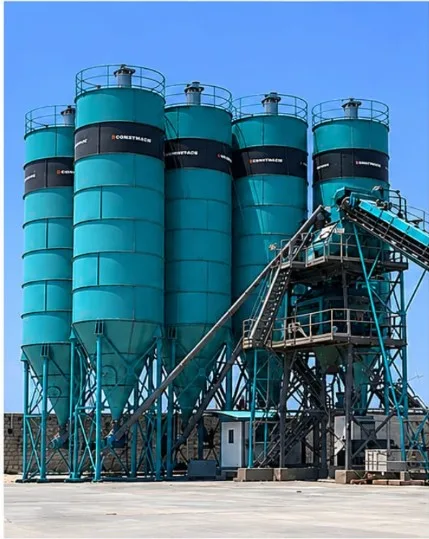
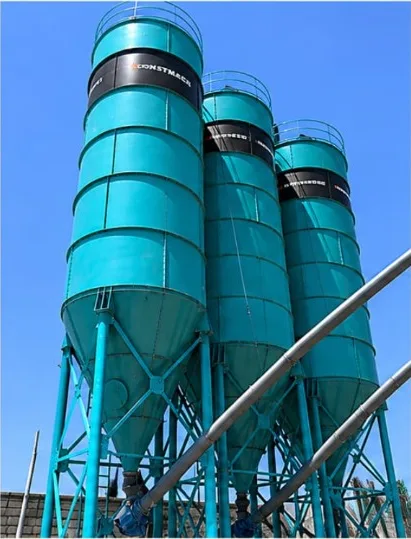
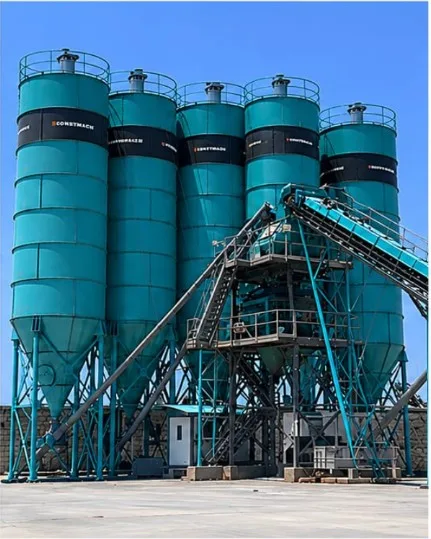
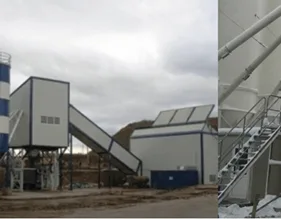
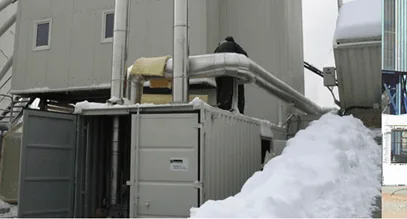
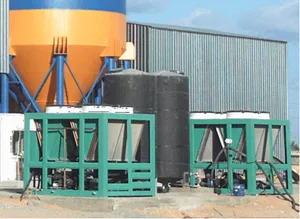
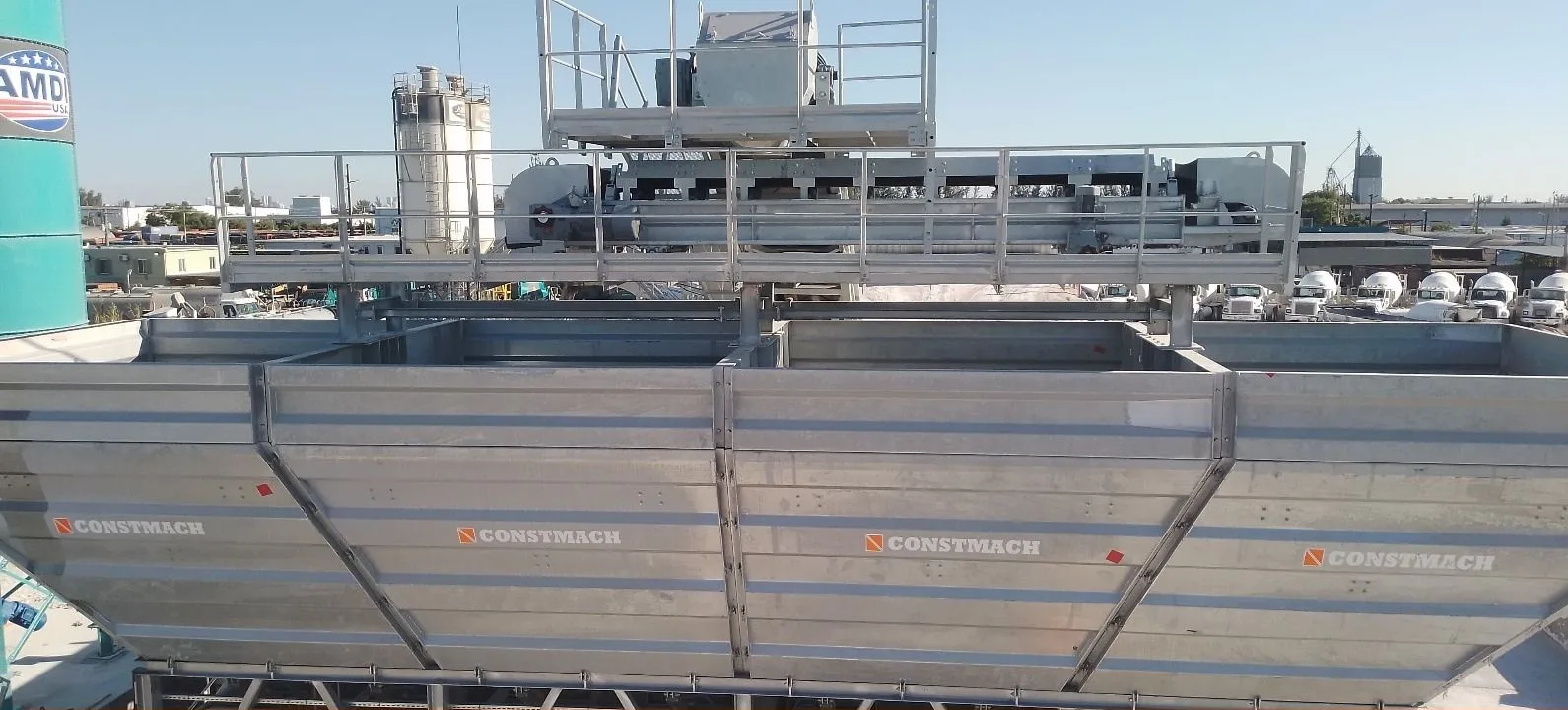
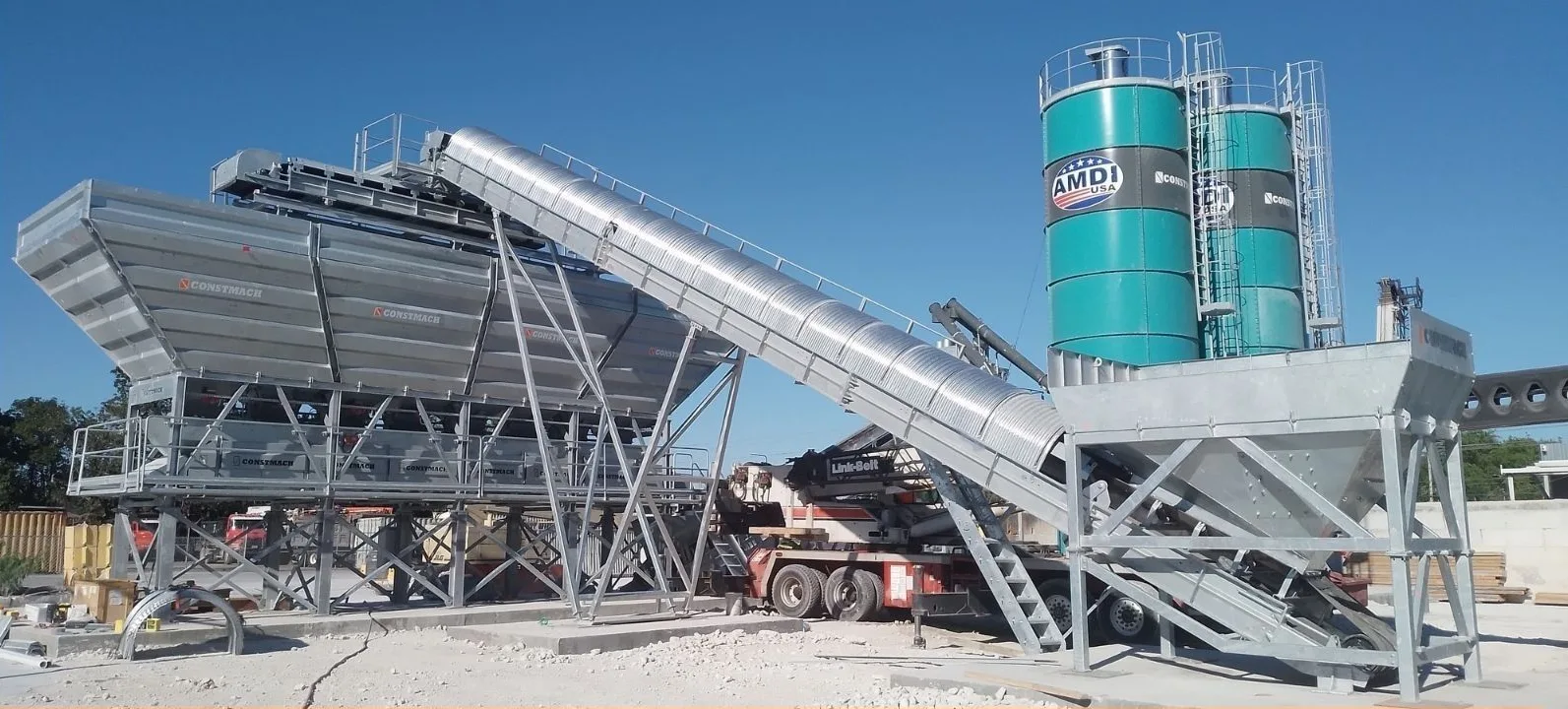
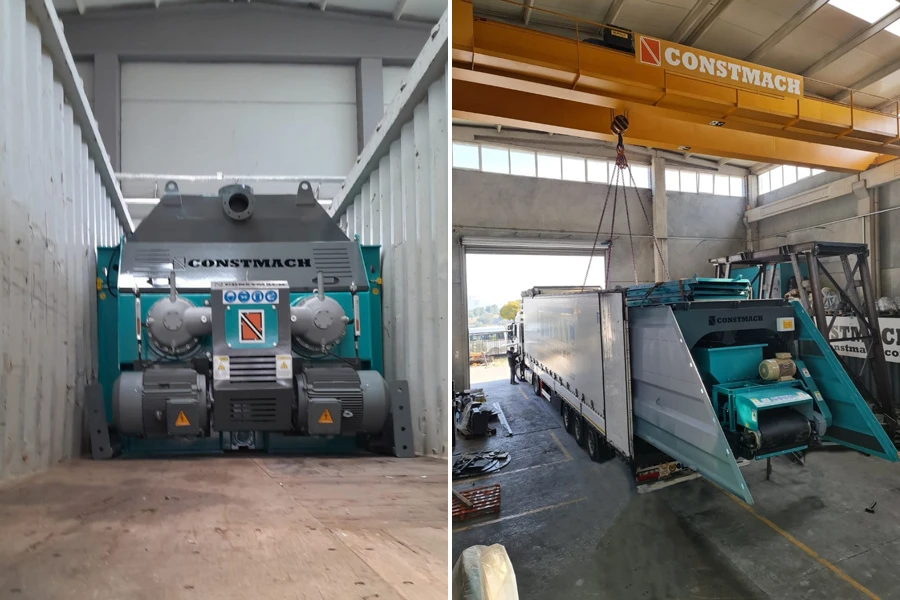
Stationary 100 is purchased for permanent ready-mixed concrete plants serving urban distribution, infrastructure programmes (bridges, dams, highways, ports), large precast factories, and on-site concrete production at major construction projects. Operators choose Stationary 100 when the production target is stable over multiple years on a single site, where the upfront civil-works investment is justified by sustained output.
What Stationary 100 Produces
Stationary 100 produces ready-mixed concrete at a rated capacity of 100 m³/h. The concrete output is matched to the customer's mix design — typical recipes range from low-slump structural concrete (C20–C50) through high-slump flowable concrete to specialty mixes such as fibre-reinforced concrete, lightweight aggregate concrete and roller-compacted concrete (RCC). Output is discharged directly into transit-mixer trucks for delivery to the placement point.
Suitability Factors
Stationary 100 is suitable for projects with: a fixed site for at least 2–5 years, road access for transit-mixer fleet circulation, electrical supply matching the plant's total motor power (155 kW), and water supply meeting concrete-quality standards. Where the project has overhead height restrictions, indoor installation requirements, or short-term deployment, mobile or compact plant alternatives are more appropriate.
Operating Considerations
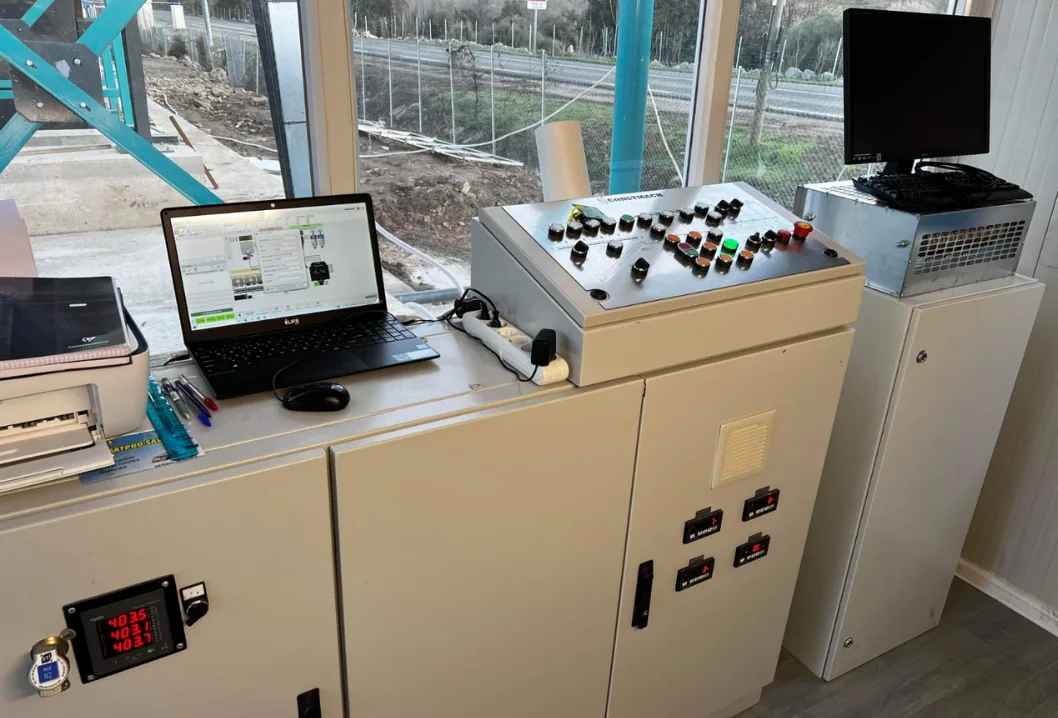
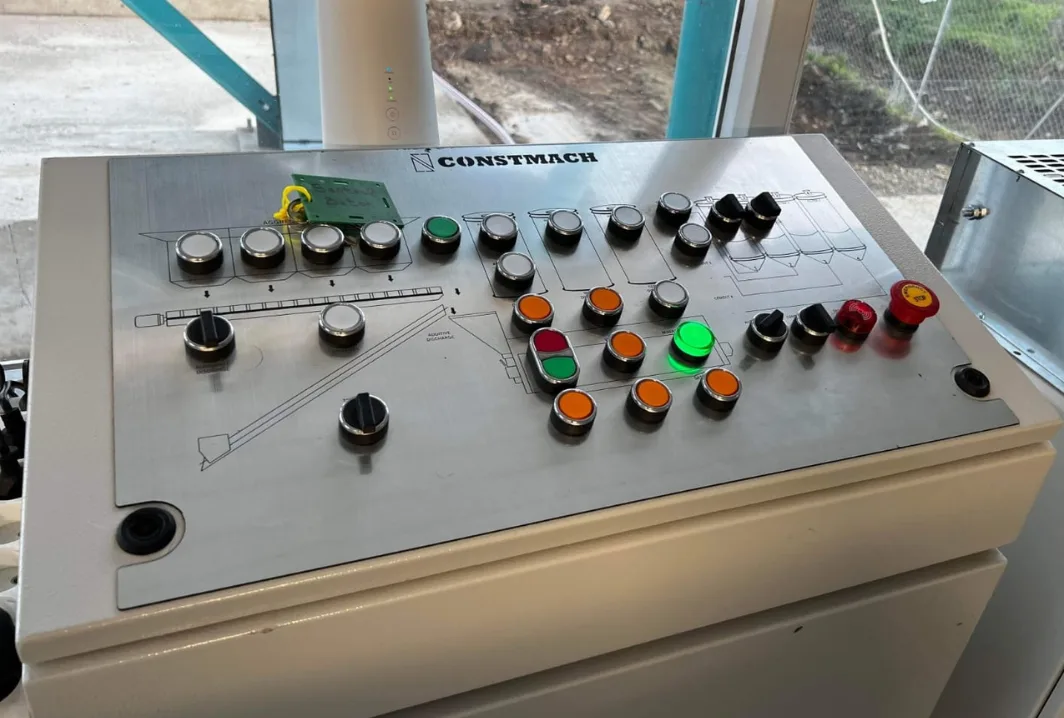
Stationary 100 requires a maintenance schedule covering daily checks (water systems, conveyor belts, mixer wear plates), weekly checks (electrical contactors, hydraulic system, lubrication), and quarterly overhauls (mixer arms and chamber liners, weighing-system calibration). Spare-part stocking is concentrated on bolted wear plates and weighing-system load cells; CONSTMACH supplies recommended spare-part lists matched to expected operating hours.
Comparison To Alternatives
Compared to mobile and compact plant alternatives at similar capacity, Stationary 100 provides: higher peak throughput (full continuous-duty design), longer service life between major overhauls, and lower operating cost per cubic metre over the plant's lifetime. The trade-off is upfront civil works — foundation pads, ramps, silo bases — and a longer site-preparation timeline before first concrete production.