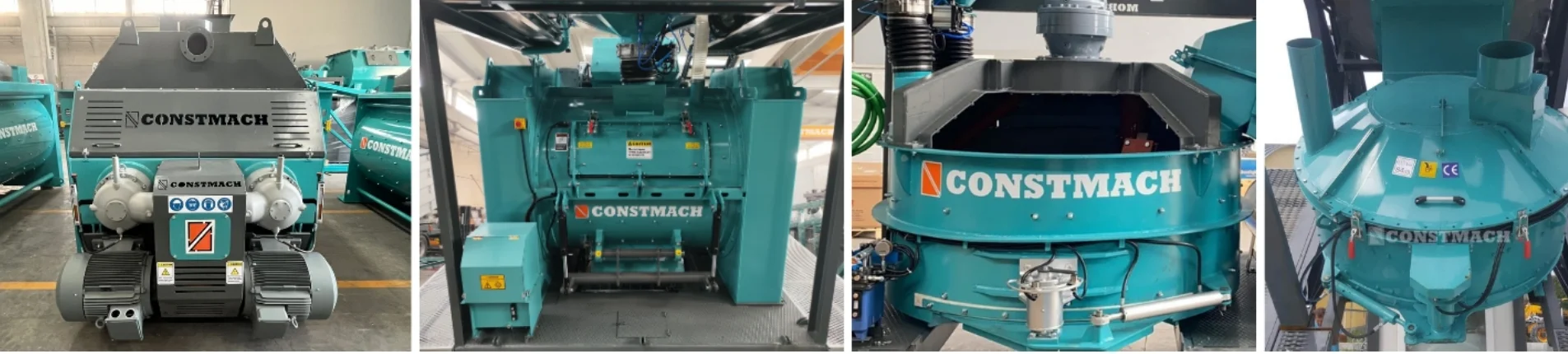
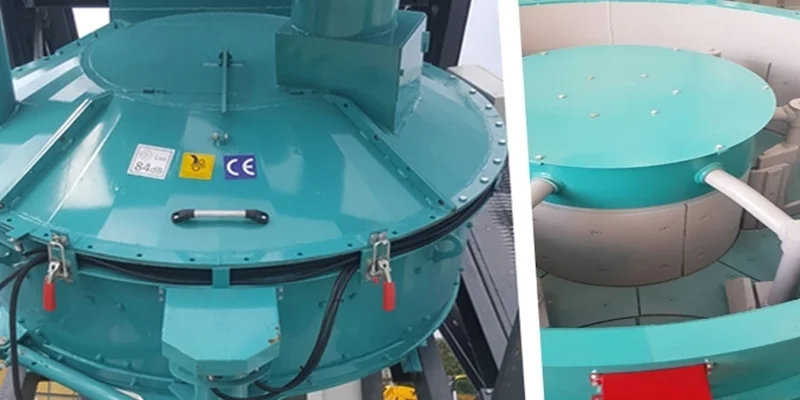
A concrete mixer is the unit that blends aggregate, cement, water and admixtures into uniform concrete at the heart of a batching plant or precast line. Constmach builds four types, twin-shaft, single-shaft, planetary and pan, with compacted outputs from 0.5 up to around 6 m³ per batch. Each type suits different work, and they share the same hard-wearing build: HARDOX or equivalent wear liners, NiHard cast mixing arms, quality gearboxes and bearings, and automatic lubrication as standard.
What Is a Concrete Mixer?
A concrete mixer here means a forced-action mixer: a fixed machine that mixes concrete by driving blades or arms through the materials, rather than relying on a tumbling drum. This is different from the truck drum that mixes concrete in transit. A forced-action mixer combines the materials quickly and thoroughly in a fixed chamber, which is what a batching plant needs to produce a consistent batch every cycle and what a precast works needs for a controlled, even mix.
The mixer is where concrete quality is decided. Accurate weighing sets the proportions, but the mixer is what turns those weighed materials into homogeneous concrete with the strength and workability the design calls for. A capable mixer, matched to the work, produces an even mix in a short cycle; the wrong mixer leaves the batch uneven or takes too long, holding back the whole plant.
The Four Constmach Mixer Types
Each mixer type works a different way and suits different concrete. The table gives the quick view, and the sections below explain each.
| Type | Compacted output | Best suited to |
|---|
| Twin-shaft mixer | Up to around 6 m³ | High-output batching plants, stiff and high-strength concrete, dams |
| Single-shaft mixer | Up to 2 m³ | General ready-mix and smaller plants |
| Planetary mixer | Up to 2 m³ | Precast, coloured and fine mixes needing very even blending |
| Pan mixer | Up to 2 m³ | Precast, block and paver works, smaller batches |
Twin-Shaft Mixer
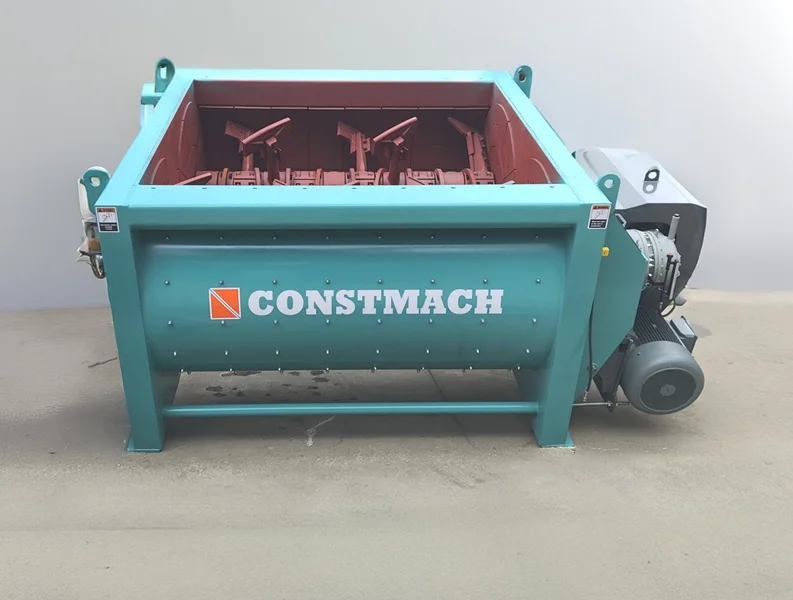
The twin-shaft mixer has two horizontal shafts whose arms throw the material into an intense, overlapping mixing action. It blends fast and copes with stiff, dry and high-strength mixes, and it reaches the largest batch sizes, which is why it is the usual choice on high-output batching plants and for demanding work such as roller-compacted concrete and dams. When output and mixing power matter most, the twin-shaft mixer is the type to reach for.
Single-Shaft Mixer
The single-shaft mixer uses one horizontal shaft and is a straightforward, capable mixer for general concrete. It handles everyday ready-mix work well and suits smaller and mid-sized plants where the very highest output is not needed. It offers a simpler, lower-cost route to forced-action mixing for producers whose mixes do not demand the intensity of a twin-shaft unit.
Planetary Mixer
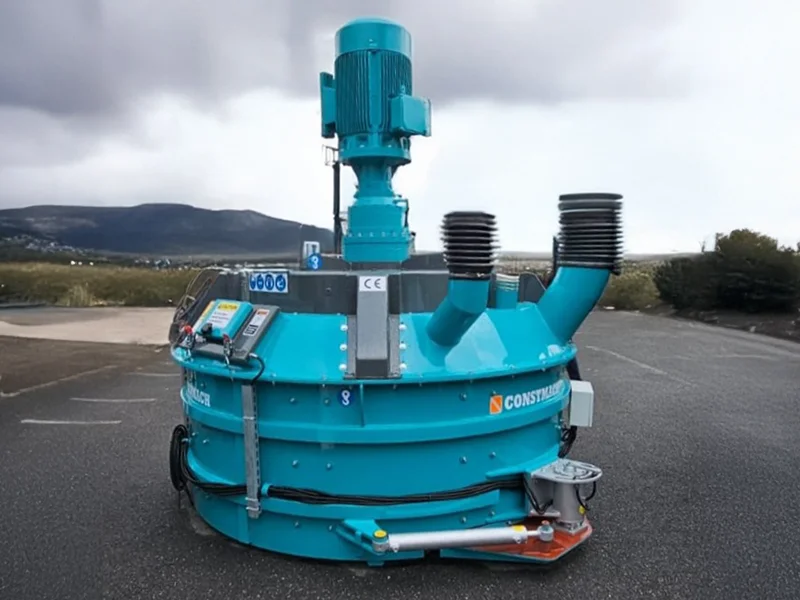
The planetary mixer drives its mixing tools in a planetary path, so they sweep the whole pan and leave no dead spots. That gives a very even, thorough mix, which is why planetary mixers are favoured for precast, coloured concrete, fine mixes and other work where uniformity and finish are critical. Where the look and consistency of the concrete matter as much as its strength, the planetary mixer earns its place.
Pan Mixer
The pan mixer mixes in a circular pan and is a versatile, compact unit well suited to precast, block and paver production and to smaller batches. It gives a good, even mix in a simple machine, and it is a common choice for works that need controlled quality at modest batch sizes rather than high plant output.
How to Choose the Right Mixer Type
The choice comes down to what concrete you make and how much. For high output and stiff or high-strength mixes, the twin-shaft mixer leads. For general ready-mix at moderate volume, the single-shaft mixer is a sound, economical choice. For precast, coloured or fine concrete where an exceptionally even mix matters, the planetary mixer is hard to beat. For block, paver and precast work at smaller batch sizes, the pan mixer fits well. Many buyers come to the question already knowing their output and mix; the type then follows naturally from there.
Charge Volume and Compacted Output
Mixer capacity is quoted two ways, and it helps to understand both. The charge volume is how much loose, dry material the mixer takes in; the compacted output is how much finished, mixed concrete comes out, which is smaller because mixing and compaction reduce the volume. Constmach mixers run at roughly a 1.5-to-1 ratio: a 1,500-litre charge yields about 1,000 litres of compacted concrete, a 3,000-litre charge about 2,000 litres, and so on up to the largest twin-shaft units at 7,500 litres in for 5,000 litres out. When you size a mixer, work to the compacted output, because that is the concrete you actually place, and match it to the batch size your plant or pour needs.
Build Quality and Wear Parts
A mixer leads a hard life. Aggregate is abrasive, and the mixing tools and chamber take constant wear, so the materials a mixer is built from decide how long it lasts and how well it keeps mixing. Constmach builds its mixers for that duty:
- Inner wear liners in HARDOX or an equivalent wear-resistant steel, protecting the mixing chamber
- Mixing arms and scrapers cast from NiHard, a hard, abrasion-resistant material
- Heavy-duty electric motors and quality gearboxes for the mixing drive
- Bearings from established brands such as FAG, SKF or NACHI
- Automatic lubrication fitted as standard, keeping the shaft seals and bearings greased
These choices are not incidental. Wear liners and arms in the right materials hold their shape far longer under abrasion, which keeps the mixing action efficient and cuts how often parts are changed. The automatic lubrication protects the shaft seals, one of the parts most exposed to cement and moisture, so the mixer stays sealed and reliable through long service.
Mixing Quality and Homogeneity
The point of a forced-action mixer is a uniform batch, where cement, water and aggregate are evenly distributed so the concrete reaches its design strength and workability throughout. Each mixer type achieves this in its own way, the twin-shaft by intensity, the planetary by sweeping the whole pan, but the goal is the same. An even mix matters because pockets of poorly mixed concrete are weak points, and on visible precast or coloured work they show as blemishes. A mixer matched to the concrete delivers that uniformity in a short, repeatable cycle, which is what keeps both quality and output high.
Where Constmach Mixers Are Used
Constmach concrete mixers serve a broad spread of work. In ready-mixed concrete plants they produce the daily output that supplies construction sites. In precast factories they make the controlled, even mixes that quality precast demands. In block and paver plants they feed the stiff mortar those machines press. And on large civil works, including dams, the largest twin-shaft mixers handle high volumes of demanding concrete. The right type for each comes back to the same two questions: how much concrete, and what kind.
Maintenance and Wear Parts
Mixer maintenance centres on the wear parts and the lubrication. The liners, arms and scrapers wear with use and should be inspected regularly and replaced before they thin too far, since worn tools mix less well and can let wear reach the chamber itself. The automatic lubrication system needs its reservoir kept topped up and its lines checked. Shaft seals, gearboxes and bearings should be inspected on a schedule. None of this is heavy work, and keeping a stock of the common wear parts means a liner or arm change is a planned job rather than an unplanned stop. Because the wear parts are chosen for long life, the intervals are longer than on a mixer built from softer materials.
Why a Plant Mixer, Not Just a Drum
Concrete can be mixed in a truck drum on the way to site, but a forced-action plant mixer gives a level of control a drum cannot. In a fixed mixer, blades or arms drive through the materials in a closed chamber, combining them quickly and evenly, and the operator sees and controls the mix before it is discharged. That matters for any concrete where consistency is critical: high-strength mixes, precast, coloured work, self-compacting concrete and fibre mixes all rely on even distribution that a forced-action mixer delivers and a tumbling drum struggles with. The mixer also fixes the mix on a known, short cycle, so the plant produces a uniform batch every time rather than depending on how long a truck happens to turn. For a producer who needs repeatable concrete and a record to stand behind, the plant mixer is where that control lives.
Loading Order and Mixing Time
How the materials enter the mixer affects how well and how fast the batch combines. The loading sequence, when the aggregate, cement, water and any admixtures go in relative to each other, is set to suit the mix, and timing the water correctly is part of getting an even result without overloading the start of the cycle. Once everything is in, the mixing time is set so the batch reaches full uniformity and no longer, because mixing past that point only wastes cycle time and output. The right sequence and time depend on the mixer type and the concrete, and they are dialled in during commissioning. Getting them right is what lets a mixer turn out a consistent batch in a short cycle, which is the difference between a plant that holds its rated output and one that falls behind.
Matching the Mixer to Your Plant
The mixer sets the rhythm of a batching plant. Its batch size and cycle time, together, decide how much concrete the plant can produce in an hour, so the mixer has to be matched to the plant's target output rather than chosen in isolation. A mixer too small for the plant becomes the bottleneck; one too large is capacity paid for and not used. Where a single mixer cannot keep up with very high demand, some plants run two mixers in one installation, the twin-mixer arrangement Constmach offers as the DoubleMix configuration, to lift output without building a second plant. When you size a mixer, start from the concrete you make and the output you need, and let the type and batch size follow from there so the mixer and the plant work as one.
Common Mistakes to Avoid When Choosing a Mixer
The first mistake is choosing the type by capacity alone and ignoring the concrete: a planetary or pan mixer suits fine and precast work that a basic single-shaft unit would not mix as well, while stiff, high-strength concrete needs the intensity of a twin-shaft. The second is sizing on charge volume rather than compacted output, which leaves the batch smaller than expected. The third is overlooking wear parts and lubrication when comparing mixers, since a cheaper mixer in softer materials can cost more over its life in replacement liners and downtime. Matching the type, the true output and the build to your work avoids all three.
Controls and Safety
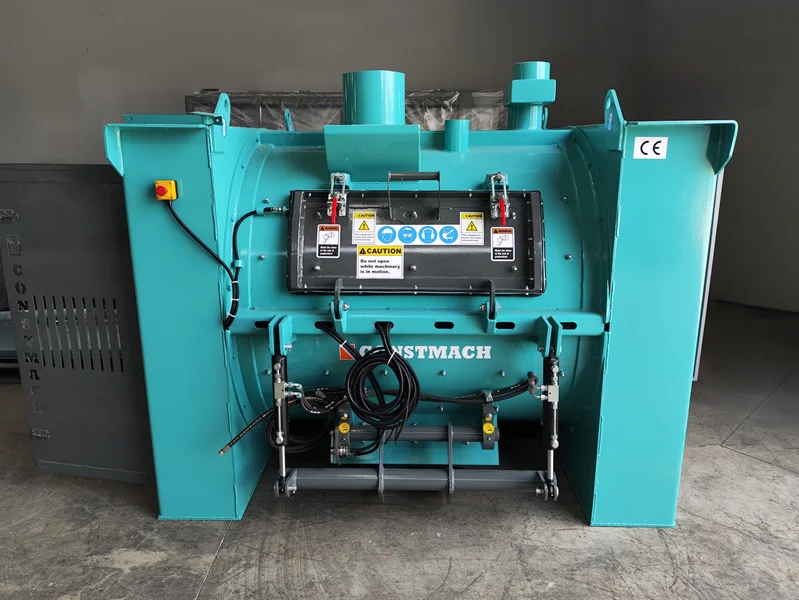
A plant mixer works as part of an automated system, so its operation is managed by the plant's control system, which times the loading, mixing and discharge for each batch to the selected recipe. Safety is built around the moving parts: a guard grid over the top of the chamber keeps the mixing zone closed during operation, and access doors for cleaning and maintenance are interlocked so the mixer cannot run while they are open. Keeping these guards and interlocks in working order is part of safe operation, because the mixing chamber is a powerful machine. Constmach sets up the controls and safety devices with the mixer so it runs correctly within the plant from commissioning.
The Constmach Mixer Range
Across the four types, Constmach offers a model for most batch sizes. The twin-shaft CTS range runs from the CTS-1 at 1,000 litres of compacted concrete up to the CTS-5 at 5,000 litres. The single-shaft CSS range covers the smaller and mid sizes up to 2,000 litres. The planetary CPLN range spans small precast batches up to 2,000 litres, and the pan CPM range covers compact batches for precast and block work. Whichever type fits your concrete, there is a size to match your plant or pour, and Constmach builds them all in-house and supports them with spare parts through their working life.