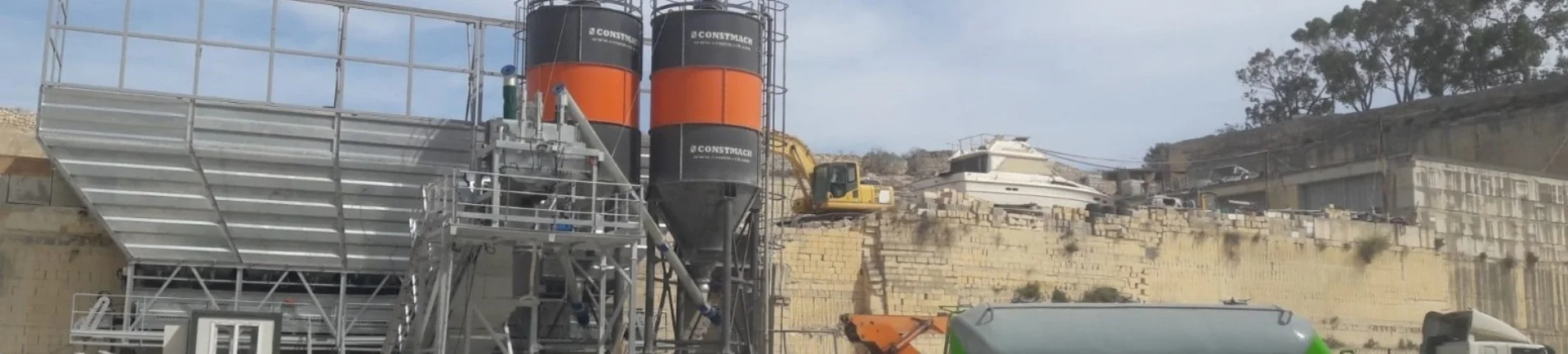
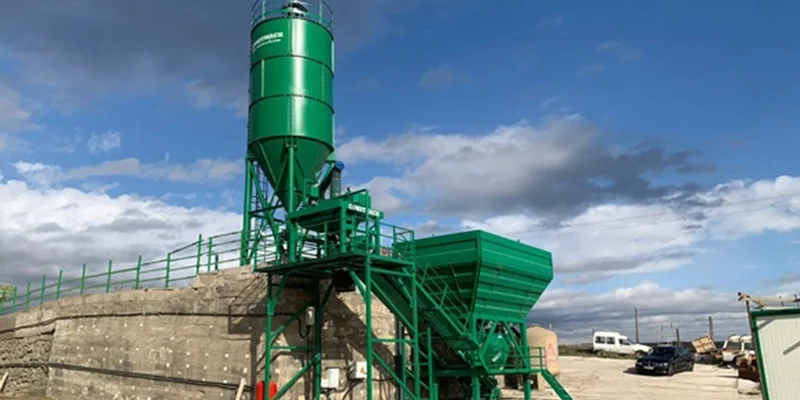
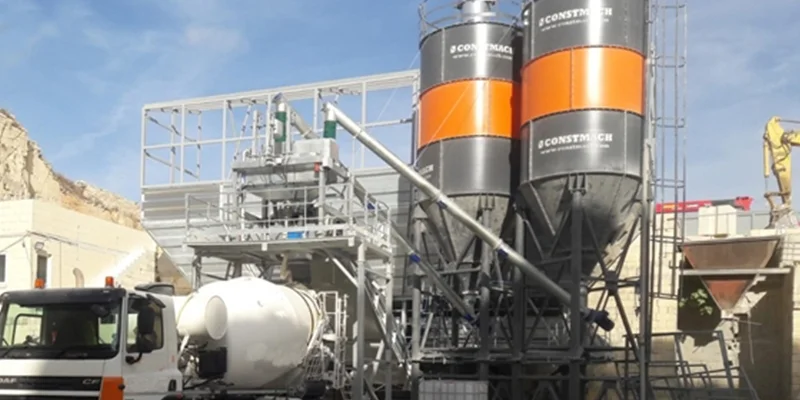
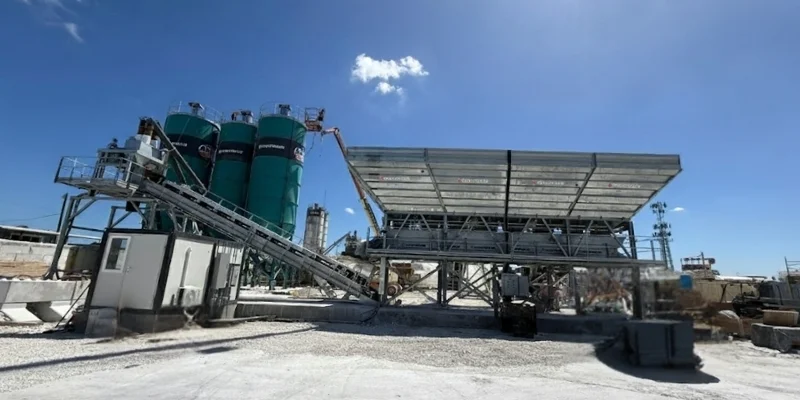
A dry type concrete batching plant weighs aggregate, cement, water and admixtures and discharges them straight into the truck mixer, where the concrete is mixed during transport. There is no central mixer at the plant. Constmach dry type concrete plants cover 60 to 120 m³/h across three DryMix models, and because the plant has no mixing unit to build, maintain and power, it is simpler, quicker to install and lower in cost than a wet plant of the same output.
What Is a Dry Type Concrete Batching Plant?
A dry type concrete batching plant, also called a dry mix or dry batch plant, prepares each batch by weighing the materials and dropping them, unmixed, into the drum of the transit mixer. The mixing then happens in the truck on the way to the pour. This is the one thing that sets it apart from a wet plant, where a compulsory mixer blends the concrete on site before it leaves.
The effect of removing the plant mixer runs through the whole machine. There is no mixer to buy, no mixer drive to power and no mixer liners, arms or blades to replace. The plant becomes lighter, cheaper and faster to set up, while the automation still weighs every material accurately for each load. Constmach builds its DryMix plants for projects that move a lot of concrete and have transit mixers travelling a reasonable distance to the placing point.
Dry Type vs. Wet Type: What Changes
The difference is where the concrete is mixed. A wet plant mixes the batch in a central mixer and discharges ready concrete; a dry type concrete plant batches the materials dry and lets the truck drum do the mixing in transit. Each suits a different job.
| Point | Dry type plant | Wet (central mixer) plant |
|---|
| Mixing location | In the transit mixer drum | In the plant's central mixer |
| Central mixer | None | Required |
| Installation cost | Lower | Higher |
| Setup and mobility | Faster, more portable | Slower, fixed |
| Maintenance | Less (no mixer wear parts) | More (mixer liners, arms, blades) |
| Best for | High-volume haulage, big projects | On-site mixed concrete, short hauls, pumping |
If the trucks haul concrete a fair distance, the drive gives the drum time to mix, and a dry type plant delivers strong output at lower cost. If you need fully mixed concrete at the plant, for example to pump it on site or where hauls are very short, a wet plant is the better choice. Many large infrastructure jobs choose dry type plants precisely because the concrete travels anyway.
How Does a Dry Type Concrete Plant Work?
The cycle is short because there is no mixing stage at the plant:
- Aggregate feeding. Sand and stone are held in bins and released by feed gates onto a weigh conveyor or into a weigh hopper.
- Weighing. Aggregates, cement, water and admixtures are each weighed on load-cell scales to the chosen mix design.
- Cement supply. Cement is drawn from the silo and carried by screw conveyor to its weigh hopper.
- Discharge into the truck. The weighed materials, with the water and admixtures, are discharged together into the drum of the transit mixer.
- Mixing in transit. The truck drum turns and mixes the concrete on the way to the site, so it arrives ready to place.
The automation handles the weighing and discharge for every cycle, so the plant batches load after load quickly. Because no batch waits in a mixer, a dry type concrete batching plant can keep a line of trucks moving steadily, which is a large part of why these plants handle very high daily volumes.
The Constmach DryMix Range
The DryMix series covers three outputs, so the plant matches the project rather than being over- or under-sized.
| Model | Output | Typical use |
|---|
| DryMix 60 | 60 m³/h | Medium projects and site supply |
| DryMix 100 | 100 m³/h | High-demand infrastructure work |
| DryMix 120 | 120 m³/h | Large-scale, high continuous output |
All three share the same idea: accurate dry batching and fast discharge into the truck, with no central mixer. The choice between them comes down to how much concrete you need at peak and how many trucks you can keep in the cycle.
Why Removing the Central Mixer Matters
The central mixer is the most expensive single component of a wet plant, and the hardest-working. It carries the cost of the mixing drive, and its liners, arms and blades wear with every batch and need regular replacement. A dry type concrete plant does without all of that. Lower purchase cost, lower installation cost and far less mixer maintenance are direct results, and the plant is simpler to run because there is no mixing cycle to manage. For a contractor watching the cost per cubic metre on a long project, those savings add up across the life of the work.
Main Components of a Dry Type Concrete Batching Plant
- Aggregate bins with feed gates
- Weigh conveyor or weigh hopper with load cells
- Cement silo and screw conveyor
- Cement, water and admixture weighing
- Discharge chute into the transit mixer
- Automated control cabin with PLC
- Dust collection on the silo and at transfer points
- Aggregate prefeeding system where a loading ramp is not wanted
The list is shorter than a wet plant's by exactly one large item: the mixer. Everything that weighs and moves material is still there, engineered for accuracy and steady throughput.
Mixing in the Transit Mixer: Getting Consistent Concrete
Because the mixing happens in the truck, the drum has to be given enough turning to blend the batch fully before placing. In practice the haul to site usually provides that time, and the drum should run at mixing speed for the recommended number of revolutions. The mix design, the loading order and the drum condition all affect the result, so a dry type plant works best where the trucks are well maintained and the journey gives the concrete time to combine. For mixes that need very intensive blending, or where the placing point is right next to the plant, a wet plant with a central mixer may suit better. Matching the method to the haul and the concrete is the key to consistent results from a dry batch plant.
Cement Silos and Material Storage
A dry type concrete plant still needs cement storage sized to its output. Constmach supplies cement silos to match the plant and the pour rate, fitted with the usual safety and operating equipment: dust filters, a pressure relief valve, a level indicator, a butterfly valve and air nozzles to keep cement flowing. Holding enough cement to batch at full rate between deliveries keeps the trucks moving, because on a high-volume dry batching operation a silo that runs low is what stops the line.
Automation and Control
The control system is what makes dry batching accurate. Constmach DryMix plants use PLC-based automation that stores mix recipes, weighs each material within set tolerances and discharges the batch into the truck on command. The same control components Constmach uses across its plants, including European-origin PLCs, bring repeatable batching and a record of each load for quality control. The interface is straightforward, which fits the design goal of a plant that is simple to operate. Accurate weighing matters even more on a dry plant, because there is no central mixer stage to even out a batch before it leaves.
Aggregate Handling and the Prefeeding System
Aggregate is charged into the bins by a wheel loader, usually over a built loading ramp. Constmach can supply an aggregate prefeeding system that replaces the ramp, letting the loader feed at ground level while the system lifts material to the bins. On a dry type plant chosen partly for its quick, low-cost installation, removing the ramp keeps site preparation light and supports the plant's portability.
Installation, Mobility and Site Requirements
Quick installation is one of the main reasons contractors choose dry type plants. With no central mixer to erect and a lighter structure overall, a DryMix plant is faster to install and commission than a wet plant of the same output, and it is easier to relocate when a project ends. The site still needs a firm, level area able to carry the plant, a three-phase power supply and a water source, but the groundwork is lighter than a heavy wet installation. Constmach provides the load, power and layout figures for the chosen model so the site can be ready when the plant arrives.
Production Capacity and Real Output
The DryMix range covers 60 to 120 m³/h. The rated figure assumes ideal conditions, and on a dry plant the real limit is often how many trucks you can keep in the cycle, because each batch leaves in a truck rather than waiting in a mixer. Size the plant to your peak demand, make sure you have enough transit mixers to match it, and keep the cement silo large enough to feed that rate. A dry type concrete batching plant rewards good truck logistics with very steady, high output.
Where Dry Type Concrete Plants Are Used
Dry type plants are a common choice on large projects that move a great deal of concrete over a working area. Dams, large public housing schemes, highways and bridge construction all suit dry batching, because the concrete travels to the placing point anyway and the lower-cost, quick-to-install plant keeps the trucks supplied. Contractors who value fast setup, easy relocation and a low cost per cubic metre on high-volume work tend to favour a DryMix plant over a heavier wet installation.
Loading the Truck: Sequence and Accuracy
How the materials enter the drum affects how well the concrete mixes on the road. A dry type concrete batching plant discharges the weighed aggregate, cement, water and admixtures into the truck in a controlled way, and getting that sequence right helps the drum blend the batch evenly without cement balling or uneven water spread. The control system manages the discharge so each load goes in the same way every time, which is part of how a dry plant holds consistent quality across a long pour. Because all the accuracy is built in at the weighing stage, calibrated load cells and a well-set recipe matter more here than on a wet plant, where a central mixer can still even out a slightly off batch. Keeping the scales calibrated and the discharge gates working cleanly is the practical heart of running a dry batch plant well, and it is a light routine compared with maintaining a central mixer.
The Economics of a Dry Type Concrete Plant
The cost case for dry batching is clear on high-volume work. The lower purchase and installation cost, the lighter maintenance and the simpler operation all reduce the cost per cubic metre over a long project, and the quick setup means the plant starts earning sooner. Against that, the method depends on a fleet of transit mixers and a haul that gives the drum time to mix, so the saving is real where the concrete travels anyway and less relevant where it does not. When you compare a dry type concrete plant with a wet plant for a particular job, weigh the lower plant cost against your truck logistics and the kind of concrete you place, and count the full cost over the life of the project rather than the purchase price alone.
Common Mistakes to Avoid When Choosing a Dry Type Concrete Plant
The first mistake is choosing dry batching for the wrong job. If you need fully mixed concrete at the plant, for pumping on site or for very short hauls, a wet plant suits better; a dry type plant relies on the truck drum and the journey to mix. The second is under-providing transit mixers. The plant can batch faster than a thin truck fleet can carry away, so the trucks, not the plant, become the bottleneck. The third is under-sizing cement storage, which stops the line on a high-volume operation. Size the silo and the fleet to the plant's output, not the other way round.
How to Choose the Right Dry Type Concrete Batching Plant
Three questions usually settle the choice:
- Does your concrete travel? If trucks haul a reasonable distance, the drum mixes in transit and a dry type plant is a strong, low-cost option. If you need mixed concrete at the plant, choose a wet plant instead.
- How much concrete, at peak? Match the output to your busiest demand. DryMix 60 to 120 covers most high-volume needs.
- How many trucks can you run? A dry plant only reaches its output if enough transit mixers keep the cycle moving, so size the fleet and the cement silo to the plant.
Answering these at the order stage gives you a dry type concrete plant that fits the project, instead of one that looks right only on paper. Constmach engineers the plant around your output, your haul and your site, and supports it from installation and commissioning through after-sales service and spare parts.