






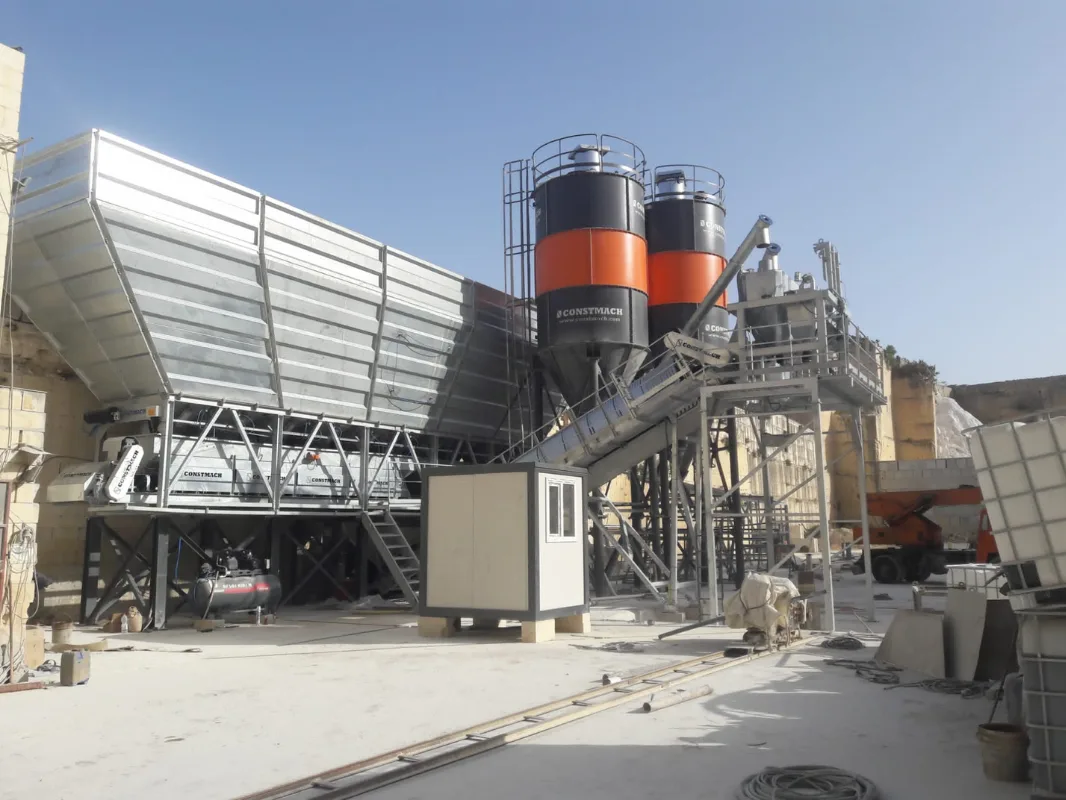
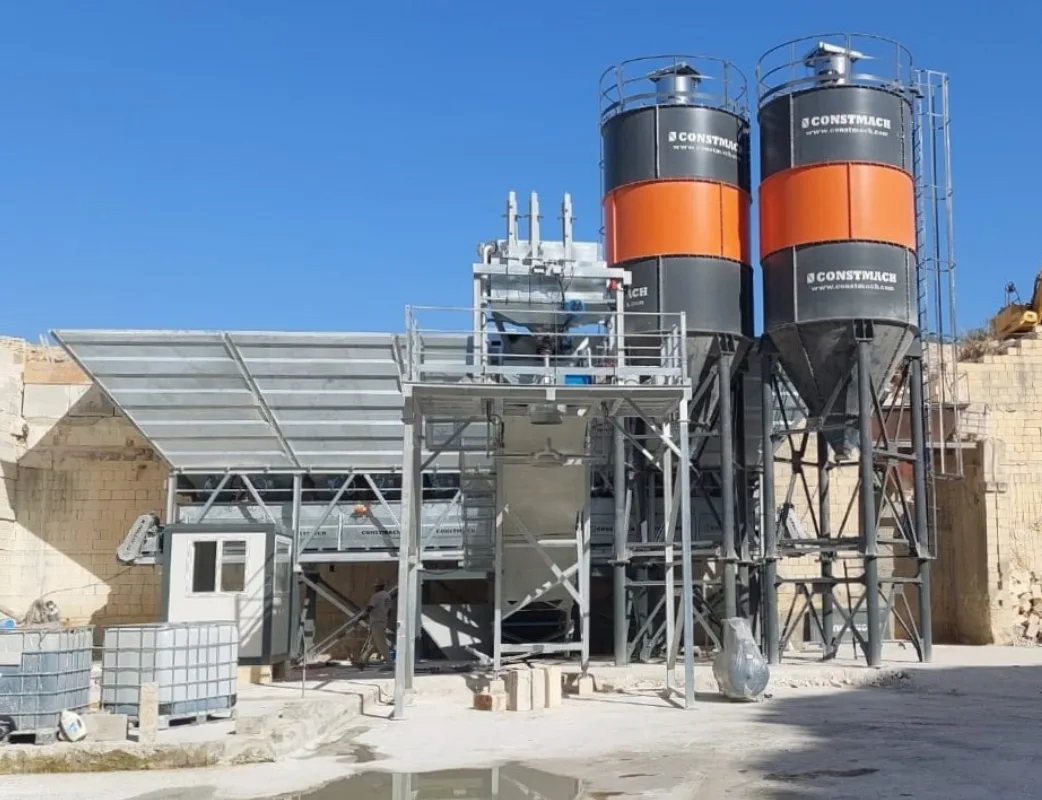
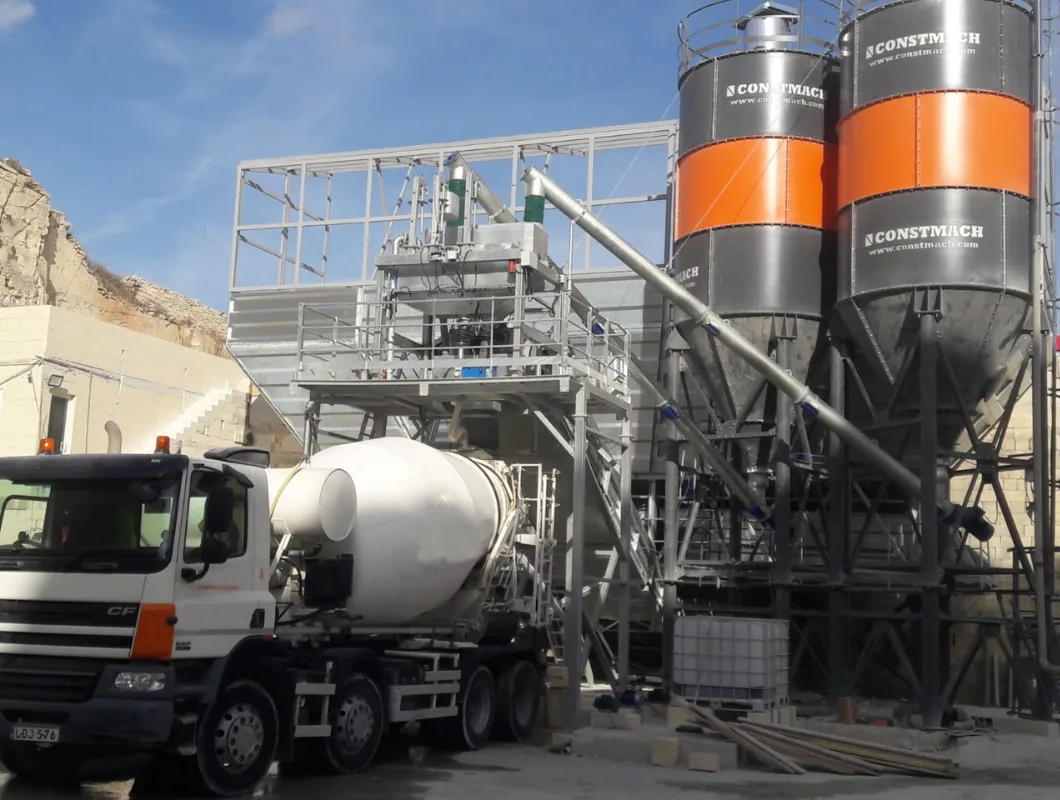
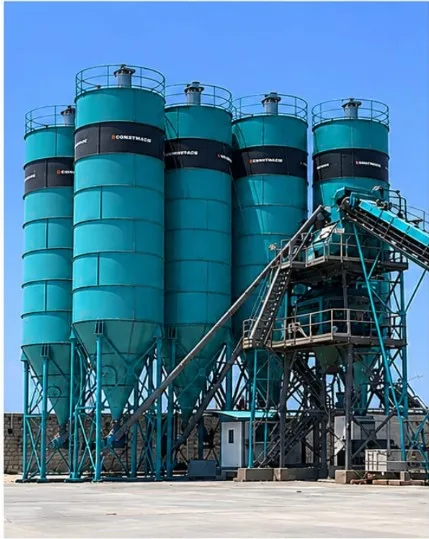
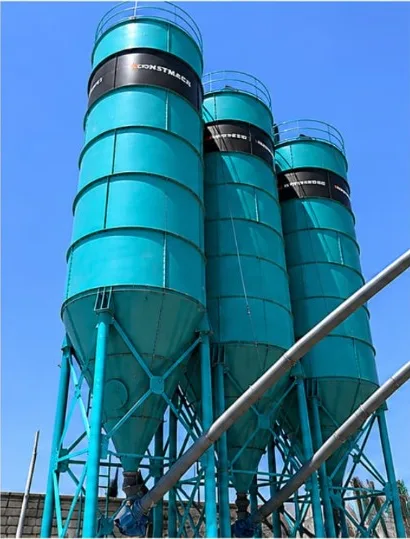
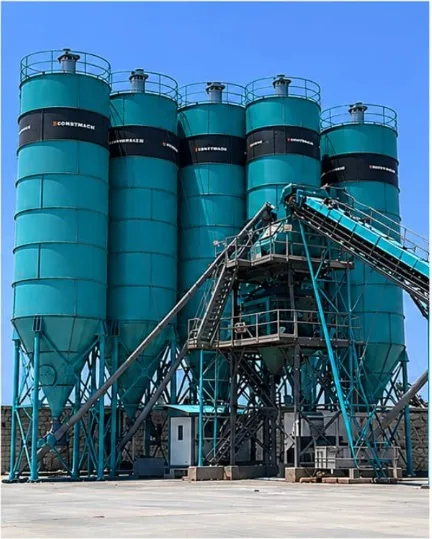
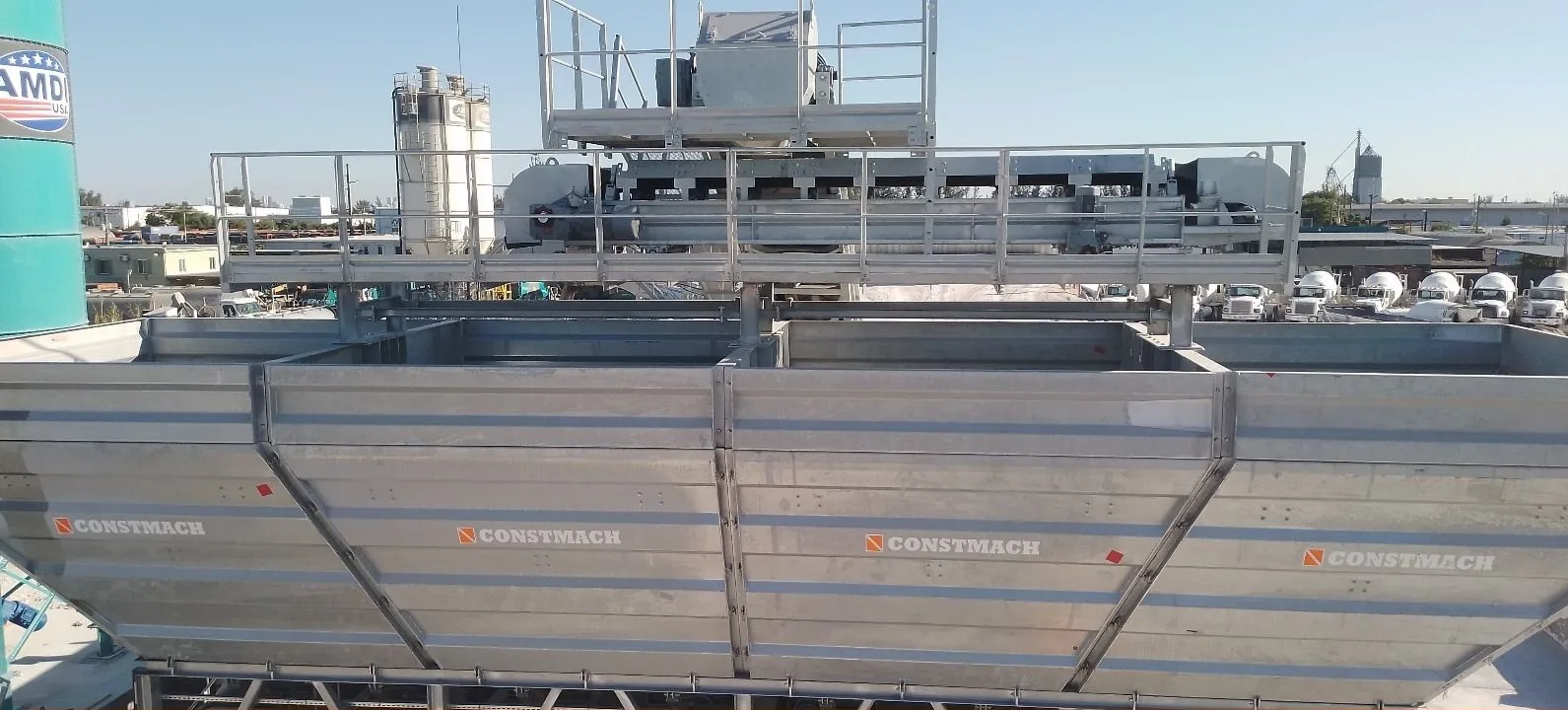
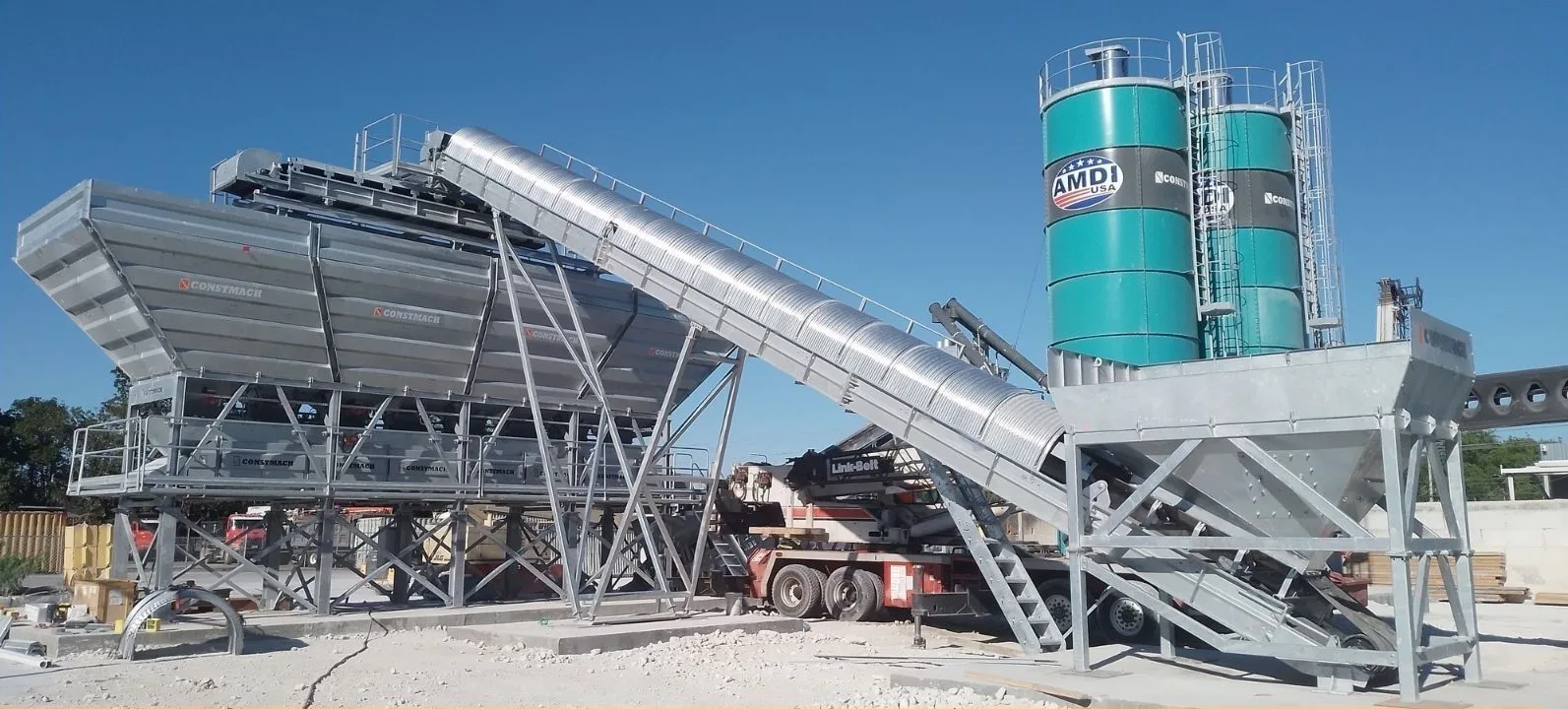
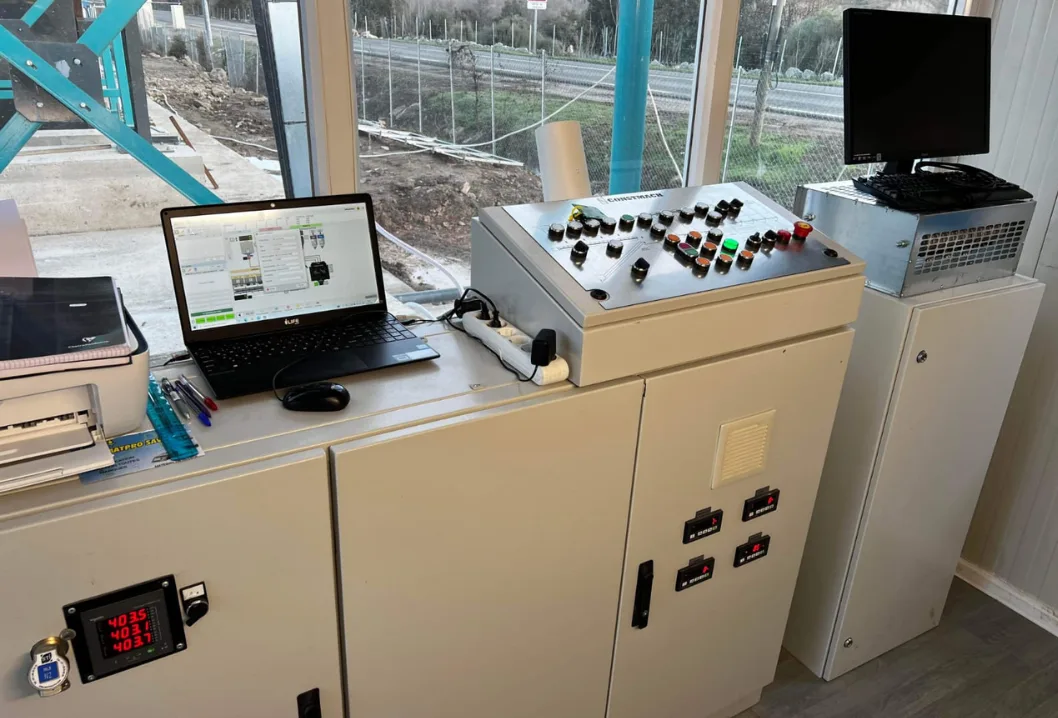
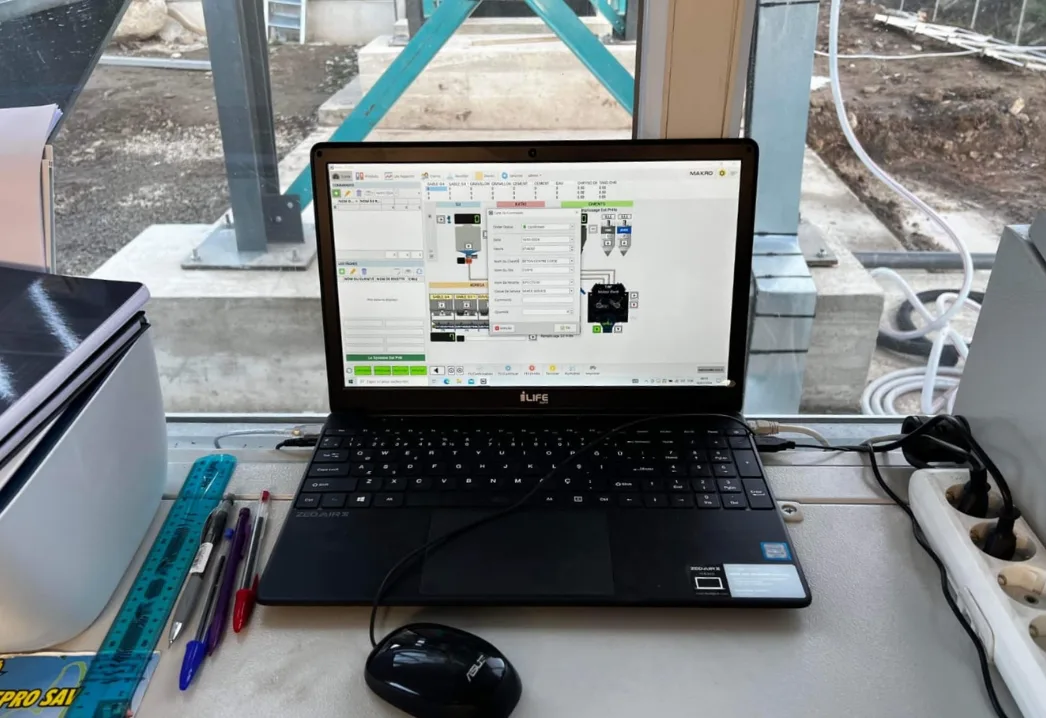
DryMix 100 is purchased by ready-mix operators whose fleet is built around transit-mixer trucks and whose delivery distances are short-to-medium. The dry-mix configuration weighs aggregates, cement and admixtures into the truck drum and lets the drum's rotation perform mixing during the journey from plant to placement. This is the most common ready-mix model in many markets, particularly where urban traffic puts a premium on plant cycle speed over central mixing.
What DryMix 100 Produces
DryMix 100 produces dry-batched concrete at a rated capacity of 100 m³/h. Output is loaded into transit-mixer drums for mixing in transit. Because there is no plant mixer, DryMix 100 can cycle faster than a wet-mix plant of equivalent capacity — each batch is in the truck drum within 60–90 seconds of weighing, where a wet-mix plant adds 30–45 seconds of plant mixer dwell time.
Suitability Factors
DryMix 100 suits operations where: delivery distances allow drum-mixing to reach full homogenisation before placement (typically 5–30 km depending on traffic), the fleet has enough transit-mixer trucks to absorb the higher cycle rate, and the recipe library is dominated by standard ready-mix grades rather than specialty wet-mix products. For specialty concrete (RCC, fibre-reinforced, high-slump self-consolidating) a wet-mix plant is preferable.
Operating Considerations
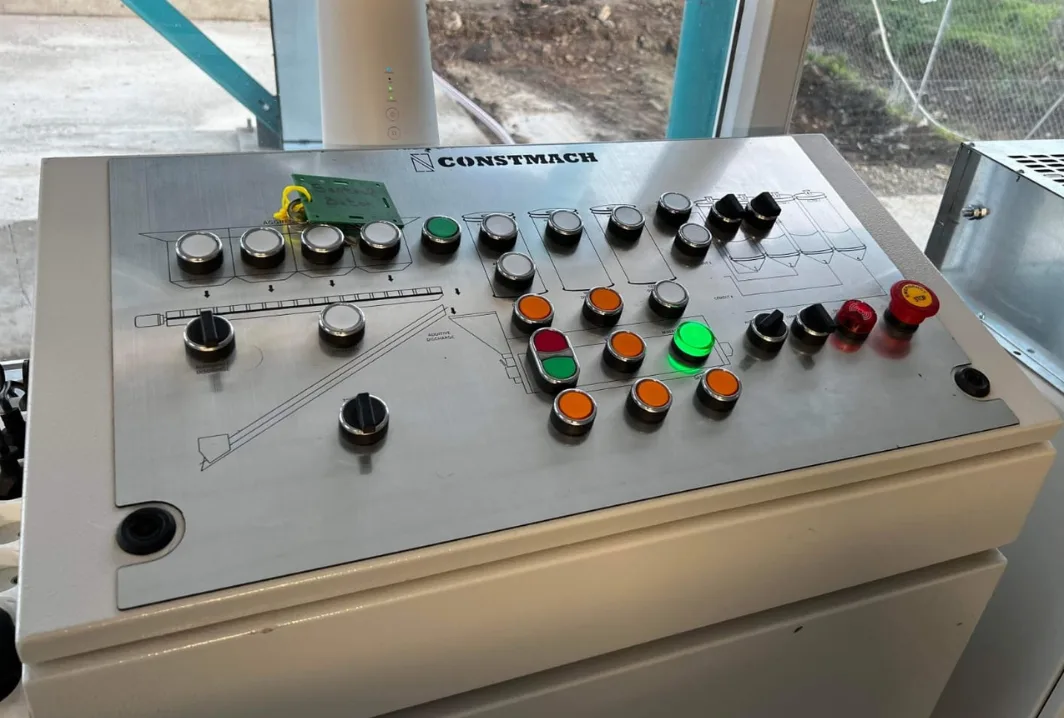
DryMix 100 requires daily checks on weighing-system calibration (the truck driver depends on accurate weights — a dry-mix plant cannot adjust water in flight as easily as a wet-mix), weekly cement-silo and aggregate-bin checks, and quarterly plant-cabin overhauls. Because there is no plant mixer, maintenance hours are lower than a comparable wet-mix plant of the same capacity — this is one reason dry-mix operators choose this configuration.
Comparison To Alternatives
Compared to wet-mix plants of equivalent capacity, DryMix 100 cycles faster but produces a slightly less homogeneous concrete when delivery distances are short (the drum has less mixing time). For ready-mix urban distribution at moderate distances, the trade-off is favourable. For precast and specialty concrete production, a wet-mix plant is more appropriate because mix consistency must be verified at the plant before discharge.