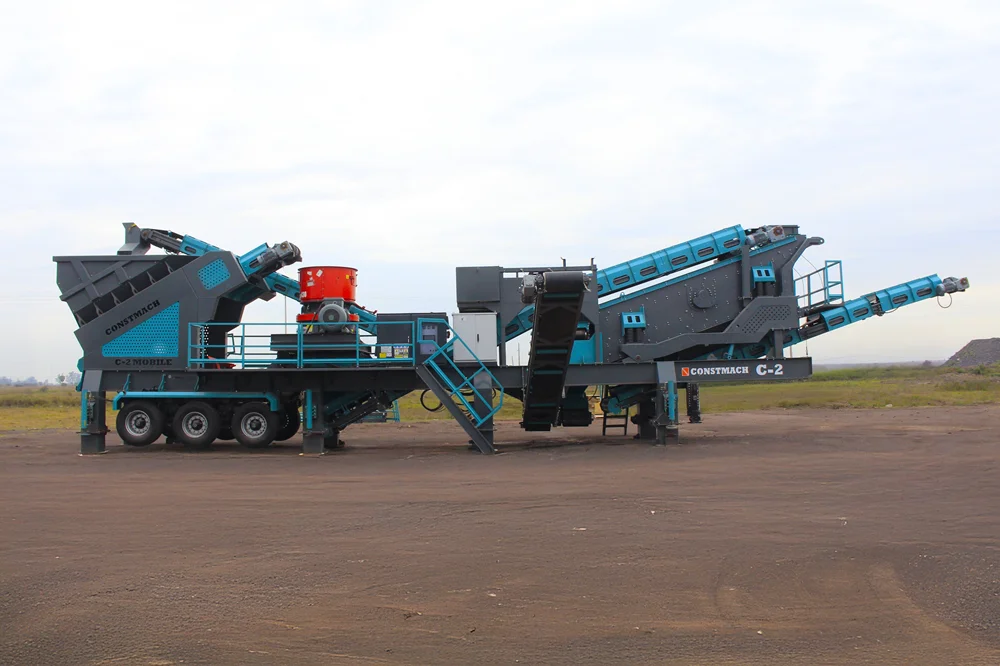






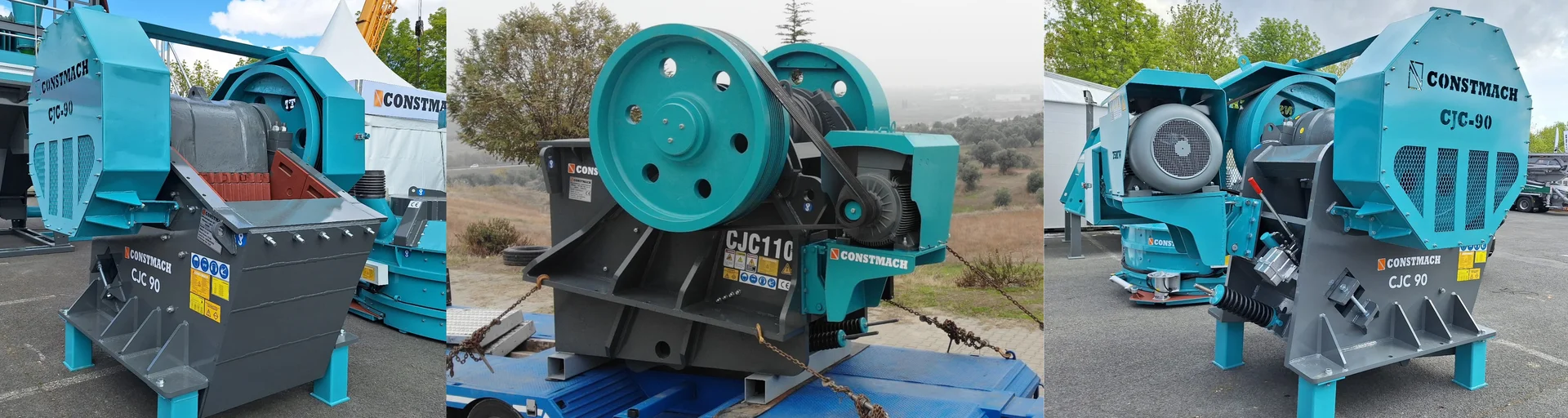

The CJC-110 jaw crusher is a high-capacity primary crushing machine. This section sets out the feed materials it handles, the products it generates, the industries it serves and the operating and maintenance factors relevant to large-scale duty.
What Materials Can the CJC-110 Process?
The CJC-110 is built for primary crushing of hard and abrasive natural rock and recycled material, including:
- Granite, basalt and other hard igneous rock
- Limestone and dolomite
- River gravel and quarried stone
- Large reinforced concrete and demolition feed in recycling
Its 1,100 x 850 mm opening accepts larger blocks than the mid-range models, reducing the need for pre-breaking. The compression crushing action makes it well suited to abrasive, high-strength rock at sustained high tonnage.
What Products Does It Produce?
The CJC-110 produces a coarse, unscreened primary product with a top size set by the closed side setting (60-200 mm). This material feeds the secondary crushers and screens that produce finished concrete and asphalt aggregate fractions, sub-base and finer products. The broad CSS range lets operators bias the machine toward maximum throughput at a coarse top size or toward a tighter gradation that lightens the secondary-stage duty.
Which Industries Use This Crusher?
- Large quarries and high-capacity aggregate plants
- Major concrete and asphalt aggregate production
- Construction and demolition recycling at scale
- Mining and mineral processing
At approximately 33,000 kg with a 132 kW drive, it is the workhorse primary crusher for producers running continuous, high-volume stationary lines.
How Are Wear Parts Managed?
The fixed and moving manganese steel jaw plates are the principal wear parts. At the tonnages this crusher handles, wear management is a planned activity: plates are reversed to extend life and then replaced during scheduled stops. The cheek plates protecting the chamber side walls are also serviceable. The toggle plate serves as a mechanical fuse, breaking to protect the machine if uncrushable tramp metal enters the chamber. Holding spare jaw plates on site keeps high-tonnage changeovers short and predictable.
What Should Be Considered During Operation?
Choke feeding maintains a full chamber for uniform product and even jaw wear, which matters more at high tonnage. The closed side setting should be confirmed with the hydraulic mechanism after each plate change. Reliable lubrication, correct drive belt tension and a balanced flywheel are essential for smooth running at the 230 rpm flywheel speed and the high loads involved. A heavy vibrating grizzly feeder ahead of the crusher scalps fines and regulates feed, protecting the jaws and steadying throughput. Monitoring jaw plate wear and re-setting the CSS periodically holds product size as the plates wear in.
Jaw Crusher Versus Impact Crusher
The CJC-110 reduces material by compression and is the appropriate primary machine for hard, abrasive rock at high capacity. A primary impact crusher reduces by impact and offers a cubical product and high reduction ratio, but it is suited to softer limestone-type feed and incurs higher wear cost on abrasive rock. For large granite or basalt operations, the jaw crusher remains the durable, lower-wear primary choice, since its compression action handles high-strength rock without the rapid blow-bar wear an impact crusher would experience.