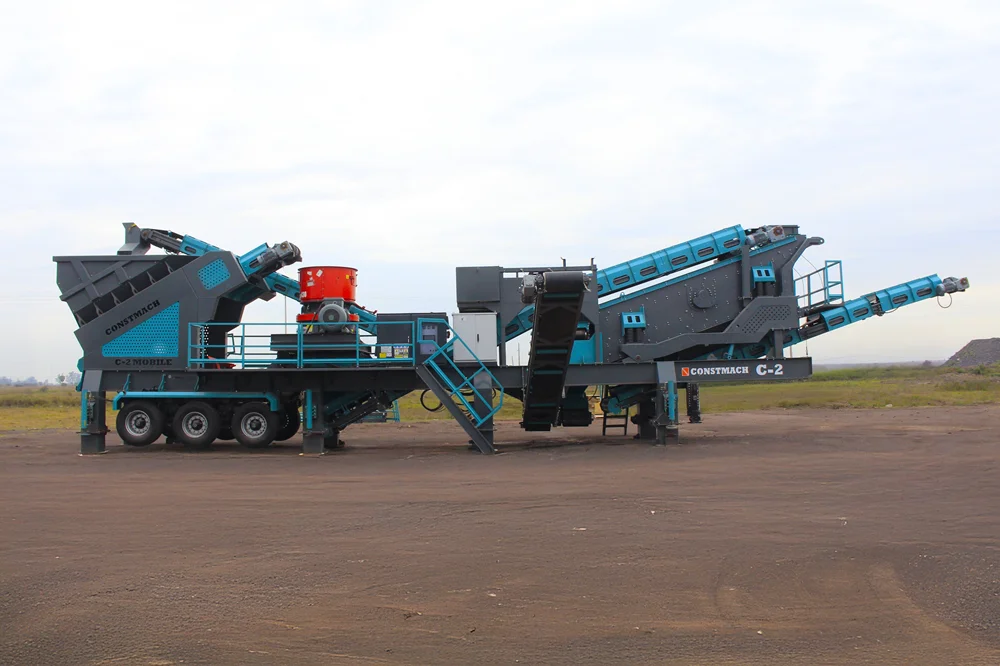






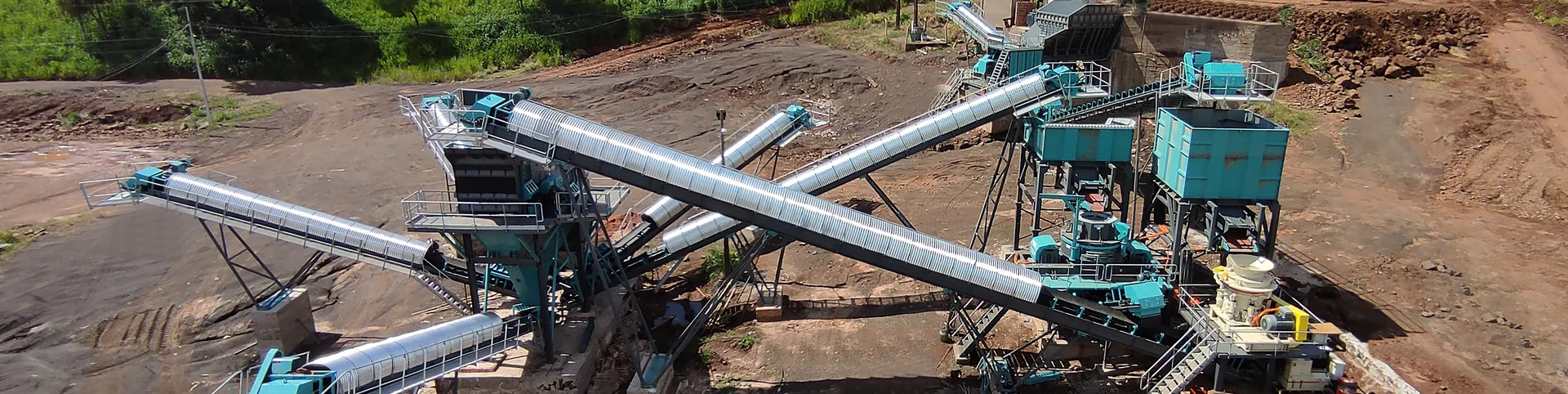

The CONSTMACH CPG-09 vibrating grizzly feeder is the front-end machine of a crushing and screening flowsheet. It receives run-of-quarry material and governs how that material enters the primary crusher, while separating fines before they reach the crushing chamber. Understanding where it sits in the process and how it is maintained helps operators get the most from the unit.
Where the CPG-09 Sits in the Plant
In a typical stationary line, the sequence is: feeder, primary crusher, conveyor, screen, secondary crusher, and so on. The CPG-09 is the first machine in this chain. Wheel loaders or dump trucks tip material into its hopper, and the feeder meters that material onto the primary jaw crusher at a steady rate. Because it is upstream of everything else, the stability of the whole plant depends on how evenly the feeder delivers material.
What It Handles
The CPG-09 is suited to blasted rock, river gravel, limestone, basalt and similar quarried materials in the small-to-medium size range. Its 80-100 t/h rating and 8-15 m³ hopper make it appropriate for primary jaw crushers feeding compact plants. It is not intended for the very high tonnages handled by the CPG-11 or CPG-13.
The Grizzly Section
The 820 mm grizzly bars let fines and dirt pass through before the crusher, reducing the load on the jaw and saving wear.
Bar spacing is selected according to the crusher setting and the proportion of fines in the feed.
Scalped fines are typically routed to a bypass conveyor or directly to a stockpile, depending on whether they are saleable.
Maintenance
Lubricate the spherical roller bearings on the schedule recommended for the vibrating motors.
Inspect the grizzly bars and trough liners regularly, as these are the highest-wear areas.
Check that both 3 kW motors stay synchronized; an out-of-phase drive produces an irregular stroke and uneven feed.
Verify the support springs and isolation mounts periodically to keep vibration isolated from the supporting structure.
Comparison With Alternatives
Compared with apron feeders, a vibrating grizzly feeder like the CPG-09 has fewer moving parts, lower maintenance, and built-in scalping, though apron feeders tolerate larger, more abrasive lumps. Compared with a simple chute or direct dumping, the CPG-09 eliminates surge loading and protects the entire downstream line. Within the CONSTMACH range, the CPG-09 is the smallest unit; operations needing 150 t/h or more should step up to the CPG-10 or larger.
Installation and Commissioning
The CPG-09 is mounted on spring isolators above the primary crusher so that the discharge end aligns with the crusher mouth. The hopper, in the chosen 8, 10 or 15 m³ volume, is positioned so loaders can dump squarely into it without spilling over the sides. During commissioning, the trough angle and the speed of the two 3 kW motors are set to deliver a feed rate that keeps the jaw crusher at its target load. Because the CPG-09 weighs around 8.000 kg, a modest foundation or skid frame is sufficient, which is part of what makes it economical for compact and relocatable plants. Electrical connection is straightforward, with the two vibrating motors wired to rotate in opposite directions to produce the linear stroke.
Operating Tips for Best Results
Match the feed rate to the crusher rather than the loader; a steady partial flow outperforms intermittent full dumps.
Keep some material in the hopper as a buffer so the trough is never starved between loader cycles.
Monitor the grizzly for blinding when the feed is wet or sticky, and adjust bar spacing seasonally if fines content changes.
Avoid dropping oversized boulders that exceed the crusher opening directly onto the trough, as repeated heavy impact shortens liner life on a unit of this size.
Listen for changes in motor sound, which often signal a loosening fastener or an early bearing issue before it becomes a failure.