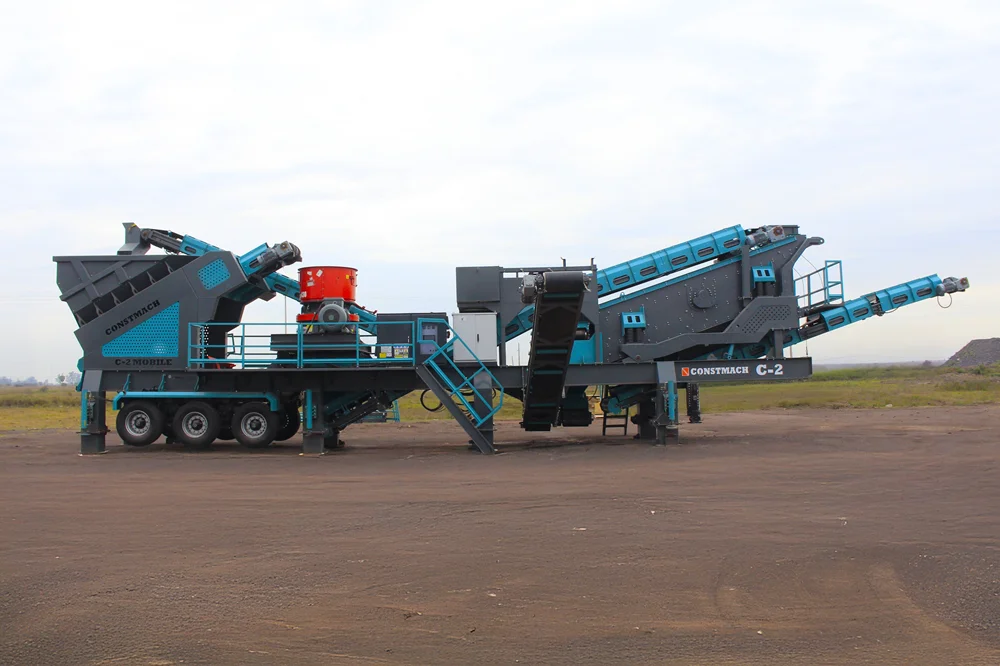






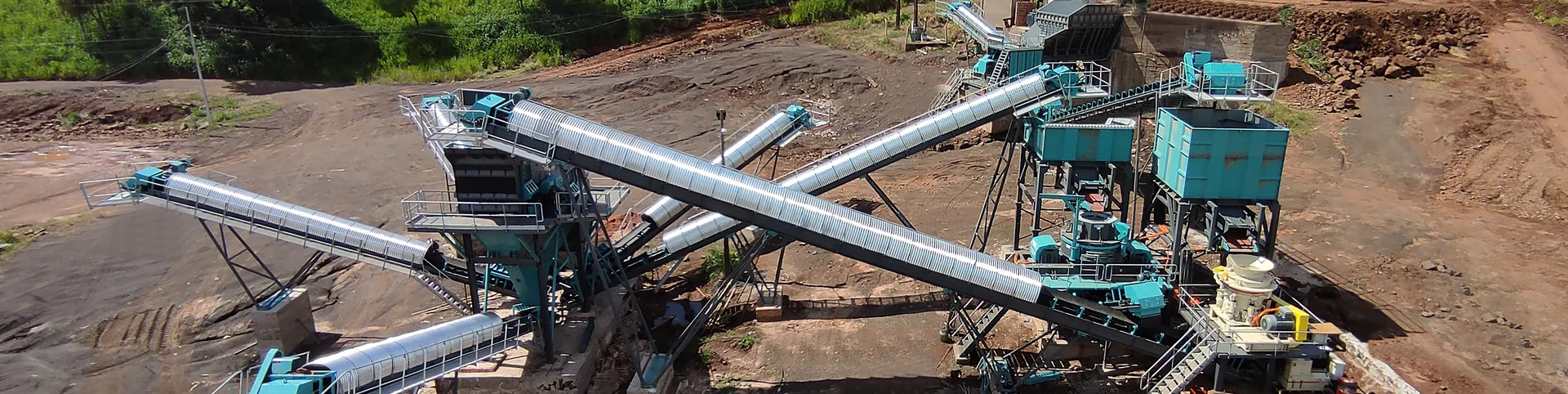

The CONSTMACH CPG-10 vibrating grizzly feeder is the front-end machine of a medium-capacity crushing and screening plant. It governs the rate at which run-of-quarry material enters the primary crusher and scalps fines ahead of crushing. Knowing its role in the flowsheet and its upkeep helps operators maximize plant availability.
Where the CPG-10 Sits in the Plant
The CPG-10 is the first machine in the line: feeder, primary crusher, conveyor, screen, then secondary stages. Loaders or trucks dump into its hopper, and the feeder meters material onto the primary jaw crusher at a constant rate. Because every downstream machine depends on the evenness of this feed, the CPG-10 sets the rhythm for the entire plant.
What It Handles
The CPG-10 suits blasted rock, gravel, limestone, basalt and similar quarried materials at 150-200 t/h. Its 10-20 m³ hopper and 3.000 x 850 mm trough are matched to medium-class primary jaw crushers. It sits between the smaller CPG-09 and the high-capacity CPG-11 and CPG-13.
The Grizzly Section
- The 1.160 mm grizzly lets fines and dirt pass before the crusher, cutting load and wear on the jaw.
- Bar spacing is chosen to match the crusher setting and the fines fraction in the feed.
- Scalped fines are routed to a bypass conveyor or stockpile, depending on whether they are saleable product.
Maintenance
- Lubricate the spherical roller bearings per the vibrating-motor schedule.
- Inspect grizzly bars and trough liners frequently; they are the main wear points.
- Keep both 4.5 kW motors synchronized, as phase drift causes an irregular stroke and uneven feed.
- Check isolation springs and mounts to keep vibration out of the support structure.
Comparison With Alternatives
Against apron feeders, the CPG-10 offers fewer moving parts, lower maintenance and built-in scalping, while apron feeders better tolerate oversized, highly abrasive lumps. Against direct dumping or a static chute, the CPG-10 removes surge loading and protects the whole downstream line. Within the CONSTMACH range it is the mid-range choice: operations below 100 t/h can use the CPG-09, while those above 200 t/h should select the CPG-11 or CPG-13.
Installation and Commissioning
The CPG-10 is mounted on spring isolators above the primary jaw crusher, with the discharge end aligned to the crusher mouth and the 10, 15 or 20 m³ hopper positioned for clean loader dumping. At an operating weight of 12.000 kg, it requires a more substantial foundation or skid than the CPG-09, sized to carry the static load plus the dynamic forces of the 2 x 4.5 kW drive. During commissioning, the trough inclination and motor speed are tuned so the feed rate holds the crusher at its target load throughout the loader cycle. The two vibrating motors are wired to counter-rotate, producing the linear stroke that conveys material along the wider 3.000 x 850 mm trough.
Operating Tips for Best Results
- Set the feed rate to the crusher's capacity, not the loader's; a steady mid-range flow gives the best product and lowest wear.
- Maintain a buffer of material in the hopper so the trough never runs empty between loads.
- Watch the longer 1.160 mm grizzly for blinding with wet or clay-bearing feed, and revise bar spacing if the fines fraction shifts.
- Avoid feeding lumps larger than the crusher opening, which cause bridging at the discharge and heavy impact on the trough.
- Track motor current and sound as early indicators of fastener loosening or bearing wear before they cause downtime.