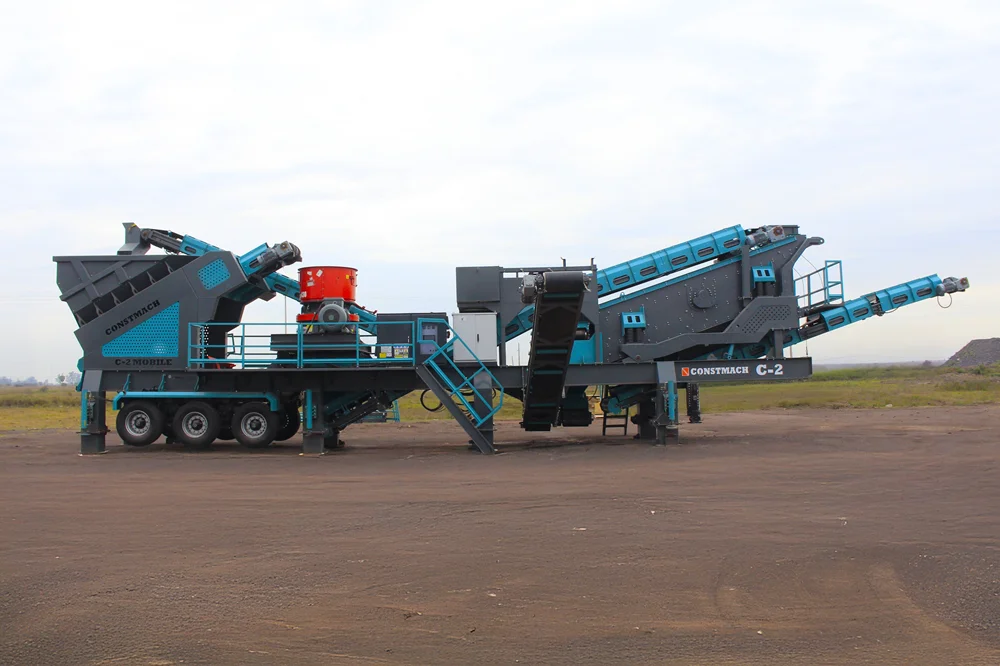






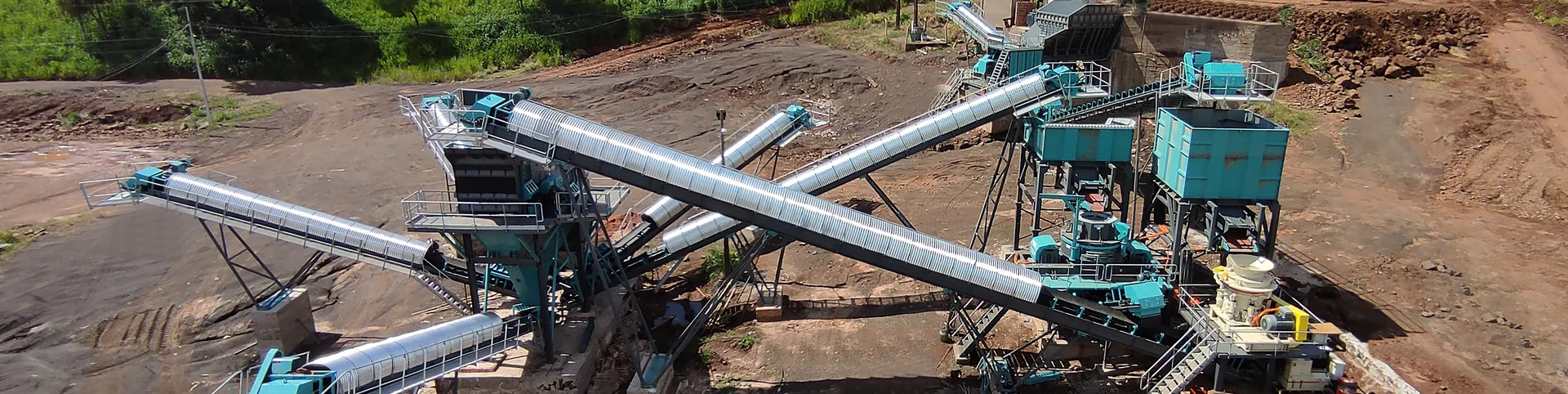

The CONSTMACH CPG-11 vibrating grizzly feeder is the front-end machine of a high-capacity crushing and screening plant. It controls the rate at which run-of-quarry material enters a large primary crusher and scalps fines ahead of the crushing chamber. Understanding its position in the flowsheet and its maintenance needs helps operators sustain high throughput.
Where the CPG-11 Sits in the Plant
The CPG-11 is the first machine in the line: feeder, primary crusher, conveyor, screen, then secondary and tertiary stages. Large loaders or trucks dump into its hopper, and the feeder meters material onto the primary jaw crusher at a steady rate. Because the whole plant follows its cadence, even feeding from the CPG-11 underpins stable downstream operation.
What It Handles
The CPG-11 suits blasted hard rock, gravel, limestone, basalt and granite at 200-300 t/h. Its 15-30 m³ hopper and 4.600 x 1.100 mm trough match large primary jaw crushers. It sits above the CPG-10 and below the largest model, the CPG-13.
The Grizzly Section
- The 1.400 mm grizzly scalps fines and dirt before the crusher, freeing crusher capacity and reducing jaw-plate wear.
- Bar spacing is matched to the crusher setting and the fines fraction in the feed.
- Scalped fines are sent to a bypass conveyor or stockpile depending on whether they are saleable.
Maintenance
- Lubricate the heavy-duty spherical roller bearings on the recommended schedule for the 9.2 kW motors.
- Inspect grizzly bars and trough liners frequently, as the higher tonnage accelerates wear at these points.
- Keep both motors synchronized; phase drift produces an irregular stroke and uneven feed.
- Check the isolation springs and mounts regularly to protect the support structure from vibration.
Comparison With Alternatives
Against apron feeders, the CPG-11 offers fewer moving parts, lower maintenance and integral scalping, while apron feeders better handle very large, sharp-edged primary lumps. Against direct dumping, the CPG-11 eliminates surge loading and protects the entire high-capacity line. Within the CONSTMACH range it is a high-capacity option; operations at 350 t/h and above should step up to the CPG-13.
Installation and Commissioning
The CPG-11 is mounted on spring isolators above a large primary jaw crusher, with the discharge aligned to the crusher mouth and the 15, 20 or 30 m³ hopper positioned for dumping by large loaders or trucks. At 18.000 kg operating weight and with a 2 x 9.2 kW drive, it requires a properly engineered foundation able to absorb the higher static and dynamic loads; the spring isolators are sized to keep these forces out of the supporting steelwork. During commissioning, the trough angle and motor speed are set so the feed rate sustains the crusher at its productive load across a full work cycle. The two vibrating motors counter-rotate to generate the powerful linear stroke needed to move material along the 4.600 x 1.100 mm trough.
Operating Tips for Best Results
- Tune the feed rate to the crusher's throughput, since a steady high flow protects both product gradation and jaw-plate life.
- Keep a working buffer in the hopper so the long trough is never starved between truck or loader cycles.
- Inspect the 1.400 mm grizzly for blinding under wet or dirty feed and adjust bar spacing as the fines fraction changes.
- Prevent oversize boulders beyond the crusher opening from reaching the trough, as repeated impact at this scale accelerates liner and bar wear.
- Monitor motor current, vibration and sound as early warnings of loosening fasteners or bearing degradation before failure.