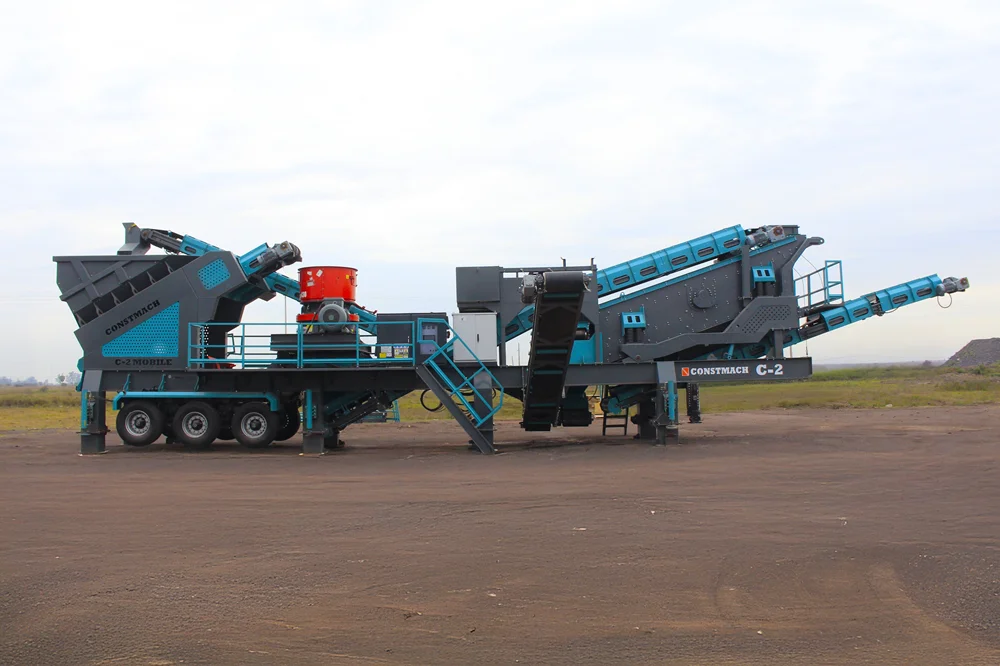






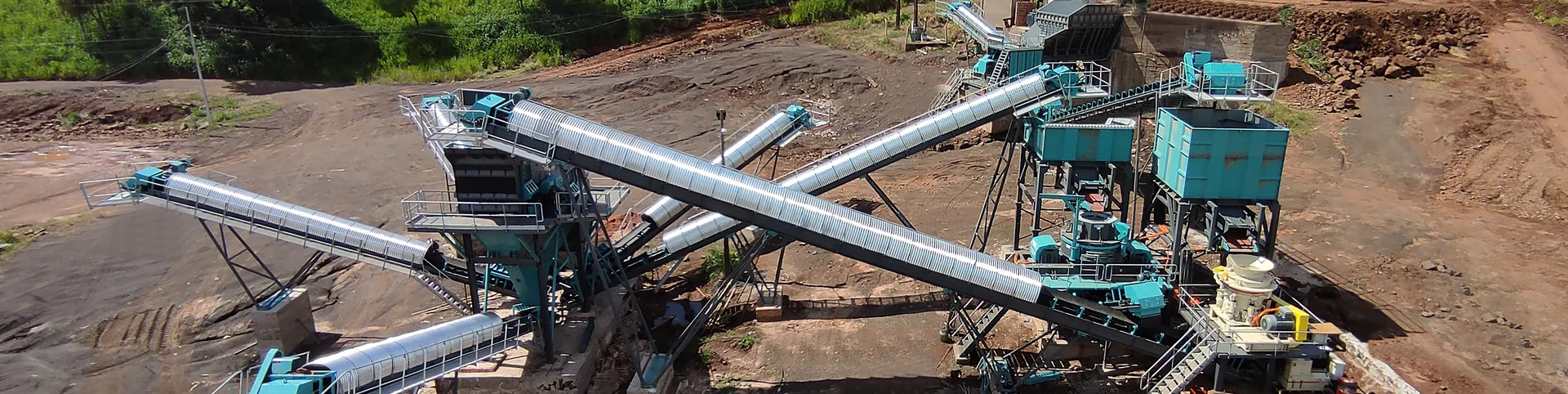

The CONSTMACH CPG-13 vibrating grizzly feeder is the front-end machine of the largest crushing and screening plants in the range. It controls the rate at which run-of-quarry material enters a large primary crusher and performs high-volume scalping of fines ahead of the crushing chamber. Understanding its place in the flowsheet and its maintenance demands helps operators sustain maximum throughput.
Where the CPG-13 Sits in the Plant
The CPG-13 is the first machine in the line: feeder, primary crusher, conveyor, screen, then secondary and tertiary stages. Large loaders and haul trucks dump into its hopper, and the feeder meters material onto the primary jaw crusher at a steady rate. As the largest feeder, it sets the pace for a high-capacity plant, so even feeding from the CPG-13 is critical to downstream stability.
What It Handles
The CPG-13 suits blasted hard rock, granite, basalt, limestone and gravel at 350-500 t/h. Its 30-50 m³ hopper and 4.880 x 1.370 mm trough match the largest primary jaw crushers. It is the top model in the CONSTMACH feeder line, above the CPG-11.
The Grizzly Section
- The 1.840 mm grizzly, the longest in the range, scalps a high volume of fines before the crusher, freeing significant crusher capacity.
- Bar spacing is matched to the crusher setting and the fines fraction in the feed.
- Scalped fines are routed to a bypass conveyor or stockpile depending on whether they are saleable product.
Maintenance
- Lubricate the heavy-duty spherical roller bearings on the recommended schedule for the 11 kW motors.
- Inspect grizzly bars and trough liners frequently, as the very high tonnage accelerates wear.
- Keep both motors synchronized; phase drift causes an irregular stroke and uneven feed.
- Check the isolation springs and mounts regularly to protect the support structure from the heavy vibration this model generates.
Comparison With Alternatives
Against apron feeders, the CPG-13 offers fewer moving parts, lower maintenance and integral high-volume scalping, while apron feeders better tolerate extremely large, sharp primary lumps in heavy mining duty. Against direct dumping, the CPG-13 removes severe surge loading and protects the entire high-capacity line. Within the CONSTMACH range it is the top model; operations needing less than 350 t/h are well served by the CPG-11 or smaller units.
Installation and Commissioning
The CPG-13 is mounted on heavy spring isolators above a large primary jaw crusher, with the discharge aligned to the crusher mouth and the 30, 45 or 50 m³ hopper, the largest in the range, positioned for dumping by haul trucks and large loaders. At 26.000 kg operating weight and a 2 x 11 kW drive, it requires a fully engineered reinforced-concrete foundation able to carry the substantial static mass and the dynamic forces of the highest-power feeder in the line; the isolators are sized to protect the supporting structure. Commissioning sets the trough angle and motor speed so the feed rate keeps a large crusher at its productive load through high-volume cycles. The two vibrating motors counter-rotate to drive the long, wide 4.880 x 1.370 mm trough.
Operating Tips for Best Results
- Match feed rate to crusher capacity; at these tonnages a steady flow is decisive for both gradation and jaw-plate economy.
- Keep a generous buffer in the large hopper so the long trough stays loaded between truck cycles.
- Inspect the long 1.840 mm grizzly for blinding under wet or clay-bearing feed and revise bar spacing as fines content varies.
- Keep boulders larger than the crusher opening off the trough, as impact energy at this scale is severe and shortens liner life.
- Track motor current, vibration and bearing temperature continuously, since unplanned downtime on the primary feeder stops the whole high-capacity plant.