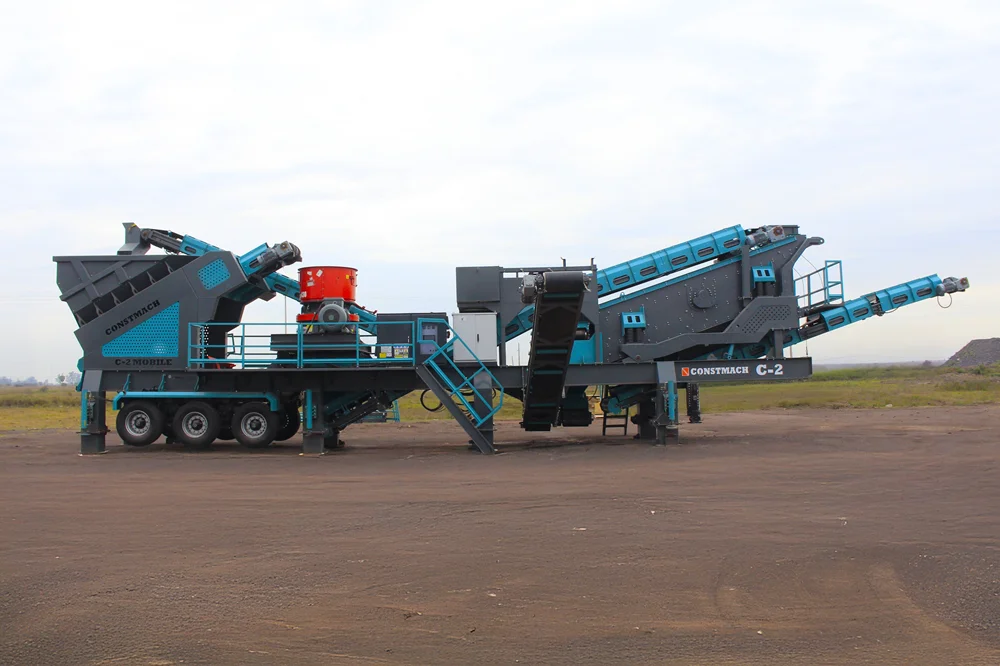






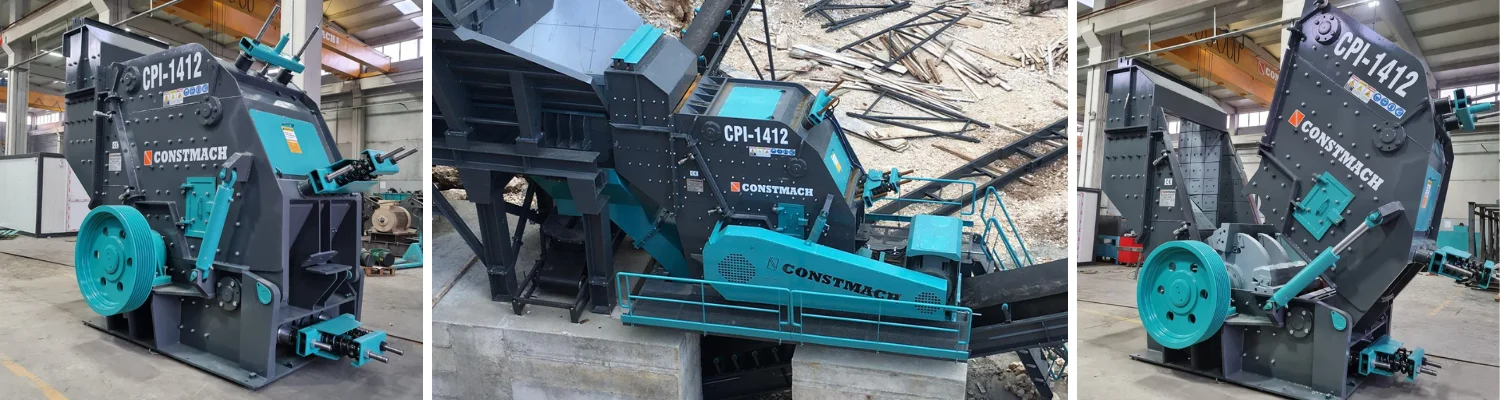

The CPI-1620 primary impact crusher is the largest first-stage impact machine in the CONSTMACH range, built for high-capacity duty on medium-hardness materials. This section covers the feed it accepts, the products it generates, its industries, wear-part management and how it compares with a jaw crusher.
What Materials Can the CPI-1620 Process?
The CPI-1620 is designed for medium-hardness, low-abrasion feed, most commonly:
- Limestone
- Dolomite
- Other soft to medium-hard sedimentary rock
It is not suited to hard, abrasive rock such as granite or basalt, which would cause rapid wear of the blow bars and breaker plates. Feed must be within the 1,300 x 1,300 mm maximum size, the largest in the impact range, allowing big run-of-quarry limestone blocks to be charged directly.
What Products Does It Produce?
The CPI-1620 produces a cubical, well-shaped primary product at high volume. Its high reduction ratio means the output on softer limestone is often fine enough to reduce the need for a separate secondary crusher. The product is screened into the full range of concrete and asphalt aggregate fractions and base material. The cubical shape is a specific advantage for concrete and asphalt mixes, where flaky or elongated particles weaken the mix and raise binder demand.
Which Industries Use This Crusher?
- Large limestone and dolomite quarries
- High-volume concrete and asphalt aggregate production
- Cement raw-material preparation at scale
- Major road base and construction aggregate supply
At approximately 52,000 kg with a twin 2 x 250 kW drive, it is the choice for the highest-volume limestone operations in the impact range.
How Are Wear Parts Managed?
The principal wear parts are the manganese steel blow (impeller) bars, the breaker plates and the chamber liners. At the tonnages this crusher handles, blow-bar rotation and replacement are planned maintenance activities, with the breaker bar setting adjusted to hold product size between changes. Keeping the feed to low-abrasion limestone-type material is the main lever for controlling wear-part cost. Checking the feed for tramp metal is also important, as iron can damage the high-speed rotor and bars.
What Should Be Considered During Operation?
Steady, balanced feed and an intact chain curtain keep the impact process efficient and the large rotor balanced. The breaker bar gaps should be checked and re-set as wear progresses. The unobstructed discharge must stay clear to prevent packing, and bearing lubrication maintained under the twin 2 x 250 kW drive at high tonnage. Rotor balance must be confirmed after each blow-bar change, as the large, high-inertia rotor is sensitive to imbalance at operating speed.
Impact Crusher Versus Jaw Crusher
A primary impact crusher like the CPI-1620 reduces by impact, gives a cubical product and a high reduction ratio, and is best for medium-hardness, low-abrasion limestone and dolomite at high volume. A jaw crusher reduces by compression and is the better primary for hard, abrasive granite or basalt, where an impact crusher would wear quickly. Feed hardness and abrasiveness drive the choice between the two: high-volume limestone with a cubical-product requirement favours the impact crusher, while hard or abrasive feed favours the jaw crusher for its lower wear cost.