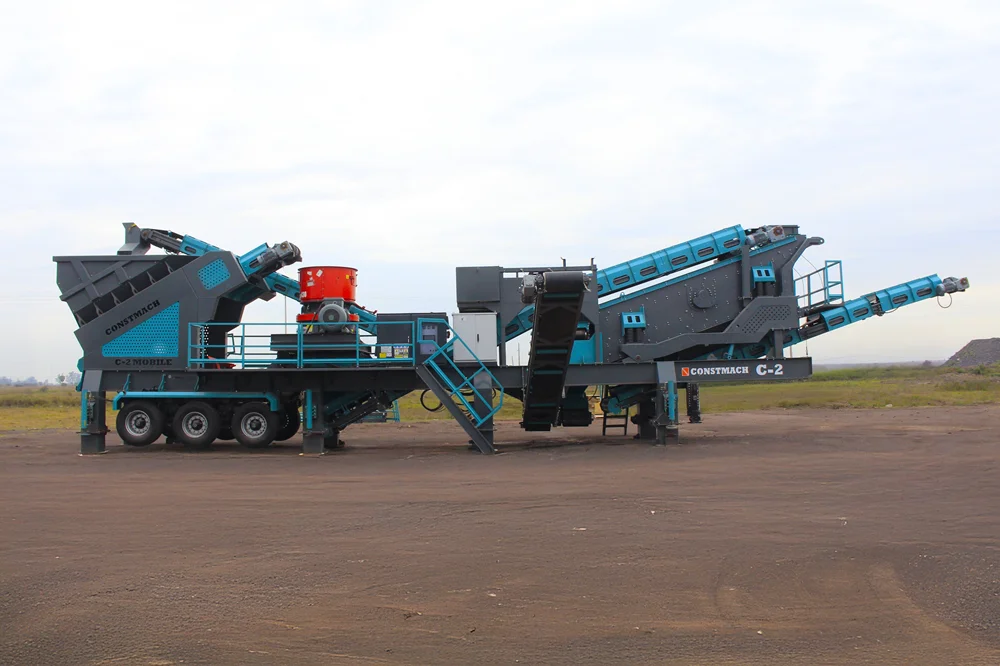






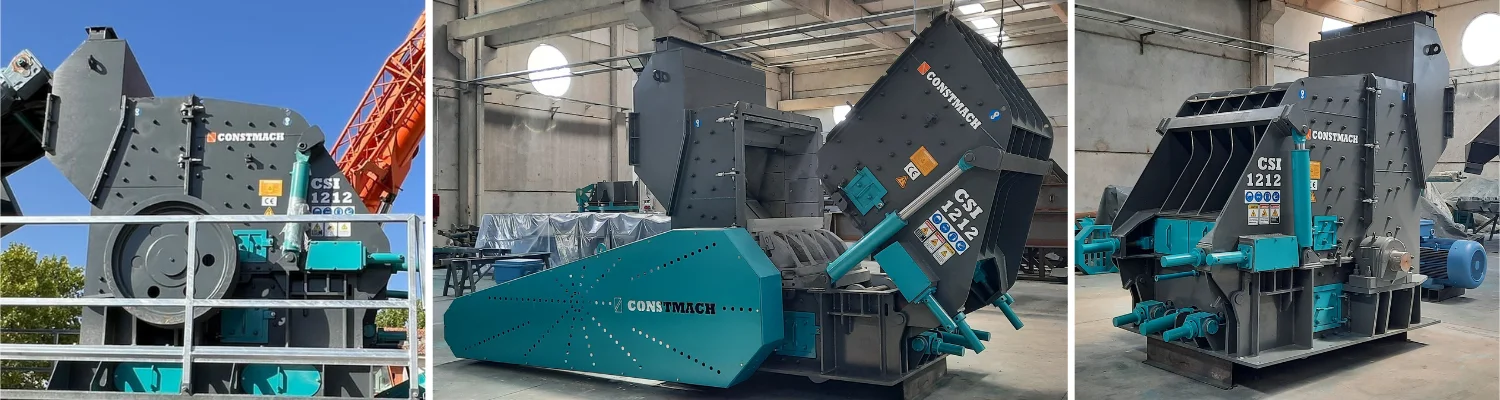

The CSI-1215 Secondary Impact Crusher is the high-capacity unit in the second crushing stage. The information below covers feed materials, output products, applications, wear-part service and comparisons with alternative crushers, to help buyers confirm the fit for a high-volume plant.
What materials can the CSI-1215 handle?
The CSI-1215 is designed for medium-hard, low to moderately abrasive stone that has passed through a primary crusher. Typical feed includes:
- Limestone, dolomite and similar sedimentary rock
- River gravel and natural stone
- Recycled concrete, demolition rubble and reclaimed asphalt
Maximum feed size is 350 mm, the largest in the secondary range. Highly abrasive rock such as granite or quartz-rich stone can be processed but accelerates blow-bar wear and is usually better matched to a tertiary or vertical shaft impactor for final shaping.
What does it produce?
The CSI-1215 produces well-graded, predominantly cubical aggregate at high volume, ready for screening into standard fractions. Typical products are base and sub-base aggregate, concrete aggregate and asphalt aggregate. The impact principle yields a cubical grain shape that benefits the strength and workability of bound mixes.
Which industries and applications use it?
- Large quarries and aggregate producers
- Ready-mix concrete and precast supply at volume
- Asphalt and major road construction projects
- High-throughput construction and demolition recycling
How are wear parts replaced and how long do they last?
The main wear parts are the blow bars (breaker bars) on the rotor and the breaker plate liners, both high-chrome or manganese alloy and interchangeable. Service life depends on feed abrasiveness and tonnage, and the high throughput of the CSI-1215 means wear should be monitored against the volume processed. Replacement is efficient because two hydraulic cylinders open the housing for rotor access and the rear doors expose the breaker plate liner bolts.
How does the CSI-1215 compare with a cone crusher?
A cone crusher reduces by compression and suits hard, abrasive rock, but offers a lower reduction ratio per stage and a higher proportion of flaky particles. The CSI-1215, crushing by impact, gives a higher reduction ratio and a more cubical product in one pass, which is preferred for limestone aggregate and recycling at volume. For very hard, abrasive feed a cone may have lower wear cost, so the choice depends on the rock. At volume, the lower purchase price and simpler maintenance of a secondary impact crusher relative to a cone of similar capacity also weigh on total cost of ownership.
How does the CSI-1215 compare with the smaller models?
The CSI-1215 is the largest, with a 1,100 x 1,500 mm rotor, 350 mm feed limit and 200-250 t/h capacity. The CSI-1212 (250 mm feed, 120-150 t/h) and CSI-1210 (200 mm feed, 60-100 t/h) cover medium and compact plants. All three share the same crushing principle, hydraulic adjustment and maintenance layout, so the choice is driven by required tonnage and feed size.
What support is available for the CSI-1215?
The CSI-1215 is supplied within complete CONSTMACH crushing and screening plants and can be integrated into existing high-capacity lines. Wear and spare parts, including blow bars and breaker plate liners, are available from the manufacturer, and the modular construction allows even this large unit to be shipped and installed without specialised handling.