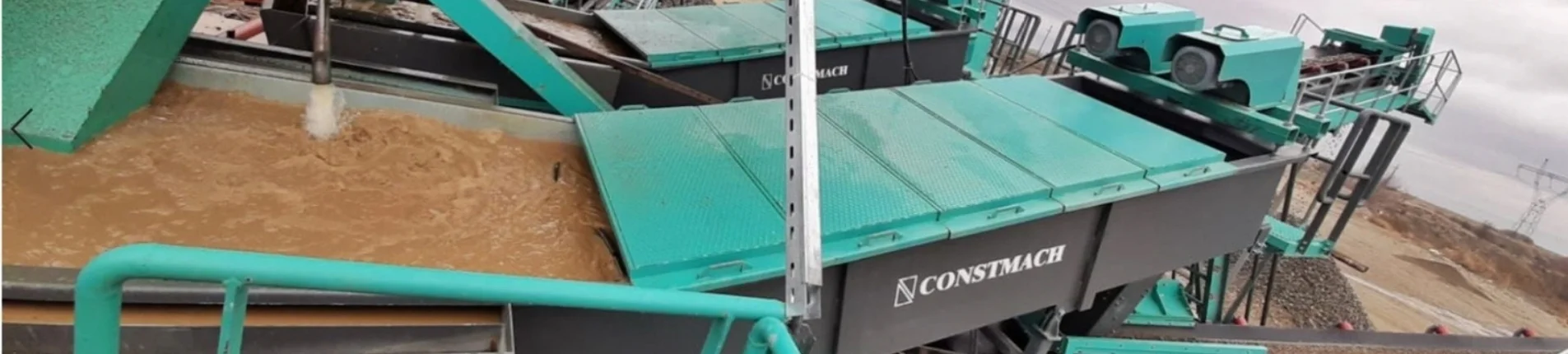
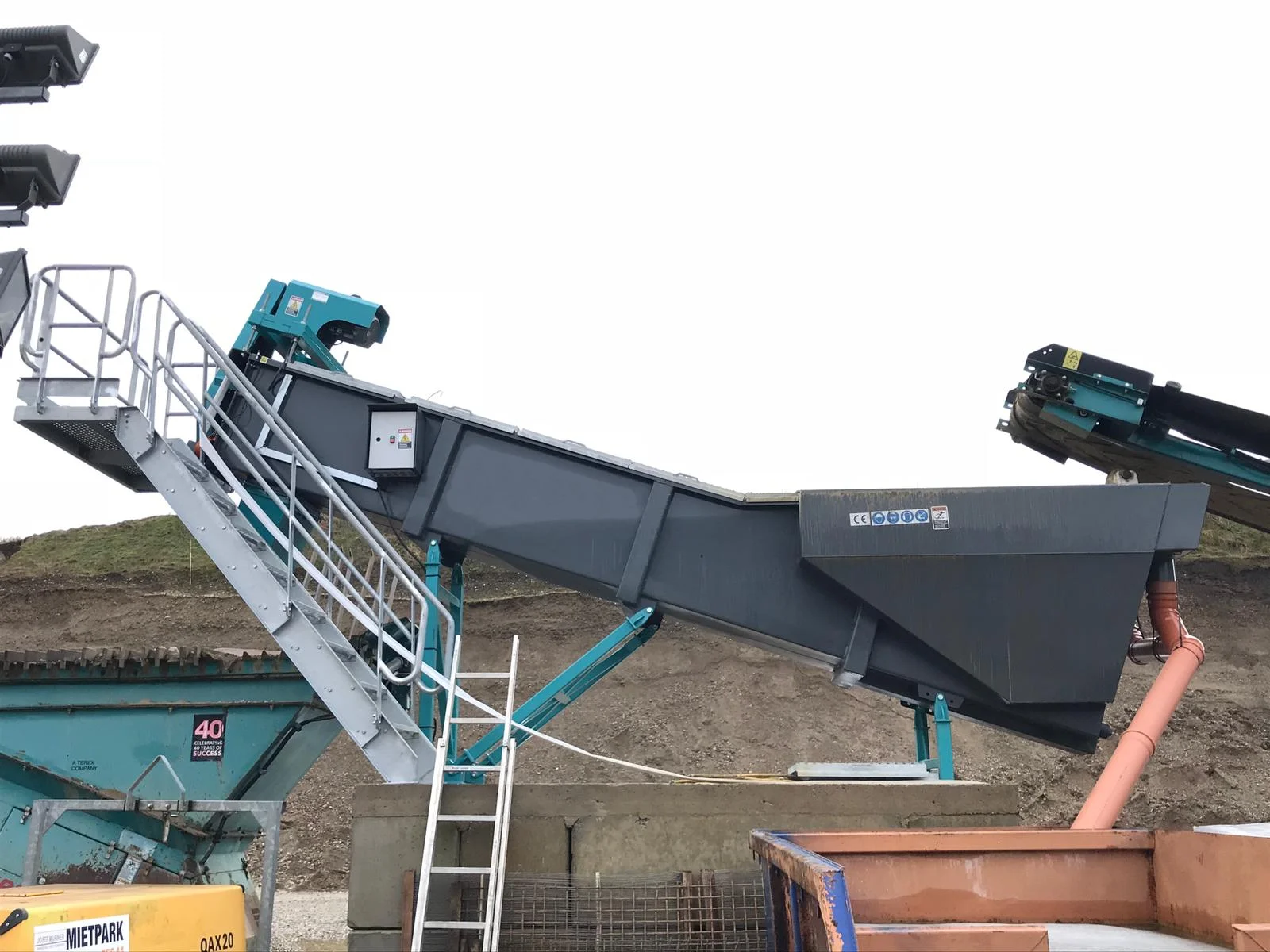
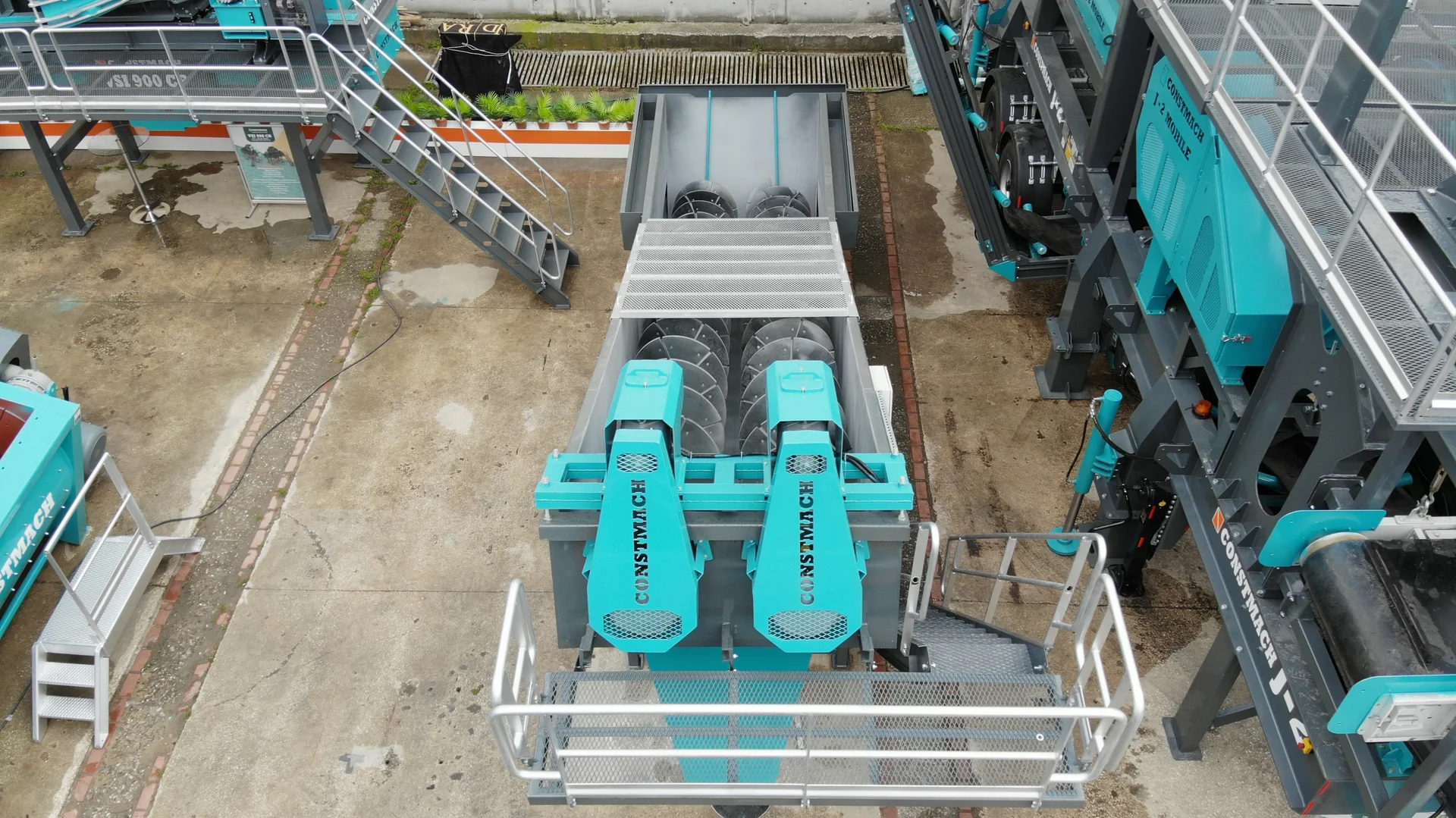
A screw sand washer is an inclined spiral washing and dewatering unit that cleans fine aggregate by scrubbing the grains against each other in a water-filled trough. Constmach CSW-series machines wash gravel, natural sand and crushed 0-5 mm stone, carrying away the clay, silt and dirt while lifting the washed sand up the incline to a partly dewatered discharge.
What a Screw Sand Washer Is
A screw sand washer is a single piece of fine-aggregate cleaning equipment. It takes dirty sand contaminated with clay, silt and surface dirt and turns it into clean, saleable product. The Constmach CSW series is built specifically for fine material: gravel, natural sand and crushed 0-5 mm stone.
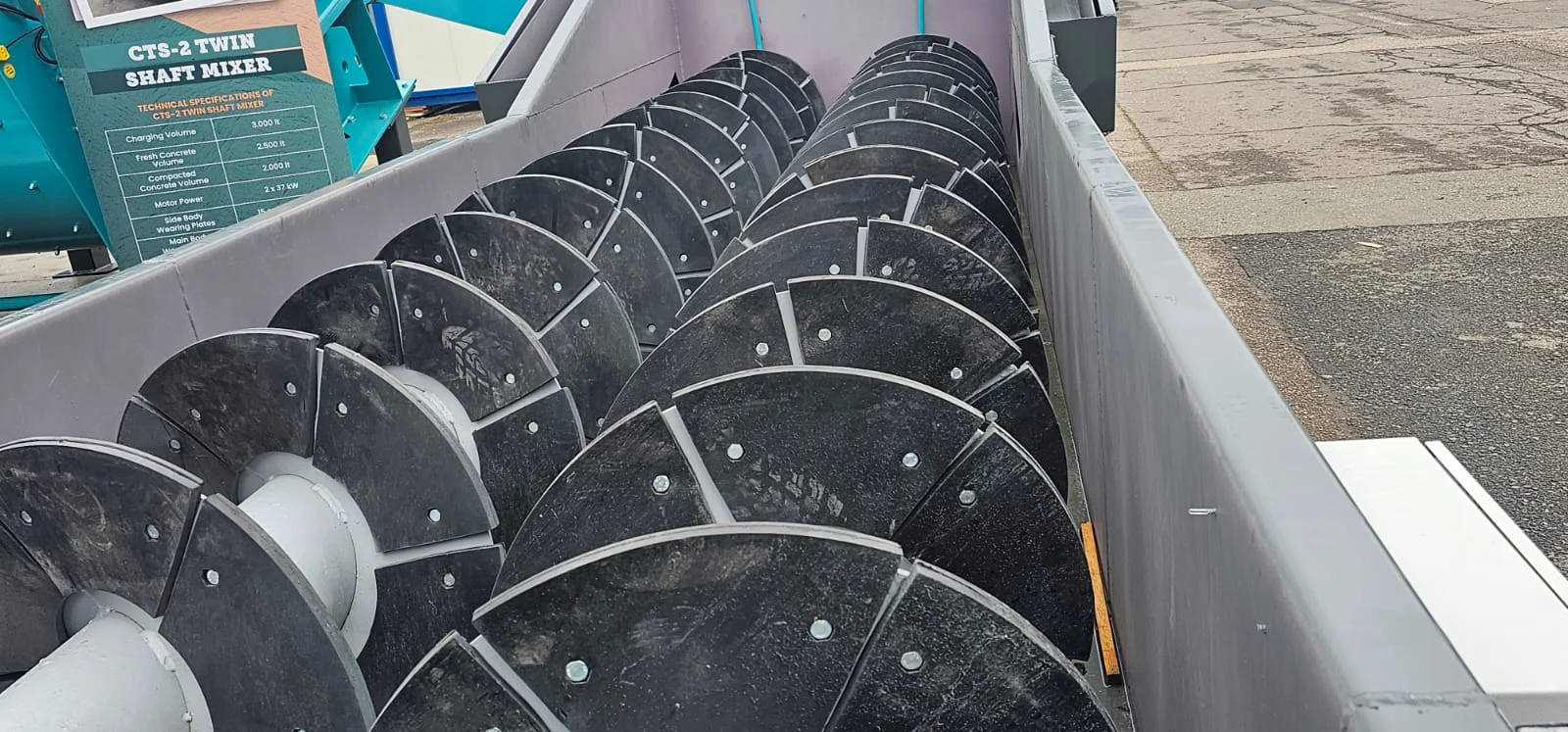
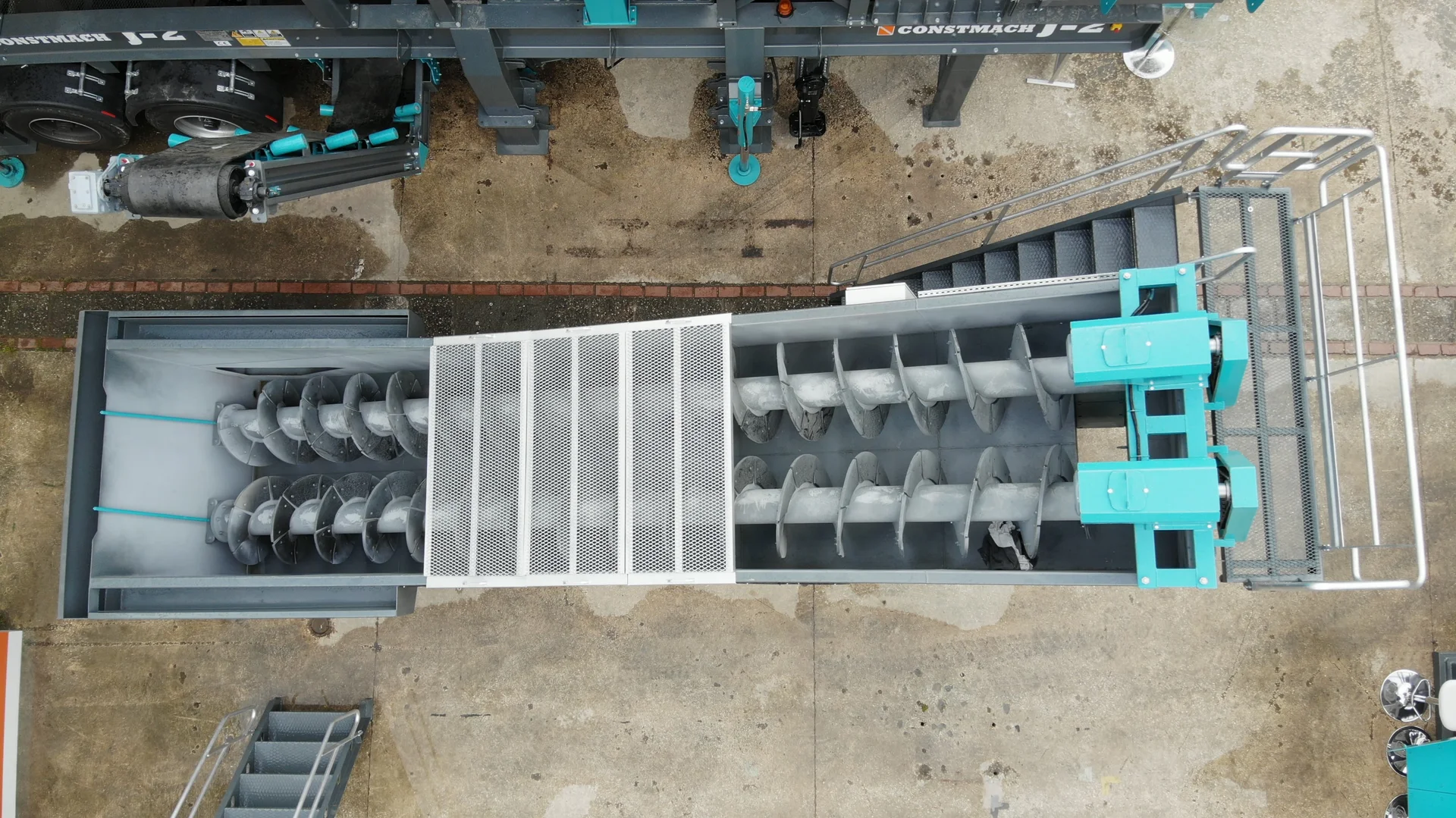
The machine is mechanically simple. An inclined steel trough holds a slow-turning screw, or a pair of screws in the larger models. The screw does two jobs at once. It scrubs the grains together to break loose the contamination, and it conveys the clean sand up the slope to the discharge end. Because there are few moving parts, the unit is reliable and easy to look after.
It helps to be clear about names, because the fine-washing corner of an aggregate yard is full of similar-sounding machines. A screw sand washer is sometimes loosely called a spiral sand washer, after the spiral screw flight that does the work. It is not the same machine as a bucket-wheel sand washer, which uses a slowly rotating wheel with perforated buckets to lift sand out of a settling tank. Nor is it a log washer, which is built for coarse, heavily clay-bound rock rather than 0-5 mm sand. The CSW range is purpose-built for the fine fraction, and the screw geometry reflects that: a long, gently inclined trough that keeps the sand bed moving while giving it time to scrub.
How a Screw Sand Washer Works
The working principle is straightforward and worth understanding before you size a machine. Dirty sand and water enter together at the lower end of the inclined trough. The rotating screw agitates the bed of material so the grains rub against each other. That grain-on-grain scrubbing is what strips the clay and silt off the sand surface.
As the screw turns, it lifts the heavier, washed sand up the incline toward the raised discharge end. Meanwhile the light contaminants, the fine silt and the wash water stay near the bottom and overflow at the lower end as a dirty slurry. By the time the sand reaches the discharge, it has been cleaned and a good part of the water has drained back down the slope, so the product comes off partly dewatered.
One number sets the quality of the wash: screw speed. The CSW-50 runs its screw at 45 rpm on a 4 kW drive. Speed has to be fast enough to move the material up the incline and clear the trough, but slow enough to give the grains real dwell time to scrub. Run it too fast and dirty sand passes straight through without proper cleaning. Run it too slow and the trough floods and chokes.
The incline angle does quiet but important work alongside the screw speed. A steeper trough drains water back faster, which means a drier discharge but a shorter wash time, because the sand spends less of its travel submerged. A shallower angle keeps the grains in the wash zone longer and scrubs harder, at the cost of a wetter product that gives up more water later. Constmach sets the geometry of each CSW model so the angle and the screw pitch suit fine 0-5 mm sand; the operator then trims feed rate and water flow around that fixed design point.
Single-Shaft and Twin-Shaft Designs
Constmach builds the CSW range in both single-shaft and twin-shaft configurations, and the choice matters for capacity and wash quality. The smallest model, the CSW-50, uses a single screw. As you move up the range, the machines switch to twin-shaft.
Twin-shaft models give two advantages. Two screws move more material per hour, so capacity climbs. They also scrub more aggressively, because the material is worked between two spirals rather than one. If your sand carries heavy clay or you need higher throughput, the twin-shaft machines are the better answer. For lighter duties and smaller plants, the single-shaft CSW-50 keeps things simple and economical.
There is a mechanical reason the twin-shaft layout scrubs harder, and it is worth understanding rather than taking on trust. With one screw, a grain is mostly worked against its neighbours and the trough wall. With two screws turning side by side, the sand is also kneaded in the zone where the two spirals meet, so each grain sees more contact and more shear in the same length of trough. That extra working is what lets a twin-shaft unit hit its cleanliness target on clay-bound feed that would defeat a single screw run at the same speed.
The Constmach CSW Range
The CSW series covers a span of capacities from a compact single-shaft unit up to a large twin-shaft washer. The table below lists the four standard models with their real dimensions, shaft arrangement, throughput and, where given, drive. Use it as a starting point and confirm sizing against your own feed and contamination level with the Constmach application team.
| Model | Trough / screw | Shafts | Capacity | Drive |
|---|
| CSW-50 | Ø500 x 5,000 mm | Single-shaft | 25 m³/h | 4 kW, 45 rpm |
| CSW-60 | Ø600 x 6,000 mm | Twin-shaft | 40 m³/h | — |
| CSW-75 | Ø750 x 7,500 mm | Twin-shaft | 45 m³/h | — |
| CSW-80 | Ø800 x 8,000 mm | Twin-shaft | 50 m³/h | — |
The model number tracks the screw diameter. A larger diameter and a longer trough mean more material in the wash zone at any moment, longer dwell time and higher throughput. The jump from single-shaft at 25 m³/h to twin-shaft at 40 m³/h and above shows what the second screw adds. Read the figures as nominal ratings for typical feed; the cleaner the sand and the more generous the water supply, the closer a model runs to the top of its band.
Why the Spiral Approach Works for Fine Sand
For fine aggregate in the 0-5 mm band, gentle, sustained scrubbing beats violent action. The grains are small and you want to clean their surfaces, not fracture them or wash the saleable fines straight out. The slow spiral gives a controlled wash: enough agitation to free the clay and silt, enough dwell time to do it thoroughly, and a steady lift that lets water drain on the way up.
The design also handles the contamination split naturally. Clean sand is heavier and gets carried up the screw; light silt and dirty water are lighter and overflow at the bottom. No screens or extra mechanisms are needed for that basic separation inside the trough itself, which is part of why the machine is so low-maintenance.
Compare that with high-energy washing methods and the logic gets clearer. A hard-hitting attrition cell or a fast log washer would clean the surfaces too, but on fine sand the cost is degradation: corners knocked off grains, extra fines created, and a gradation that drifts away from spec with every pass. The screw washer trades brute force for time. It puts the grains in contact and keeps them there long enough to shed their coating, which is exactly the bargain a 0-5 mm product wants.
Build and Wear Considerations
The parts that wear in a screw sand washer are the ones in constant contact with abrasive sand: the screw flights, the wear shoes or liners on the spiral, and the lower trough where material first lands. Constmach builds these units for in-house manufacture with serviceable wear sections so the high-wear faces can be renewed without replacing the whole screw.
Because the machine runs slowly and steadily, wear is predictable rather than sudden. That makes it easy to plan replacements around your production schedule. Keeping spare wear parts on the shelf, available through Constmach after-sales, avoids unplanned downtime when a flight finally wears thin.
Wear is not even along the trough, and knowing the pattern helps you read a machine. The lower end takes the first impact of the incoming feed and tends to wear fastest, while the upper flights, which mostly convey already-scrubbed sand, last longer. A sensible inspection routine looks hardest at the feed end and the leading edges of the flights. Catching a thinning flight there, before it wears through to the carrier shaft, is the difference between swapping a wear shoe and rebuilding a screw.
Where the Washer Sits in a Plant
A screw sand washer is the fine-washing stage of an aggregate line. Upstream of it you typically have crushing and screening that have already sized the material down to the 0-5 mm fraction. The washer takes that dirty fine product, cleans it, and delivers washed sand to a stockpile or to the next dewatering stage.
It pairs naturally with the rest of a Constmach wash plant. Feed can come from a sizing screen; the clean discharge can drop straight to a stockpile conveyor. The overflow slurry needs somewhere to go, usually a settling pond, thickener or a fines-recovery circuit, which leads to the next point.
Managing Water and the Overflow Slurry
Water is not a side issue on a sand washer; it is half of how the machine works, and the way you handle it shapes both cost and product. Clean water entering the trough carries the freed clay and silt out at the overflow, so a steady, adequate supply is what keeps the wash effective. A starved water feed lets fines settle and re-coat the sand, and the product cleanliness drops even though the screw is turning normally.
On most sites the wash water is recirculated rather than drawn fresh and dumped. The overflow slurry runs to a settling pond or a thickener, the solids drop out, and the clarified water is pumped back to the washer. That loop cuts the volume of fresh water a plant draws and keeps the discharge from the site within whatever environmental limit applies. The cleaner you want that loop to run, the more it pays to take the fine solids out mechanically rather than waiting for them to settle in a pond that needs periodic dredging.
The slurry itself is worth treating as a product stream, not just waste. It carries real saleable fine sand along with the silt and clay, which is the whole argument for a fines-recovery stage. Planning where the overflow goes, and how the water comes back, belongs in the layout from the start rather than being bolted on after the washer is already running short of water.
Recovering the Lost Fines
An honest limitation of the screw washer is fine-sand loss. Some of the finest saleable sand is light enough to leave with the overflow water rather than getting carried up the screw. On clean, coarse feed that loss is small. On feed with a lot of very fine sand, it can be enough to matter commercially.
The fix is to pair the screw washer with a dewatering screen and a hydrocyclone. The cyclone reclaims the fine sand from the overflow slurry and feeds it onto the dewatering screen, which delivers it as a low-moisture product. That combination recovers material the screw alone would lose and gives you a drier final sand. Constmach can engineer this fines-recovery stage as part of the wider wash plant when feed analysis shows it pays.
There is a quality angle as well as a yield angle. Because the cyclone lets you choose the cut point, you can decide how much of the very finest material to keep and how much to send to waste, which is a direct lever on the gradation of the finished sand. A producer chasing a tight specification for, say, plaster sand can blend the cyclone product back into the screw discharge to dial the fines content up or down. The screw washer alone gives you one product; the screw washer with a recovery stage gives you control.
Capacity and Sizing
Rated capacity runs from 25 m³/h on the CSW-50 to 50 m³/h on the CSW-80. Those figures are guides, not guarantees, because real throughput depends on how dirty the feed is and how clean you need the product. Heavy clay contamination demands more dwell time, which means running at the lower end of a model's range or stepping up a size.
- Feed rate: Match the model's rated capacity to your tph of 0-5 mm material, with headroom for peaks.
- Contamination level: The dirtier the sand, the longer the dwell time needed, so size up rather than running a small machine flat out.
- Required cleanliness: Tight specifications for clay and silt content push you toward a twin-shaft machine for harder scrubbing.
- Water supply: Confirm you can supply the wash water the chosen model needs at a steady rate.
Commissioning and First Run
A screw washer is simple to commission, but a few minutes spent tuning it at start-up saves a lot of off-spec product later. The first job is to confirm the machine sits at its designed incline on a level foundation, because the angle is part of the wash and a unit out of true will neither drain nor scrub as intended. With the geometry confirmed, the drive is checked for direction and the trough is filled with water before any sand is introduced.
From there, commissioning is a matter of finding the balance between feed rate and water flow at the set screw speed. Bring sand in gradually and watch the overflow: a clean machine shows a steadily turbid overflow carrying silt away, while a starved or flooded trough shows in a slurry that is either too thin to be doing work or thick enough to be carrying good sand over the lip. The discharge end tells the other half of the story. Sand coming off too wet means the feed is outrunning the drainage; sand that looks dirty under a quick wash test means the dwell time is too short for the contamination level. Constmach commissioning support sets these variables against your actual feed so the machine leaves the start-up phase tuned, not guessed.
Materials and Applications
The CSW series is made for fine aggregate. It handles natural sand straight from a pit, crushed 0-5 mm stone from a crushing line, and gravel that needs the clay and dirt washed off. The cleaned product is washed sand suitable for use as aggregate for concrete and asphalt, for plaster and mortar, for fill and for any application where a graded, low-fines sand is specified.
Typical sites include sand and gravel pits, quarries running a crushing and screening line, and dedicated wash plants. Anywhere dirty fine material has to be turned into clean, specification sand, the screw washer earns its place. Manufactured sand from a crushing line is a growing case in point: crusher dust and 0-5 mm fines often carry too much very fine material to sell as-is, and a wash through the screw, with cyclone recovery to trim the fines, turns a low-value by-product into a graded concrete or plaster sand.
Maintenance
Maintenance is light by design. The main routine tasks are checking the wear on the screw flights and shoes, looking after the gearbox and drive, and lubricating bearings on schedule. Because the machine runs slowly, mechanical stress is modest and service intervals are long.
- Inspect screw flights and wear shoes regularly and renew them before they wear through to the carrier.
- Keep the drive and bearings lubricated to the recommended schedule.
- Check that the lower-end overflow runs freely and is not blocked by settled fines.
- Watch the feed and water balance so the trough neither floods nor runs starved.
Hold the common wear parts in stock. Constmach supplies spare parts and after-sales support so a worn flight or liner never turns into a long stoppage.
Common Mistakes to Avoid
The most frequent error is running the screw too fast to chase throughput. Speed up beyond the design point and dirty sand passes through without proper scrubbing, so the product fails its cleanliness spec even though the tonnage looks good. The fix is patience: pick a model big enough to give the dwell time at the speed the work needs.
The second mistake is ignoring overflow losses. Sites sometimes accept the screw washer alone, then wonder why their fine-sand yield is short. If your feed is rich in fine sand, plan the dewatering screen and hydrocyclone from the start. The third is undersizing for dirty feed, expecting a small machine to cope with heavy clay at full rated tonnage.
A quieter fourth mistake is neglecting the water side. Operators who tune only the feed rate and leave the water flow to chance end up with a wash that drifts with every change in supply pressure. Treat water as a set variable, not an afterthought, and the machine holds its cleanliness from shift to shift.
How to Choose Your Machine
Start with two facts: how many cubic metres an hour of 0-5 mm material you need to wash, and how dirty that feed is. Clean feed at modest tonnage suits the single-shaft CSW-50. Higher throughput or stubborn clay calls for one of the twin-shaft units, the CSW-60, CSW-75 or CSW-80, where the second screw delivers both capacity and harder scrubbing.
Then decide whether you need fines recovery. If the feed carries a lot of very fine sand and the loss matters, plan the screw washer alongside a dewatering screen and hydrocyclone rather than buying the washer in isolation. Constmach's application engineers will size the whole stage against your feed analysis, your water supply and your product specification, so the machine you receive is matched to the duty rather than chosen from a brochure alone.