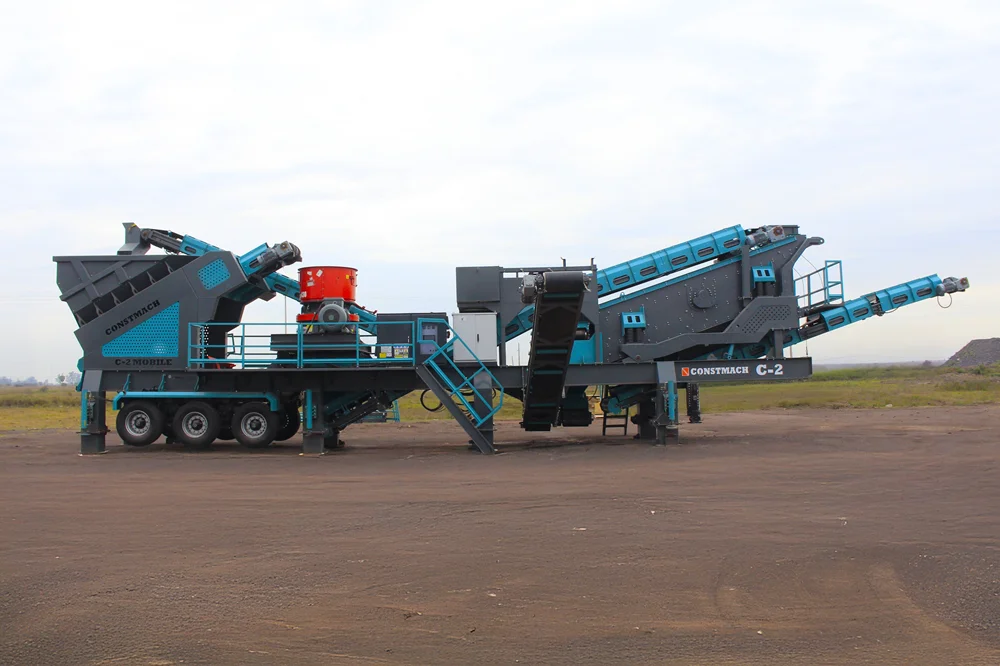






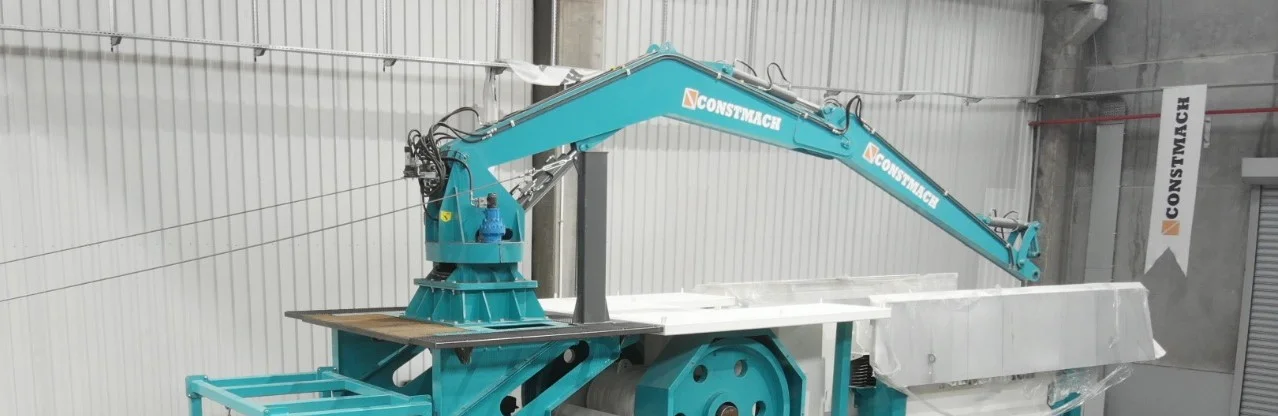

The CONSTMACH Hydraulic Hammer Breaker is a boom-mounted hydraulic rock breaker installed at the feed point of a crushing plant to break oversize blocks before the primary crusher. The sections below explain what it does, where it is used, how it is controlled, its main specifications, and how it integrates with the primary crushing stage.
What does the hydraulic hammer breaker do?
It breaks oversize material that is too large for the primary crusher. Using a hydraulically driven percussion tool, it fractures blocks at the feed hopper or bunker into sizes the crusher can accept, keeping material flowing into the plant and preventing jams in the primary crusher.
Where is it used in the plant?
- Positioned over the primary crusher hopper, bunker or grizzly at the feed point of the line.
- Boom-mounted with a 360-degree working angle and a maximum reach of 9,000 mm, so it covers the bunker area from a fixed station.
- Acts as the first line of intervention against oversize ahead of the primary crusher.
Is it a crusher?
No. It is a supporting component, not a crusher. It does not reduce the bulk of the feed; it only breaks the largest oversize blocks so they can enter the primary crusher, which then performs the actual crushing.
How is it controlled?
The breaker is operated by remote control. CONSTMACH provides both radio remote control and manual valve control, allowing the operator to break material from a safe distance away from the bunker, or to use direct valve control where required by site conditions.
What are the main specifications?
- Model: CHB-400, operating weight 350 kg.
- Tool diameter 68 mm; electric motor 18.5 kW.
- Working pressure 100-150 bar; flow rate 50-80 litres.
- Maximum reach 9,000 mm; working angle 360 degrees.
- S355J2 steel structure, OMT 25-micron filtration, R2 (Bezek) hoses.
How does it integrate with the primary crusher?
The breaker is set so its working envelope covers the feed hopper or grizzly ahead of the primary jaw or impact crusher. By intercepting oversize at the bunker it reduces feed interruptions and makes crusher wear more predictable, supporting steady throughput. It complements the primary crushing and screening plant rather than replacing any crushing stage.