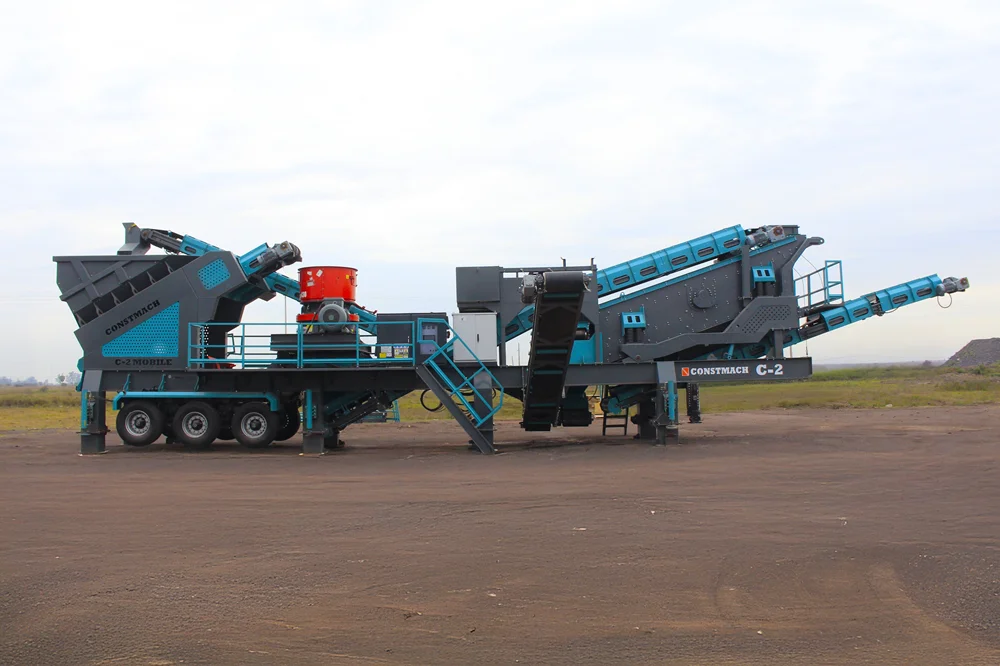






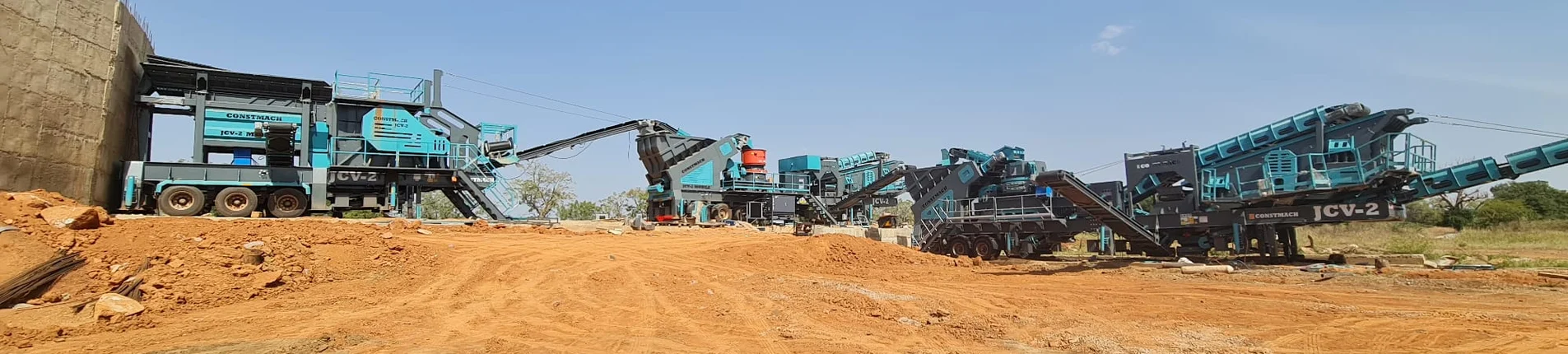

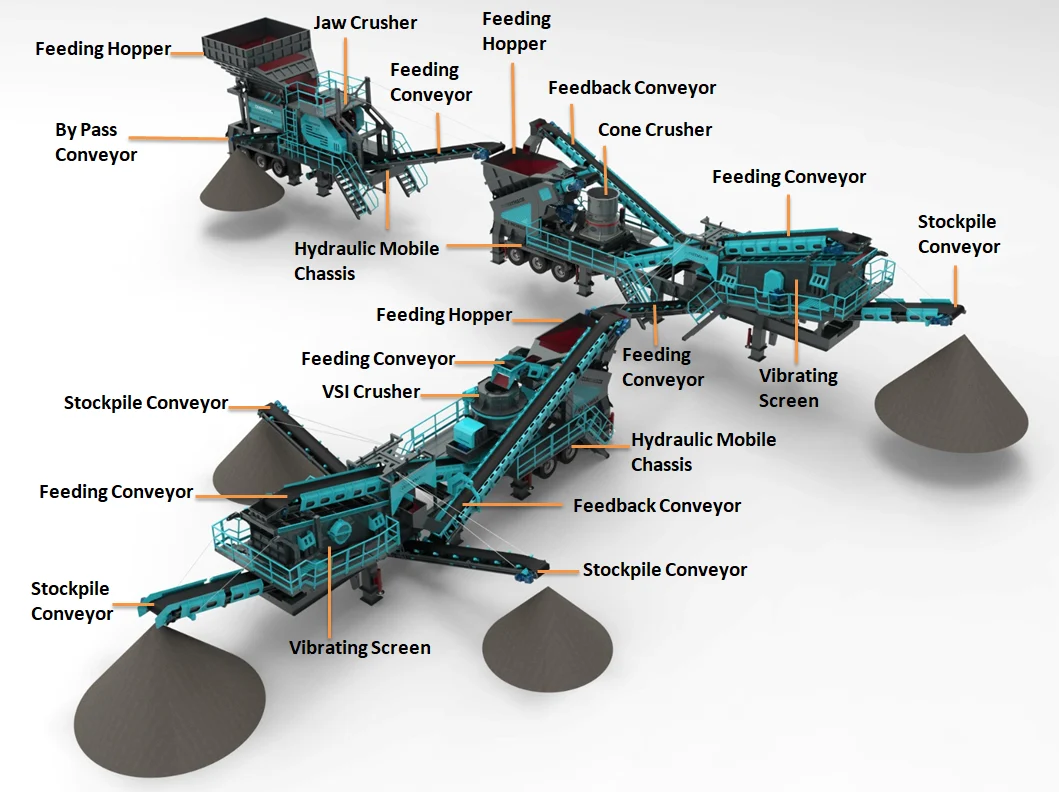
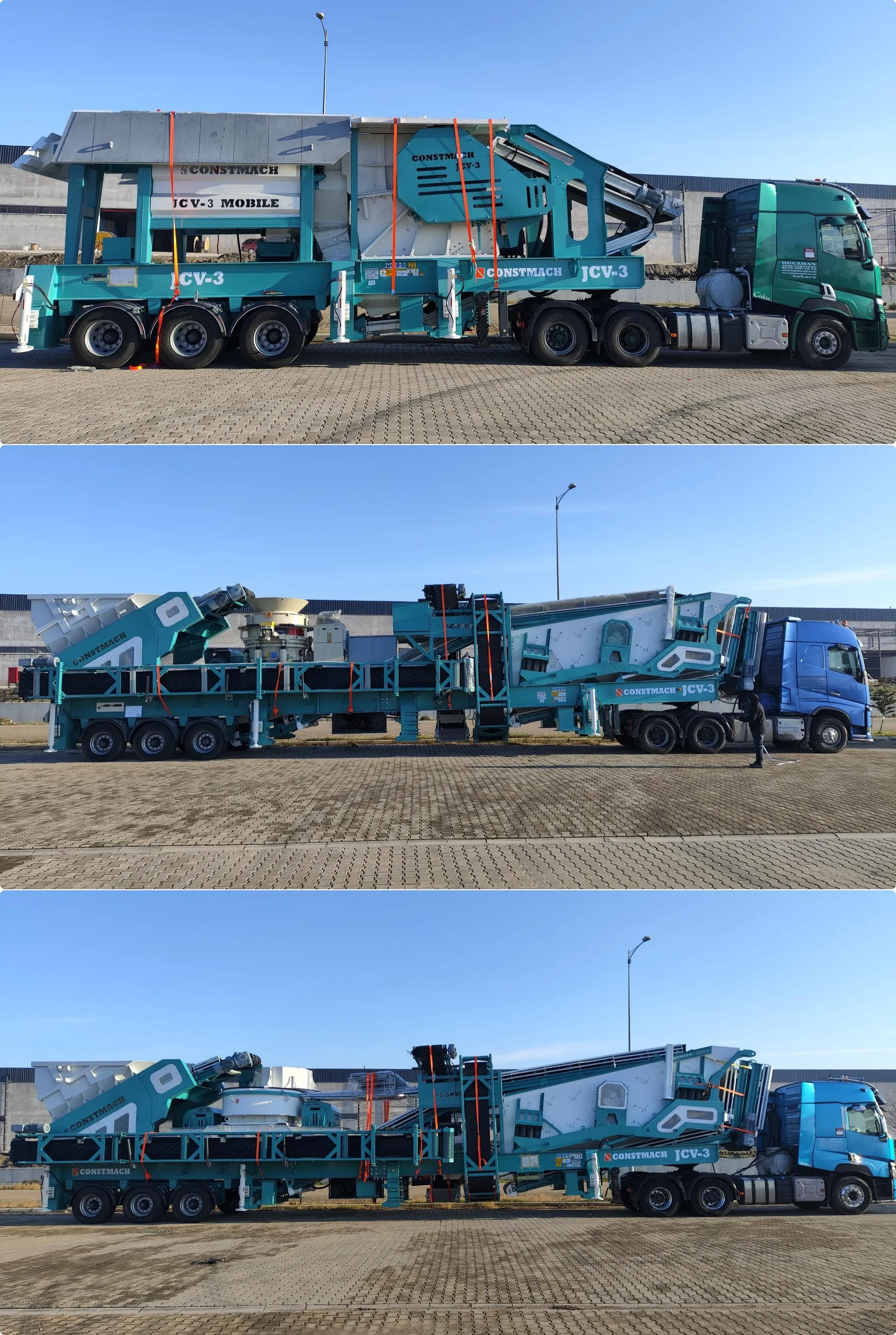
The following section describes how the CONSTMACH JCV-1 mobile crushing plant is used, the materials it processes, the products it makes and how it compares with the two-stage JC series. The JCV-1 is a triple-chassis, wheel-mounted plant that combines a primary jaw crusher, a secondary cone crusher and a tertiary VSI in one closed circuit.
What materials can the JCV-1 process?
The plant is configured for hard and abrasive rock with a high silica content. Typical feed materials include:
- Granite, basalt and gabbro
- Limestone and dolomite
- River stone and other hard quarried stone
The maximum feeding size is 610 x 380 mm, which sets the largest rock the primary jaw can accept.
What end products does the JCV-1 produce?
Because the circuit includes screening on two chassis, the JCV-1 can deliver up to five fractions at the same time. The VSI third stage shapes the product, so the plant produces graded aggregate with a more cubical particle form and manufactured sand, suitable for use as construction material.
Which industries and applications use this plant?
The JCV-1 is applied where graded hard stone aggregate and shaped sand are required on or near the production site, such as:
- Aggregate production from hard rock quarries
- Concrete and asphalt aggregate and manufactured sand supply
- Road and infrastructure construction projects
What is the trade-off between a mobile and a stationary plant?
A mobile plant such as the JCV-1 is mounted on wheeled chassis with hydraulic opening legs, so it can be relocated between sites and set up without separate cranes or loaders in many cases. A stationary plant is fixed in one location. The mobile arrangement favours projects that change location, while the underlying three-stage crushing circuit remains the same.
What are the main wear parts and maintenance points?
As a three-stage hard stone plant, the principal wear items are associated with the crushing chambers and material handling:
- Jaw plates in the primary jaw crusher
- Mantle and concave liners in the cone crusher
- Rotor wear parts and chamber components in the VSI
- Screen media on the vibrating screens and conveyor belts
Hard, abrasive feed such as granite and basalt increases wear on these components, so wear-part condition is a routine maintenance focus.
How does the JCV-1 compare with the JC-1?
The JC-1 is a two-stage plant using a primary jaw crusher and a secondary cone crusher on two chassis. The JCV-1 keeps that jaw and cone arrangement and adds a VSI 700 CR third stage on a separate chassis. The VSI improves particle shape and produces manufactured sand, which is the reason to choose the JCV configuration over the JC configuration.
How is the plant integrated as one circuit?
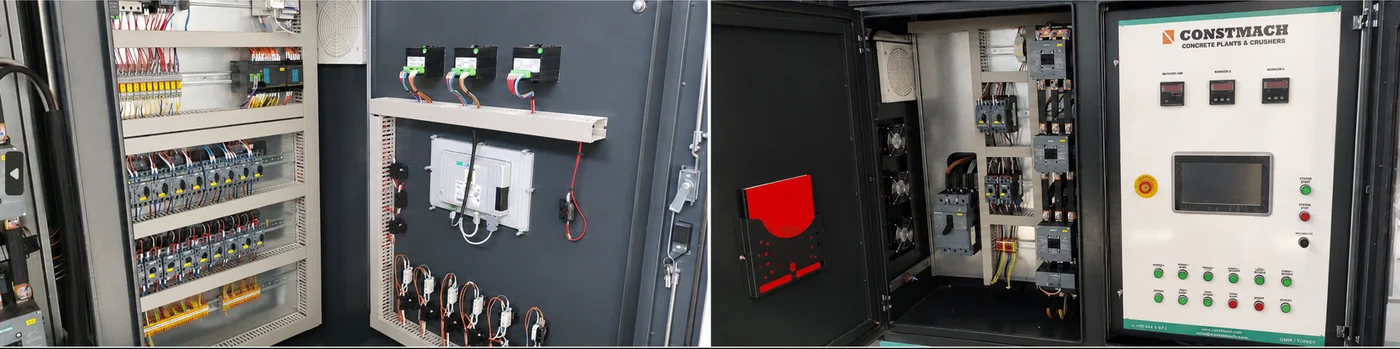
The three chassis operate as a single closed circuit. Feed passes from the jaw chassis to the cone chassis and then to the VSI chassis, with feedback conveyors returning oversize for further reduction. PLC automation with tablet-based remote control coordinates the stages, and each chassis carries a dust removal system.