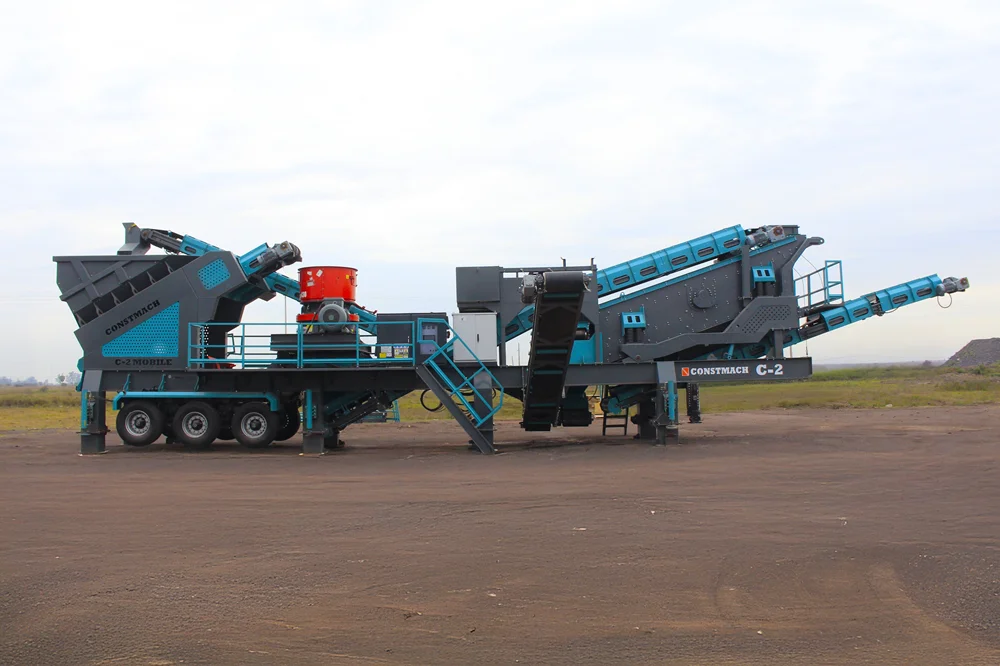






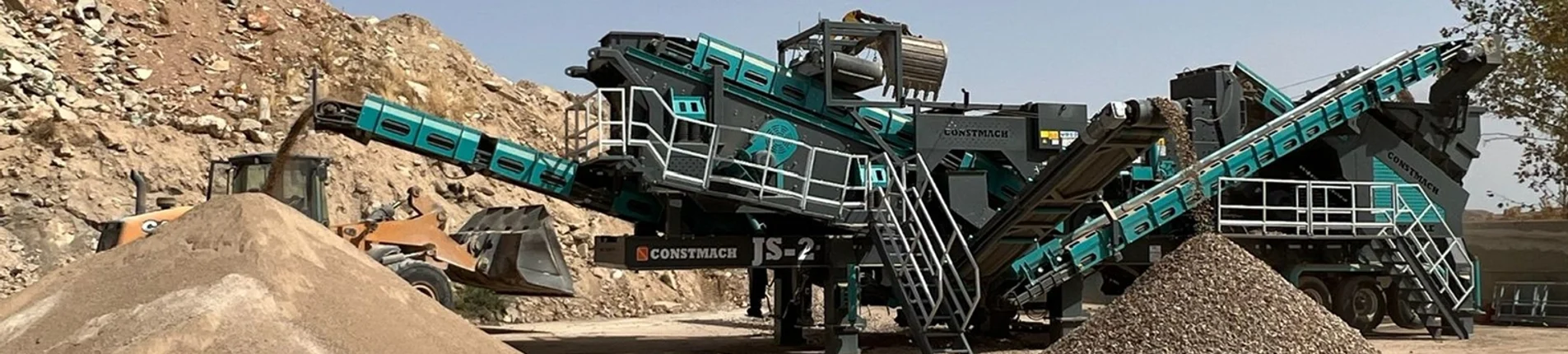

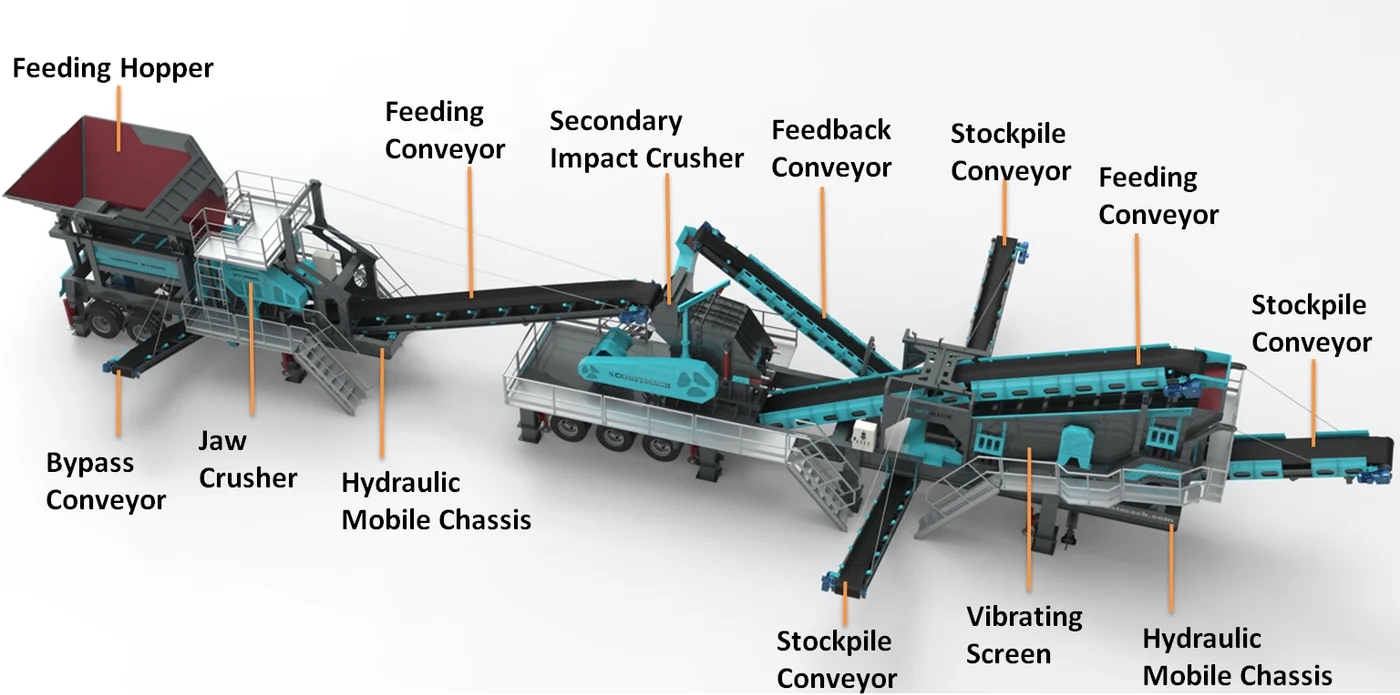
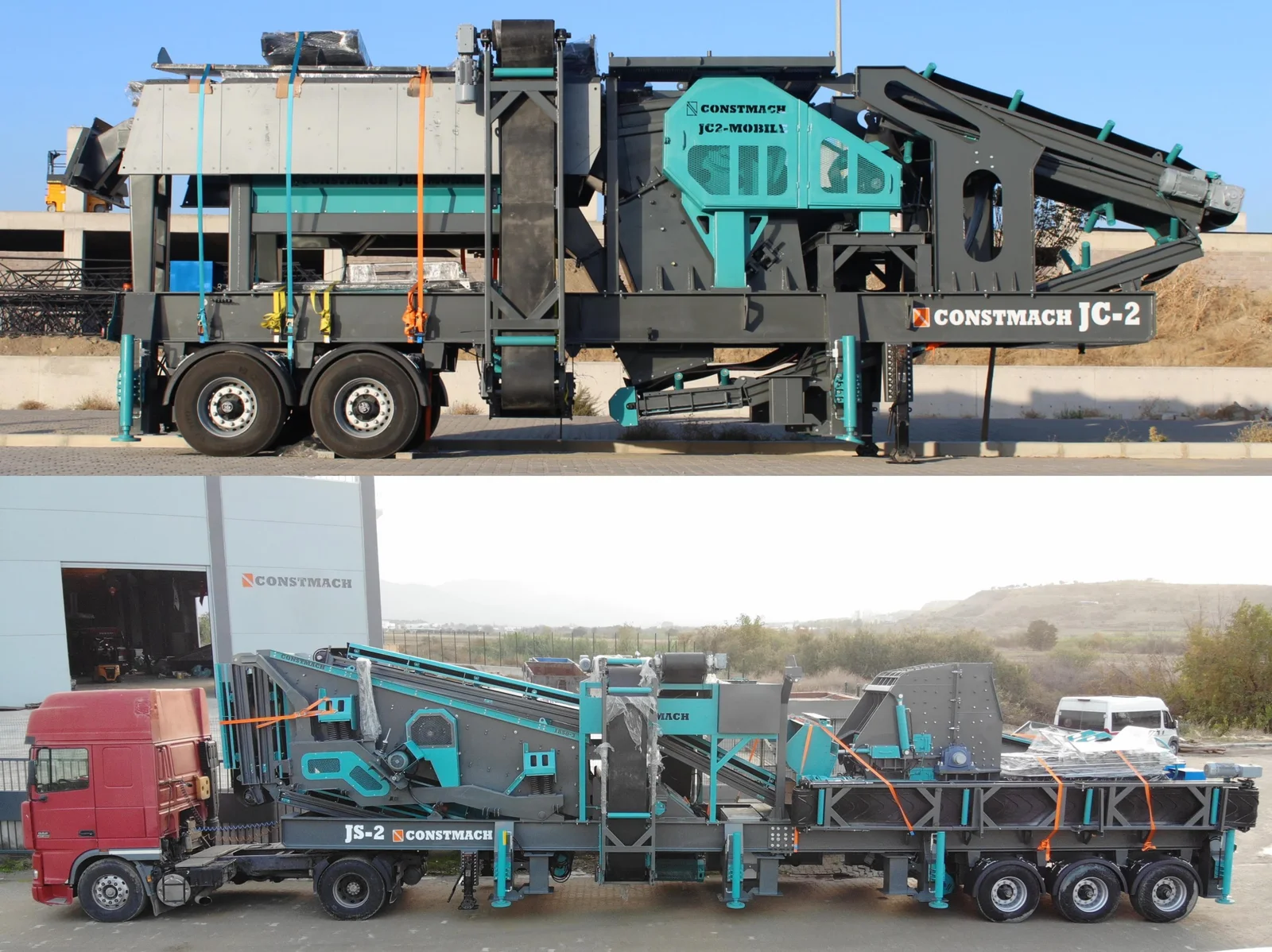
The CONSTMACH JS-1 is the entry model of the JS series of mobile jaw and impact crushing plants, combining a CJC-60 primary jaw crusher and a CSI 1210 secondary impact crusher on two wheeled chassis. The sections below summarise the materials it is intended for, the products it makes, typical industries, how a jaw-and-impact plant compares with a jaw-and-cone plant, wear-part and maintenance considerations, and how the plant is integrated as a circuit.
Suitable Materials
The JS-1 is configured for middle-hardness, lower-abrasion stone. Impact crushers are generally applied to less abrasive feed than cone crushers, so highly abrasive, high-silica rock is outside the intended range for this plant type.
- Limestone
- Riverstone
- Dolomite
- Other medium-hard, less-abrasive stone
End Products
The plant is designed to produce several graded fractions in a single pass, and the impact crushing stage typically yields a cubical particle shape and a relatively high fines content.
- Three or four different fractions simultaneously
- Aggregate sizes for concrete and asphalt production
- Base and sub-base material for road construction
Typical Industries
- Aggregate and quarrying operations
- Ready-mixed concrete production
- Road and infrastructure construction
- Contractors requiring a relocatable crushing circuit
Jaw-and-Impact versus Jaw-and-Cone
The secondary crusher type is the main selection factor. A jaw-and-impact plant such as the JS-1 suits medium-hard, less-abrasive material and emphasises cubical shape and fines generation. A jaw-and-cone plant (CONSTMACH JC series) or a jaw-cone-VSI plant (JCV series) is configured for harder, more abrasive rock such as granite and basalt, where cone crushing reduces wear-part consumption compared with impact crushing.
Wear Parts and Maintenance
The principal wear components reflect the two crushing principles in the plant.
- Jaw crusher: fixed and moving jaw plates (compression wear)
- Impact crusher: rotor blow bars and breaker (apron) plates (impact wear)
- Screen media on the three-deck vibrating screen
- Conveyor belts and idlers
Because impact wear parts are consumed faster on abrasive feed, matching the feed material to the plant's intended hardness range is an important maintenance consideration.
Comparison Within the JS Series
The JS-1 is the smallest of the three JS models. Capacity, maximum feed size and installed power increase through the JS-2 and JS-3, so model selection is driven by required throughput and the largest expected feed size.
Plant Integration
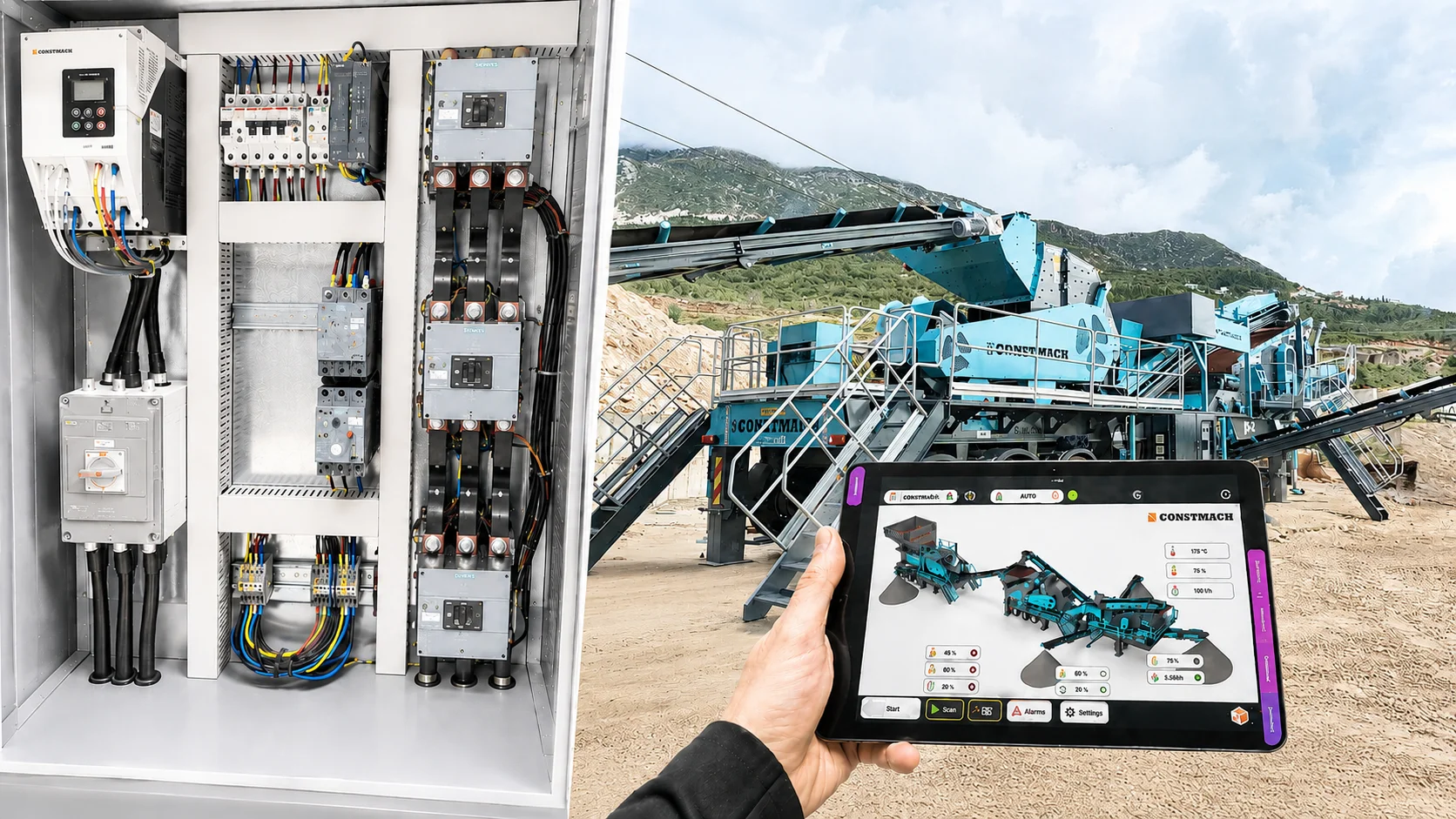
The JS-1 functions as a complete two-stage crushing and screening circuit across two chassis. The first chassis handles feeding and primary jaw crushing; the second handles secondary impact crushing, screening, oversize return and product stockpiling, with a dust-removing system and on-board control.