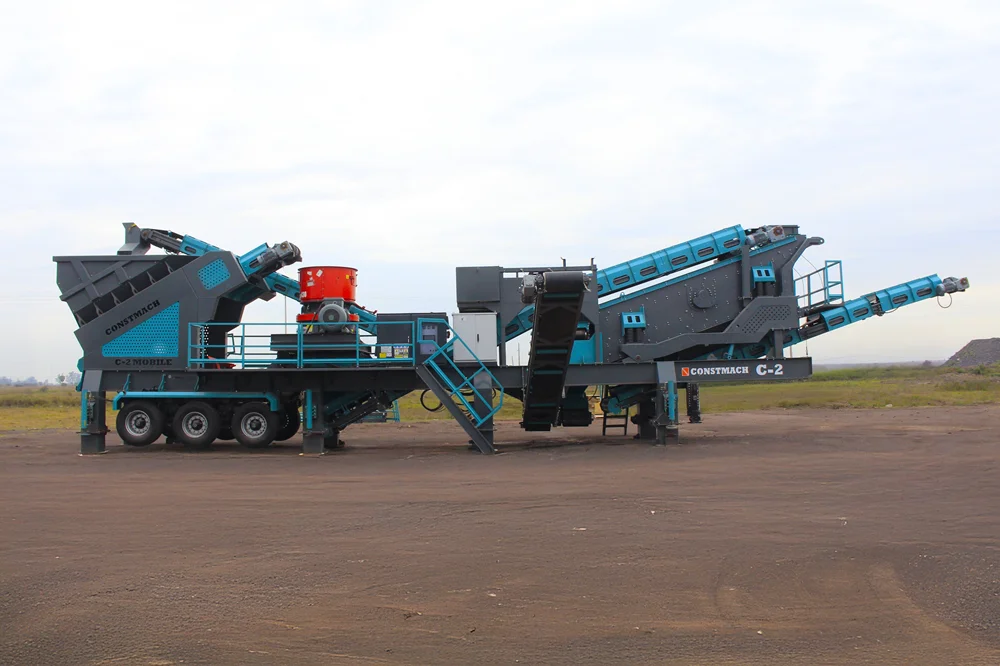






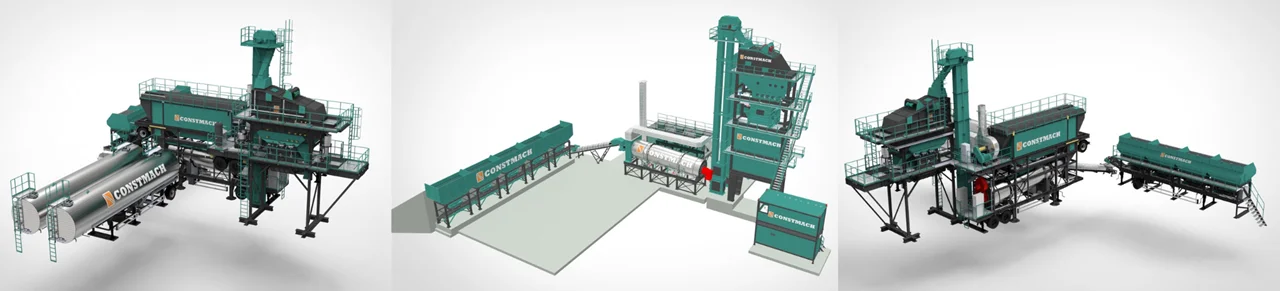

The CONSTMACH Mobile Asphalt Plant (Batch Type) is a relocatable tower plant that produces hot-mix asphalt in controlled batches. The sections below cover what it produces, the materials it uses, the stages of the batch process, its applications, how bitumen and temperature are controlled, the maintenance it needs, and how it compares with a stationary plant.
What does the plant produce?
It produces hot-mix asphalt: a heated, homogeneous blend of graded aggregate, mineral filler, and bitumen made in discrete batches. Because the recipe can be changed between batches, the plant can produce different asphalt types for base, binder, and wearing courses.
What materials does it use?
The main inputs are mineral aggregate of several size fractions, mineral filler, and bitumen (asphalt cement). The aggregate is dried and heated before mixing, and the bitumen is stored and kept hot for accurate dosing.
What are the stages of the batch process?
- Cold feed: aggregate is metered from cold-feed bins.
- Drying and heating: a rotary dryer drum with a burner heats the aggregate and removes moisture.
- Elevation and screening: a hot elevator lifts the aggregate to a screen that separates it into hot bins.
- Weighing: aggregate fractions, filler, and bitumen are weighed for each batch.
- Mixing: a twin-shaft pugmill blends the batch and discharges it to storage or trucks.
Where is the plant used?
It is used for road construction and infrastructure projects, particularly where production needs to follow the work and the plant is relocated between sites over its service life.
How are bitumen and temperature controlled?
Bitumen is stored in heated tanks and weighed precisely for each batch. The dryer burner and the control system regulate aggregate and mix temperature, and the controls monitor proportions so each batch meets the specified recipe.
What maintenance is required?
Maintenance includes inspection of the dryer drum and burner, the pugmill mixer tips and liners, the elevator and conveyors, the bitumen heating system, and the dust-collection filter bags, together with checks of the weighing and control systems.
How does it compare with a stationary plant?
The mobile plant is built on a transportable chassis for fast erection and relocation with minimal foundations, while a stationary plant is fixed to a permanent site. The batch process and product quality are equivalent; the mobile unit trades some installed scale for the ability to move between projects.