





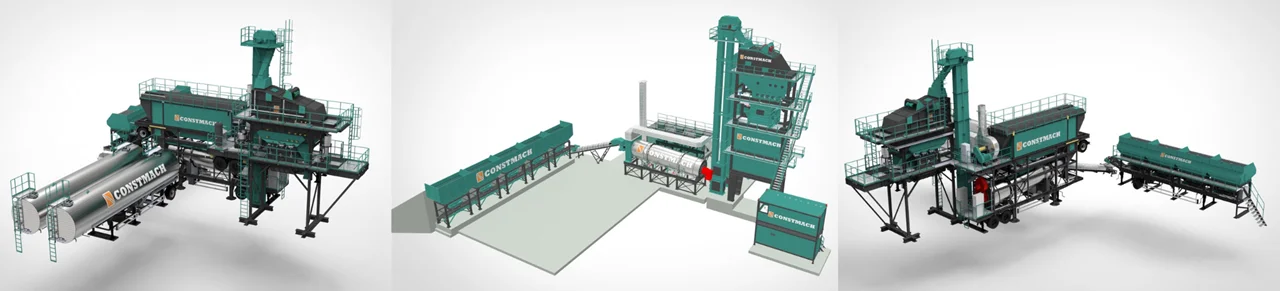

The CONSTMACH Stationary Asphalt Plant is a fixed batch-type plant that produces hot-mix asphalt in controlled batches for long-term, high-volume supply. The sections below cover what it produces, the materials it uses, the stages of the batch process, its applications, how bitumen and temperature are controlled, the maintenance it needs, and how it compares with a mobile plant.
What does the plant produce?
It produces hot-mix asphalt by blending heated, graded aggregate with mineral filler and bitumen in measured batches. The recipe can be adjusted between batches, so the plant can supply different asphalt types for base, binder, and wearing courses.
What materials does it use?
The inputs are mineral aggregate in several size fractions, mineral filler, and bitumen (asphalt cement). The aggregate is dried and heated before mixing, and the bitumen is stored hot for accurate weighing.
What are the stages of the batch process?
- Cold feed: aggregate is metered from cold-feed bins onto a conveyor.
- Drying and heating: a rotary dryer drum with a burner heats the aggregate and removes moisture.
- Elevation and screening: a hot elevator lifts the aggregate to a screen that fills the hot bins by fraction.
- Weighing: each aggregate fraction, the filler, and the bitumen are weighed per batch.
- Mixing: a twin-shaft pugmill blends the batch and discharges it to a storage silo or trucks.
Where is the plant used?
It is used as a permanent, central production facility for road construction, highway maintenance, and infrastructure projects that require a high, steady supply of asphalt from one location.
How are bitumen and temperature controlled?
Bitumen is held in heated tanks and weighed precisely for each batch. The dryer burner and the control system regulate aggregate and mix temperature, and the controls verify component proportions so every batch meets the specified recipe.
What maintenance is required?
Maintenance covers the dryer drum and burner, the pugmill mixer tips and liners, the elevator, screen, and conveyors, the bitumen heating system, and the dust-collection filter bags, along with calibration of the weighing and control systems.
How does it compare with a mobile plant?
The stationary plant is fixed on a permanent foundation and configured at full scale for sustained, high-volume output, whereas a mobile plant is built on a transportable chassis for relocation. Both share the same batch process and mix quality; the stationary plant favours capacity and permanence over mobility.