







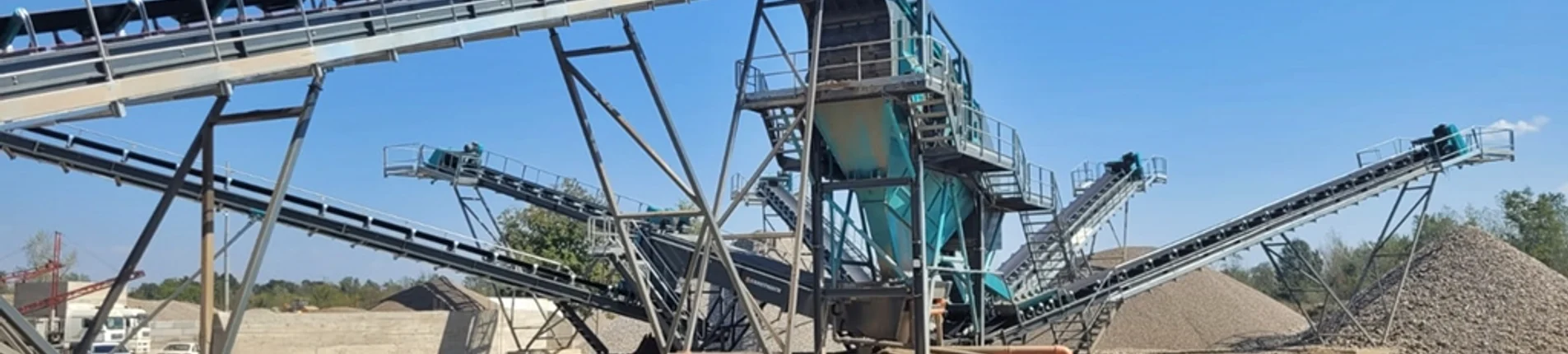

Stationary Screening & Washing Plant

The CONSTMACH Stationary Screening and Washing Plant is a fixed installation that combines size separation and washing in a single integrated line to produce clean, graded sand and aggregate. It is part of the Gravel Washing Systems product group and is used by quarries, sand and gravel pits, and aggregate producers that need a permanent, high-output facility for converting raw, contaminated feed into market-ready washed products. Because it is a stationary plant, its structure, conveyors, and water system are configured for the specific site, feed material, and required product fractions.

The plant works as a sequence of stages. Raw material is loaded into a feed hopper fitted with a vibrating feeder, which delivers a controlled flow onto a feed conveyor. The conveyor carries the material to a vibrating screen equipped with spray nozzles. On the screen, the feed is separated into different size fractions while pressurised water washes the particles and rinses fine contaminants through the screen mesh. Oversize and graded coarse fractions are discharged to stockpile conveyors, while the fine fraction and wash water pass through to the sand-washing stage.

For the sand fraction, the plant can be equipped with different washing technologies depending on the product specification: a screw (spiral) washer, a bucket-wheel washer, or a hydrocyclone-based unit. These devices wash the sand, separate it from the silt-laden water, and dewater the product so that it can be stockpiled with a manageable moisture content. The choice and combination of washers is determined by the required throughput and by the number and size of the final fractions to be produced.

Throughout the process, water is central to performance. Spray water on the screen and the wash water in the sand washer carry away clay, silt, and dust. This dirty water is directed to a water-management stage, where settling tanks, thickeners, or filter presses separate the solids from the water. Clarified water can then be recirculated back to the plant, reducing fresh-water demand and helping to control the discharge of fines, while the separated solids are removed as a manageable cake or sludge.

The plant is suited to natural sand and gravel as well as crushed stone, and it removes clay, silt, and dust to deliver clean products. The standard configuration offers a production capacity in the range of approximately 100 to 250 tons per hour, with a maximum feed size of around 200 mm and a feeding height of about 4.5 metres. The exact layout, screen deck count, and washer selection are matched to the desired output and product mix, so the plant can simultaneously yield several washed sand and aggregate fractions.

Core components include the feed hopper and vibrating feeder, the feed conveyor, the multi-deck vibrating screen with washing nozzles, the selected sand-washing unit, the stockpile conveyors, and the water-treatment equipment. The plant is operated from a control cabinet with PLC automation built around industrial-grade electrical components, which coordinates the feeders, conveyors, screen, and washers and allows the line to run continuously with minimal manual intervention.

As a complete, fixed washing facility, the Stationary Screening and Washing Plant is intended for sites with a stable, long-term production requirement. By integrating screening, washing, and water management on one foundation, it delivers consistent, well-graded washed aggregate and sand for use in concrete, asphalt, plaster, and construction fill, while the closed water circuit supports efficient water use on site.

Stationary Screening & Washing Plant Technical Specifications

Production CapacityChanges from 100 to 250 tph
Maximum Feeding Size200 mm
Feeding Height4.5 meters
Main ConfigurationFeeding Hopper + Vibrating Screen with washer + Screw Washer / Wheel Washer / Hydrocyclone + Conveyors
Total Motor PowerVaries depending on production capacity
Electric Generator RequirementVaries depending on production capacity
Weight of the plantVaries depending on production capacity

Stationary Screening & Washing Plant General Layout

FAQ

The CONSTMACH Stationary Screening and Washing Plant is a fixed line that screens and washes sand and gravel to produce clean, graded products. The sections below explain what it produces, the materials it accepts, the sequence of process stages, where it is used, how the water circuit is managed, and the maintenance it requires.

What does the plant produce?

It produces multiple washed and graded fractions of sand and aggregate from raw feed. Clay, silt, and dust are removed during washing, so the output is clean material suitable for concrete, asphalt, and other construction uses.

What materials can it process?

The plant handles natural sand and gravel as well as crushed stone. The standard configuration accepts a maximum feed size of around 200 mm at a feeding height of about 4.5 metres.

What are the main process stages?

  • Feeding: a hopper with a vibrating feeder delivers a controlled flow onto a conveyor.
  • Screening and washing: a vibrating screen with spray nozzles separates fractions and rinses out fines.
  • Sand washing: a screw, bucket-wheel, or hydrocyclone unit washes and dewaters the sand.
  • Water treatment: settling and clarification recover water and separate the solids.

Where is the plant used?

It is used at quarries, sand and gravel pits, and aggregate production sites that require a permanent, high-output washing facility producing several graded products at once.

How is water managed?

Spray and wash water carry clay, silt, and dust to a water-management stage with settling tanks, thickeners, or filter presses. Clarified water is recirculated to the plant, which reduces fresh-water consumption and controls the discharge of fines, while the separated solids are removed as cake or sludge.

What maintenance is required?

Routine maintenance covers screen media, spray nozzles, the wear parts of the sand washer, conveyor belts and idlers, and inspection of pumps and the water-treatment equipment. Because the plant is PLC-controlled, the electrical and control system is also checked as part of regular servicing.

Frequently Asked Questions

whatsapp gorsel 2024 01 10 saat 15 28 30 bf9fc1cb 9474
Quick Contact

Leave a request, and our expert team will as soon as possible get back to you

Fill out the form for detailed information about concrete plants, crushing-screening plants, or our other products — or contact us directly.

By leaving a request, you consent to the processing of your personal data.

or directly

What's new on Constmach

Our expert team is ready to provide a solution tailored to your project. We're just a phone call away — call us now.