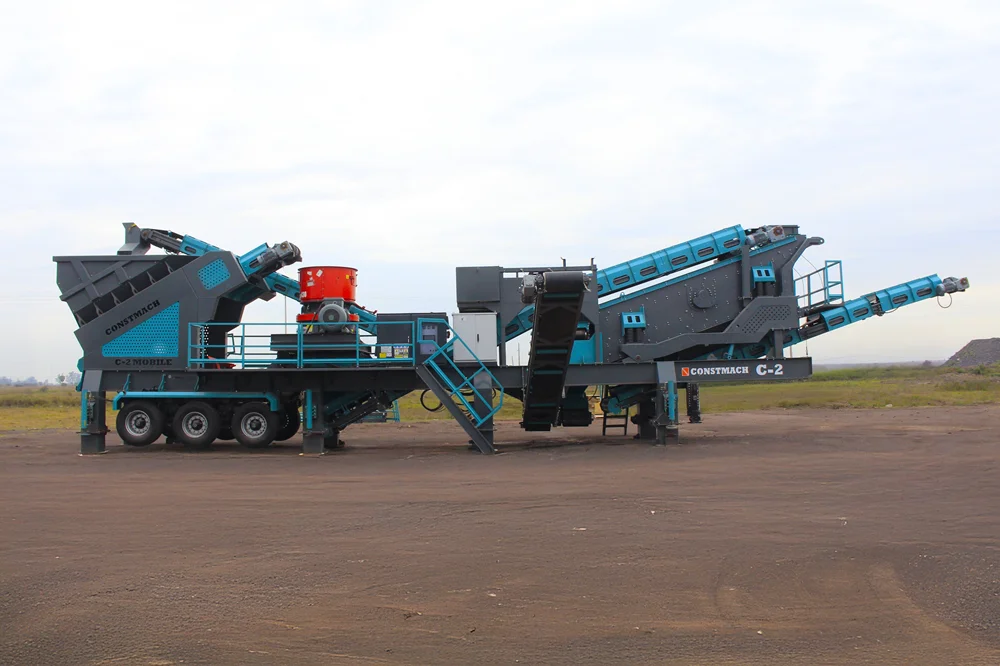






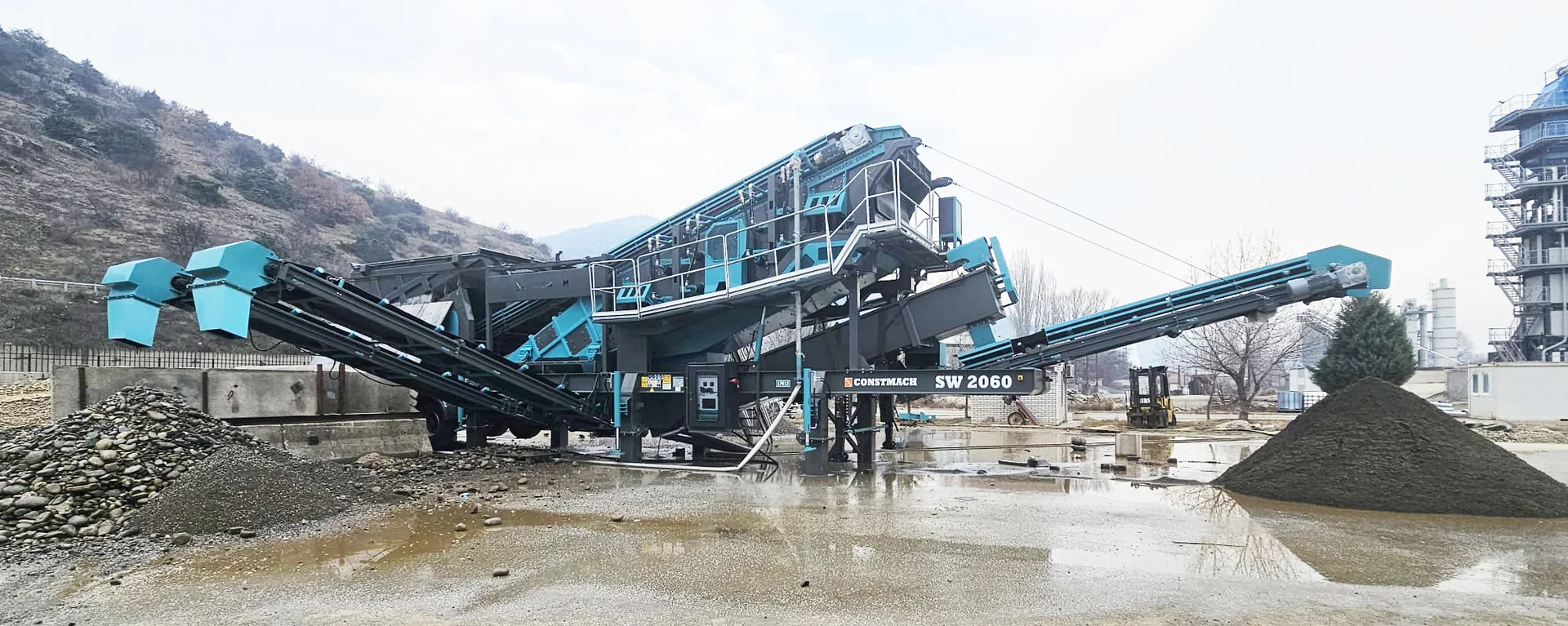

The SW-1640 Mobile Screening & Washing Plant is used wherever sand and gravel must be both graded and cleaned on site: riverbed and alluvial sand deposits, gravel pits, and crushed-stone quarries producing washed 0–5 mm sand and graded aggregate fractions. Its mobile chassis suits contractors who work several deposits in a season and need to move the plant rather than build a fixed installation. The 80 t/h rated capacity defines the daily tonnage the unit can sustain.
What does the plant wash and produce?
Feed material — pit-run sand, gravel or crushed stone — is screened on the 1,600 x 4,000 mm deck into clean graded fractions, while spray water removes silt, dust and light clay. The 500 x 5,000 mm screw washer scrubs the fine sand fraction and lifts it clear of the wash water on its inclined flight, draining most of the water back into the tank. The output is washed concrete or plaster sand plus one or more clean gravel sizes, depending on how the screen decks are meshed.
How much water and power does it need?
The SW-1640 carries a total installed power of 41 kW, or about 85 kVA of generator capacity if run off-grid. Water consumption depends on feed cleanliness, but the screw washer is designed so that the bulk of the process water settles and recirculates rather than being lost. Pairing the plant with a settling pond or a thickener markedly cuts fresh-water make-up.
How does it handle clay, and how dry is the output?
The combination of spray-washed screening and a screw washer copes well with low to moderate clay contamination. For lightly to moderately dirty feed the SW-1640 produces clean sand directly. Where the feed carries heavy, sticky clay, a bucket-wheel washer or an attrition stage ahead of the plant is the better route. Sand leaving the screw washer is partially dewatered and typically holds residual moisture in the 15–25% range; a downstream dewatering screen can bring this down to a stackable 12–15%.
How does it compare with stand-alone washers?
Screw washer alone washes and dewaters fine sand but does not screen or grade — the SW-1640 integrates a screw washer with a vibrating screen on one mobile chassis.
Bucket-wheel washer handles higher clay content and uses less water, but again only treats the sand fraction; it is not a complete screening-plus-washing plant.
Dewatering screen removes residual water and recovers fines, and is best added downstream of the SW-1640 when very dry, low-loss sand is required.
In short, the SW-1640 is the all-in-one mobile solution; the other machines are specialised stages that can be added when feed conditions or product specifications demand them.
What feed size and site preparation does the SW-1640 need?
The SW-1640 is designed for sand and gravel feed; oversize rock should be removed or crushed upstream so that material reaching the 4,650 mm feeding height stays within the screen's capacity. Site preparation is minimal because the plant stands on its own hydraulic legs — a level, compacted pad and access for a loader and the water supply line are usually enough. A simple settling pond or clarifier downstream lets the wash water recirculate and keeps fresh-water demand low. With the fold-up conveyors deployed, the plant builds separate stockpiles for washed sand and each graded gravel size, ready for direct loading.
What maintenance does the SW-1640 require?
Routine maintenance focuses on the wear items common to washing plants: screen meshes, screw washer paddles and conveyor belts. The screw washer flights and rubber paddles are replaceable, and the gearbox is oil-lubricated for a long service interval. Because the SW-1640 concentrates all stages on one chassis, inspection and greasing points are grouped together, which shortens daily checks and keeps the 80 t/h output stable over time.