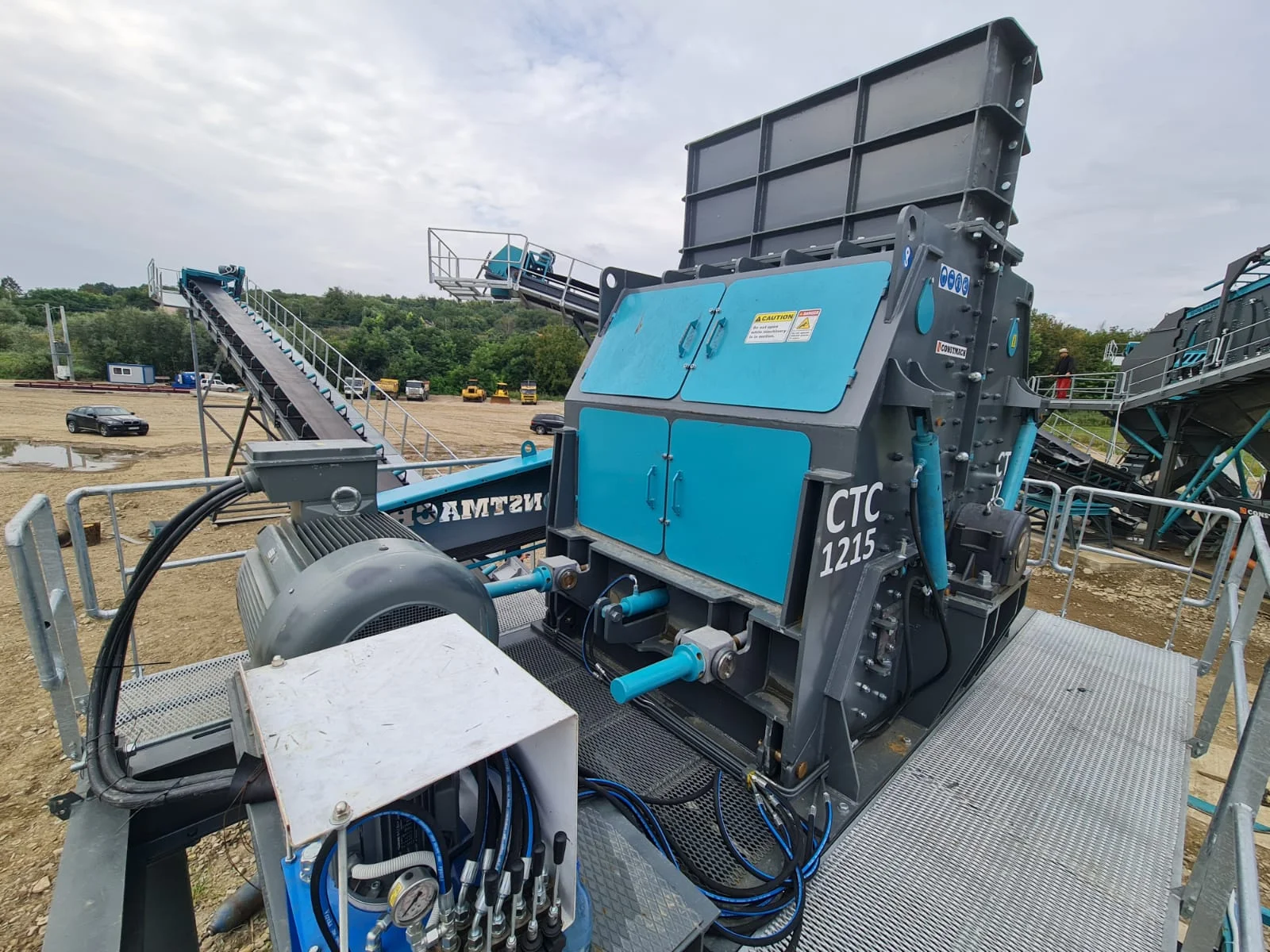
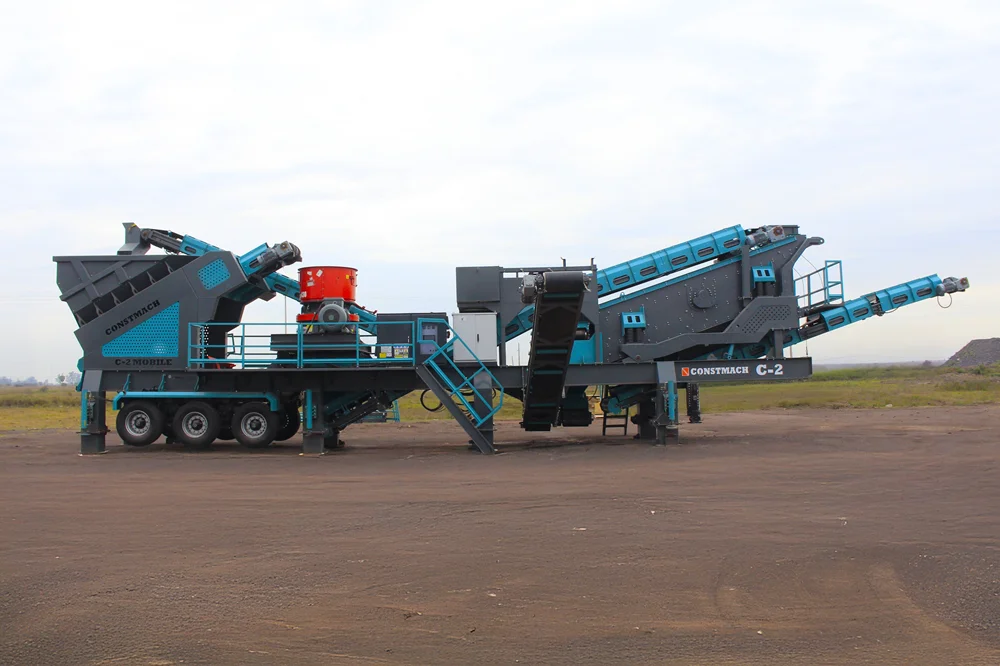
Tertiary impact crushers are the final, third-stage shaping machines in an aggregate plant. They take pre-crushed feed and break it on the impact principle, producing well-shaped cubical fines and a high proportion of sand-sized material. The Constmach CTC range spans four models from 60 to 250 t/h, with rotor sizes from 1,100x750 mm up to 1,100x1,500 mm and drive ratings from 110 to 250 kW.
What a tertiary impact crusher is
A tertiary impact crusher sits at the end of the crushing line, after the primary and secondary stages have already reduced the rock to a manageable size. Its job is not heavy reduction. Its job is shaping and sizing. The machine takes feed that is already small and turns it into clean, cubical fine aggregate with a controlled amount of fines and sand.
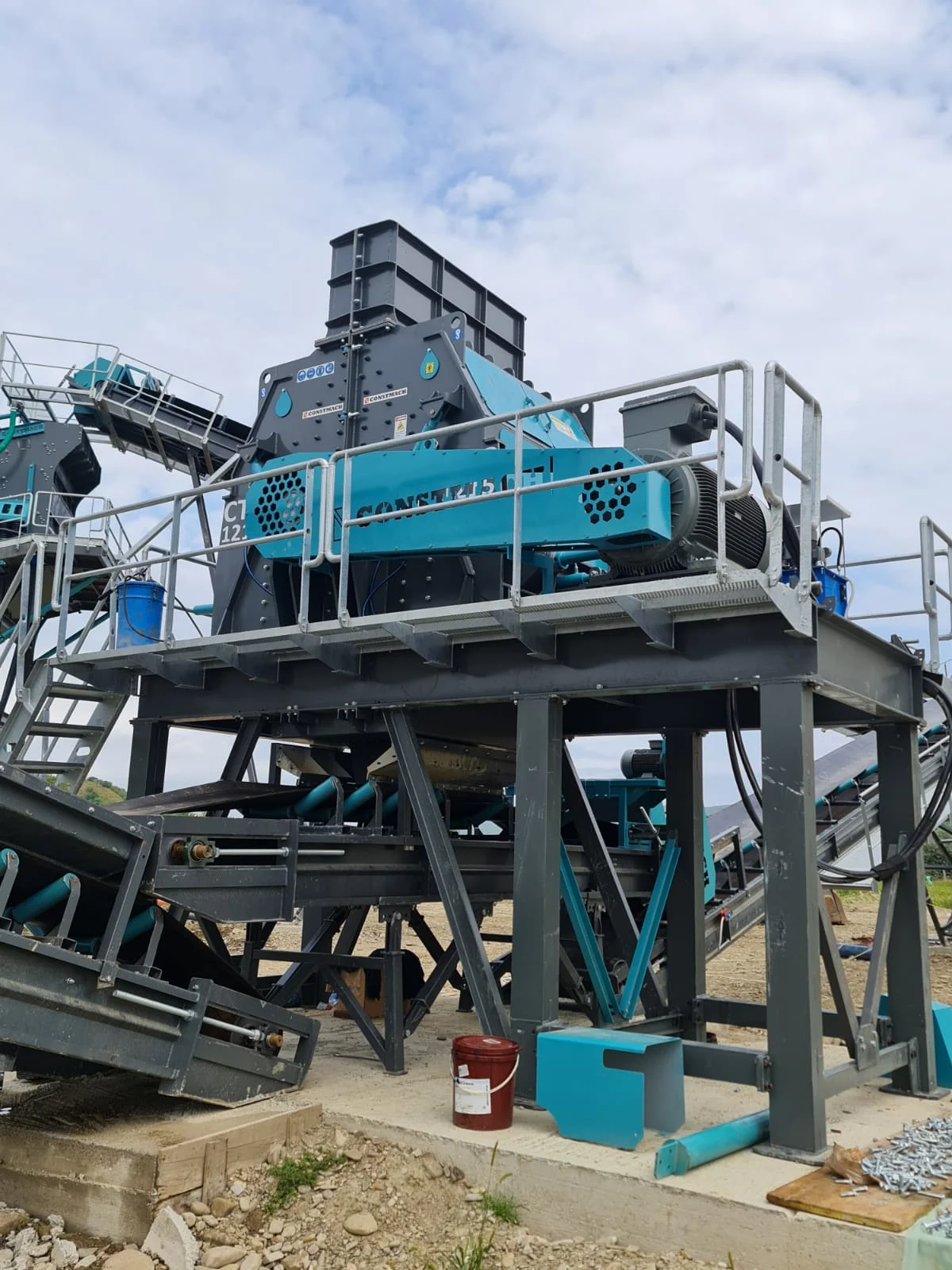
The Constmach version carries the CTC designation. It works on impact, using a rotor fitted with manganese blow bars that strike the material and throw it against breaker plates. The repeated impacts knock off flaky edges and produce a tighter, more cubical particle. Because the feed is already fine, the energy goes into shape correction and the generation of sand-sized product rather than gross breakage.
That distinction matters more than it first appears. A primary jaw crusher and a secondary cone both reduce size by a large ratio, and they accept a wide range of feed because their job is bulk reduction. A tertiary impact crusher is the opposite: a precision finisher. It receives a narrow, pre-sized feed and works on the surface and the corners of each grain rather than splitting it in half. Understanding that single point explains almost every sizing, wear and operating decision that follows.
How it works
Feed enters the crushing chamber and meets a high-speed rotor. The blow bars accelerate each particle and hurl it against the breaker plates mounted in the housing. The stone fractures along its weak planes, and the sharp corners that make a particle flaky or elongated are the first to go. The result is a rounder, more cubical grain.
The gap between the rotor and the breaker plates sets the product size and the fines fraction. A tighter setting drives more material into the sand range; a more open setting keeps the product slightly coarser. Rotor speed also matters. Higher tip speed means more energy per impact, more fines, and better shape, at the cost of faster wear. Operators tune both to hit the gradation the plant needs.
There is a second mechanism at work alongside the direct blow. Particles thrown off the rotor do not only strike the breaker plates; they collide with each other in flight and with the material already rebounding off the plates. This stone-on-stone action does a share of the shaping and is gentler on the metal, which is one reason an impact crusher set up well can hold a good shape without punishing its wear parts. The proportion of stone-on-stone to stone-on-metal action shifts with chamber design, feed rate and rotor speed, and an experienced operator learns to read it from the product and the wear pattern rather than from a single dial.
The breaker plates are usually adjustable in two positions, sometimes called the first and second curtains. The first plate takes the initial, hardest impact and does most of the size reduction; the second refines what comes off the first. Setting the two gaps independently gives a degree of control over the balance between reduction and shaping. Closing the second curtain a little, for instance, lifts the fines yield without forcing the first plate to do more work than it should. These adjustments are the operator's main levers once the machine is installed and the rotor speed is fixed.
Why use this crusher type
Cone crushers and impact crushers earlier in the line reduce size, but they do not always deliver the shape and fines content a producer wants for premium aggregate or for feeding a sand circuit. A tertiary impact crusher closes that gap. It is the tool you reach for when the gradation is right but the particle shape is poor, or when you need to lift the proportion of fine, sand-sized material in the final product.
Shape is not a cosmetic concern. Flaky and elongated particles pack badly, demand more binder in concrete and asphalt, and weaken the finished mix. A cubical grain interlocks, carries load better and uses less cement or bitumen for the same strength. For a producer selling to a specification, the difference between an angular, flaky product and a clean cubical one is the difference between a premium price and a rejected load. The tertiary stage is where that value is added.
To be clear about scope: a tertiary impact crusher shapes and sizes. A vertical shaft impact crusher, the VSI, is the dedicated sand-making machine. The two are often used together. The tertiary impact crusher does the bulk of the shaping and fines generation, and a VSI refines the sand fraction where a strict sand specification has to be met. On many medium-hard stone sites, the CTC alone produces enough well-shaped fines to satisfy the requirement, and the VSI is only brought in when the sand grading or the fineness modulus has to hit a tight target.
The Constmach CTC range
Four models cover throughputs from small fine-shaping duties up to high-tonnage tertiary stages. All share the same impact design and the same wear-part philosophy; they differ in rotor size, capacity and installed power.
| Model | Rotor (mm) | Capacity (t/h) | Drive |
|---|
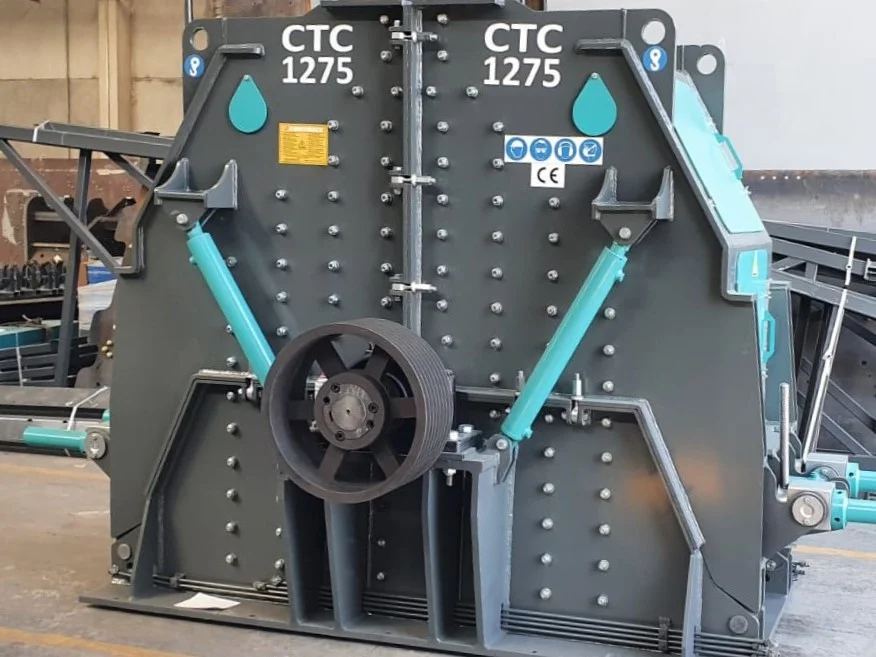
| CTC-1275 | 1,100 x 750 | 60 - 80 | 110 kW |
| CTC-1210 | 1,100 x 1,000 | 80 - 135 | 160 kW |
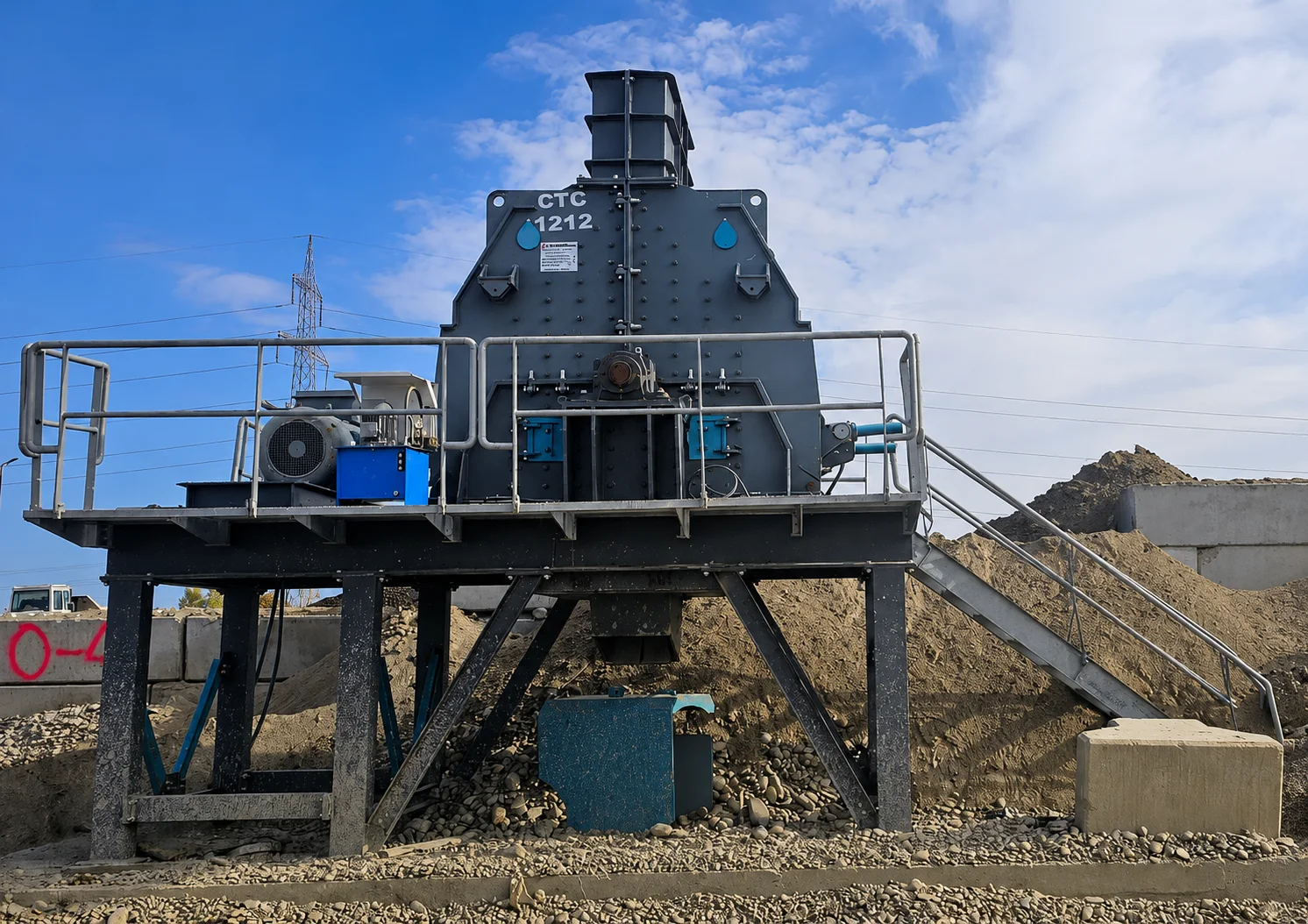
| CTC-1212 | 1,100 x 1,200 | 120 - 170 | 200 kW |
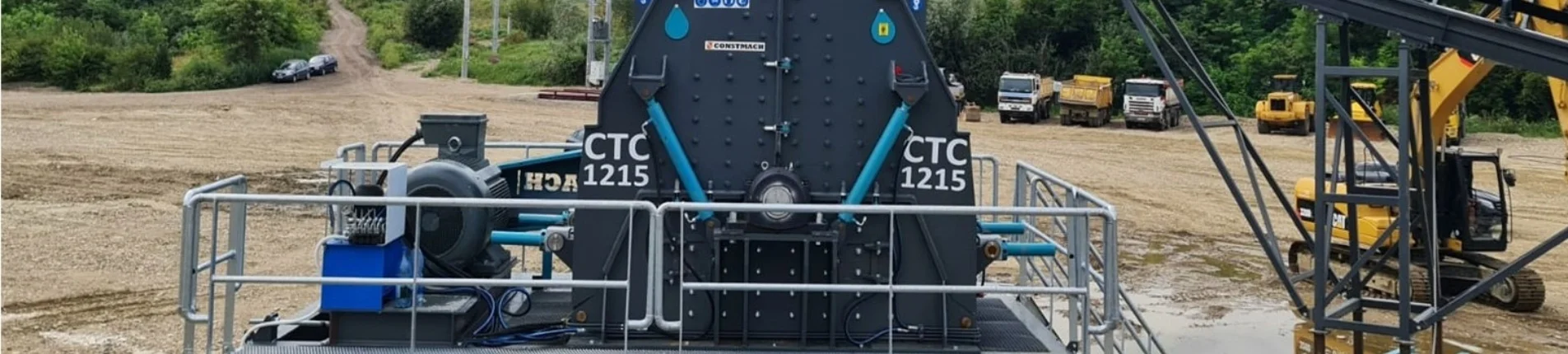
| CTC-1215 | 1,100 x 1,500 | 230 - 250 | 250 kW |
The rotor width grows across the range while the rotor diameter class stays consistent, so capacity scales with the size of the crushing chamber and the power on the shaft. The CTC-1275 suits compact plants and modest fine-shaping loads. The CTC-1215, at up to 250 t/h on 250 kW, handles the tertiary stage of a large fixed installation. The two middle models, the CTC-1210 and CTC-1212, cover the broad band of medium plants where most quarries sit, and the overlap in their capacity ranges gives you room to choose on gradation and headroom rather than tonnage alone.
Build quality and wear parts
The two wear parts that define the machine are the manganese blow bars and the breaker plates. Both take the direct impact of the stone and are designed to be replaced. Manganese steel is the standard choice because it work-hardens under repeated impact: the surface toughens in service while the body underneath stays ductile, which is exactly the behaviour you want in a part that gets struck thousands of times a minute.
The housing and rotor are built to carry that impact loading without flexing, because a rigid frame keeps the rotor-to-plate gap stable and the gradation consistent. Automatic lubrication is standard, so the rotor bearings receive a metered supply of grease without an operator having to remember the rounds. That single feature removes one of the most common causes of premature bearing failure on impact machines.
The rotor itself is the heart of the machine, and its mass is deliberate. A heavy rotor stores energy as it spins, so the blow bars deliver a consistent strike even as feed surges and dips. That stored inertia smooths the load on the motor and keeps the product gradation even through the small variations that happen on any feed conveyor. Blow bars are held in the rotor by a clamping arrangement that locates them positively and lets them be drawn out and replaced without dismantling the rotor, which keeps the changeover time, and the lost production behind it, as short as the job allows.
How it fits in the crushing line
A typical hard-rock plant runs in stages. A jaw crusher takes the primary reduction. A secondary crusher, often a cone or a secondary impact crusher, brings the size down further. The tertiary impact crusher then takes that pre-crushed feed for the final shaping pass.
Feed reaches the CTC through a vibrating feeder and belt conveyors, and the product leaves on a discharge conveyor to a vibrating screen. The screen splits the output into final fractions and returns any oversize for another pass. Where a sand product is needed, the fine fraction from the tertiary stage either meets the spec directly or is sent on to a VSI and a washing or classifying circuit. The crusher rarely works alone; it is one element in a balanced flow where feeder, screen and conveyor capacities all have to match its throughput.
Balance is the word that matters here. A tertiary impact crusher running in closed circuit with a screen returns its oversize for another pass, so the crusher actually handles more tonnes than the fresh feed rate suggests. That circulating load has to be designed in. If the screen is undersized, oversize backs up and the crusher chokes; if the return conveyor is too small, the circuit cannot clear itself. Sizing the feeder, the screen decks and every conveyor to the circulating load, not just the fresh feed, is what separates a plant that holds its rated tonnage from one that constantly trips and starves. The crusher can only produce to spec when the equipment around it keeps the chamber fed at a steady, controlled rate.
Capacity and sizing
The published figures, 60 to 80 t/h for the CTC-1275 up to 230 to 250 t/h for the CTC-1215, are ranges for a reason. Actual throughput depends on the feed size, the hardness and abrasiveness of the stone, the target gradation and the closed-side setting. A coarser product setting and a softer stone push you toward the top of the range. A fine product with a high sand demand pulls you toward the bottom, because the machine is doing more work per tonne.
Size the tertiary stage to the output of the stage feeding it, with a margin. A crusher that is run permanently at its ceiling leaves no room for harder batches of rock or for the gradual opening of the gap as the wear parts age. Choosing the next model up is often cheaper over the life of the plant than running a smaller machine flat out.
A worked sizing example
Take a limestone quarry that needs 150 t/h of well-shaped 0 to 5 mm and 5 to 12 mm product, fed from a secondary cone running at minus 40 mm. The 150 t/h is the fresh feed, but the tertiary stage will run in closed circuit with a screen, and on a fine-shaping duty a fair share of each pass comes back as oversize. Assume a circulating load of around 30 per cent: the crusher itself then sees roughly 195 t/h. That figure, not the 150, is what you size against.
Read 195 t/h against the range and the CTC-1212, at 120 to 170 t/h, is already over its ceiling, so it could not hold the duty at all once the plates wore. The CTC-1215, at 230 to 250 t/h, carries 195 t/h comfortably and leaves margin for the gap opening as the blow bars wear. On the brochure ceiling the CTC-1212 might tempt a buyer; on the real duty, with the circulating load and a sensible margin folded in, the CTC-1215 is the only sound choice. This is the calculation that catches out buyers who size on the fresh feed rate and the top figure, then find the plant cannot hold its rated output once the wear parts are halfway through their life.
The lesson generalises. Always size against the load the crusher actually sees, including the circulating return, and always read the required tonnage against the lower-to-middle part of a model's range rather than its top figure. The top of the range is what the machine does on the easiest material at the most open setting, not what it will hold on your stone at your target gradation, shift after shift.
Materials and applications
The CTC range is built for medium-hard, lower-abrasion stone. That covers limestone, dolomite and similar sedimentary rocks, and many basalts and andesites at the milder end of the abrasion scale. On these materials the impact principle delivers excellent shape and a generous fines yield, and the manganese wear parts give sensible service life.
Highly abrasive feeds such as quartzite, river gravel with a high silica content, or very hard granite are a different proposition. Impact crushing those materials drives wear-part consumption up sharply, and a compression machine or a VSI with the right configuration is usually the better economic answer. Match the crusher to the rock, not the other way round.
- Cubical fine aggregate for concrete and asphalt mixes
- Manufactured sand and a higher fines fraction for sand circuits
- Final shaping where earlier stages leave flaky or elongated particles
- Tertiary duty in limestone and similar medium-hard quarries
Wear economics
On an impact crusher the wear parts are the running cost that matters, and they deserve to be understood as economics rather than maintenance. The cost per tonne of product is driven by how fast the manganese disappears, and that rate is set far more by the material than by the machine. On the medium-hard, lower-abrasion stone the CTC is built for, a set of blow bars and plates earns its keep and the cost per tonne stays low and predictable. Push the same machine onto abrasive, high-silica feed and the manganese vanishes several times faster, so the cost per tonne can multiply even though nothing about the crusher has changed.
This is why feeding the right material is an economic decision, not just a technical one. It is also why a slightly larger machine running at a more open setting can be cheaper to operate than a smaller one closed up tight, because tip speed and impact energy drive both the fines yield and the wear, and a machine that is not working flat out wears its parts more slowly for the same output. The figures that decide a purchase are not the sticker price of the crusher but the manganese cost per tonne over a year, the labour and lost production of each changeover, and the value of the cubical product the machine adds. Weighed that way, the right tertiary impact crusher pays for itself in product quality and binder savings long before its wear parts are an issue.
Operating tips
A few habits separate a tertiary impact crusher that holds its spec from one that drifts. Feed it steadily: a choke-fed chamber at a constant rate shapes far better than one that surges and starves, because consistent loading keeps the stone-on-stone action working and the gradation even. Keep the feed pre-crushed and free of tramp oversize, since slugs of large rock hammer the blow bars and upset the product. Watch the product, not just the gauges; a creeping rise in flaky particles or a drop in the fines fraction usually means the gap has opened with wear, and that is the cue to adjust the plates or plan a changeover.
Mind the feed moisture too. Damp, sticky fines can build up on the plates and in the chamber, and on a fine-shaping duty that build-up changes the effective gap and the gradation. Keep the chamber clear and, where the feed is wet, make sure the screen and conveyors are not letting near-size material recirculate endlessly. Log the wear as well. Measuring the blow bars at each inspection and tracking how the gap opens turns wear-part replacement from a surprise into a scheduled event, and a scheduled changeover is always cheaper and faster than an emergency one.
Maintenance and wear parts
Day-to-day maintenance centres on the blow bars and breaker plates. Inspect them on a regular schedule and track how the gap opens as they wear, because a widening gap shifts the gradation toward the coarse side and cuts the fines fraction. Rotating or reversing blow bars at the right point evens out the wear and extends the set before replacement.
With automatic lubrication fitted, bearing care is largely a matter of checking that the system is delivering and that the grease lines are clear. Keep the drive belts correctly tensioned, watch for vibration that signals an unbalanced rotor, and clear any build-up in the chamber on sticky or damp feed. None of this is unusual for an impact machine; the discipline is in doing it on schedule rather than waiting for a fault.
Common mistakes
The most frequent error is feeding the wrong material. Putting abrasive, high-silica rock through a machine built for medium-hard stone burns through manganese and ruins the running cost. The second is oversized or uneven feed: a tertiary impact crusher expects pre-crushed material, and slugs of oversize hammer the blow bars and upset the gradation.
Other common faults: running the wear parts past their useful life and accepting a drifting product spec; choking the chamber by feeding faster than the screen and conveyors can clear; and expecting the tertiary impact crusher to act as a sand-maker on a strict spec when that is properly the job of a VSI. Each of these is avoidable with correct sizing and a clear understanding of what the machine is for.
How to choose
Start with the stone. Confirm it is medium-hard and lower-abrasion, the duty the CTC range is built for. Then fix the required throughput and the target gradation, especially the fines and sand fraction you need, and read those against the four models. The CTC-1275 and CTC-1210 cover small to mid-size plants; the CTC-1212 and CTC-1215 carry the larger tertiary stages up to 250 t/h.
Check that the rest of the line is balanced around your choice, that the feeder, screen and conveyors can keep pace, and leave headroom for harder batches and for wear. Decide whether the tertiary impact crusher meets your shape and fines target on its own, or whether your sand specification justifies pairing it with a VSI. Get the rock and the gradation right, size with a margin, and the machine will hold its product spec and its wear costs across a long working life.